

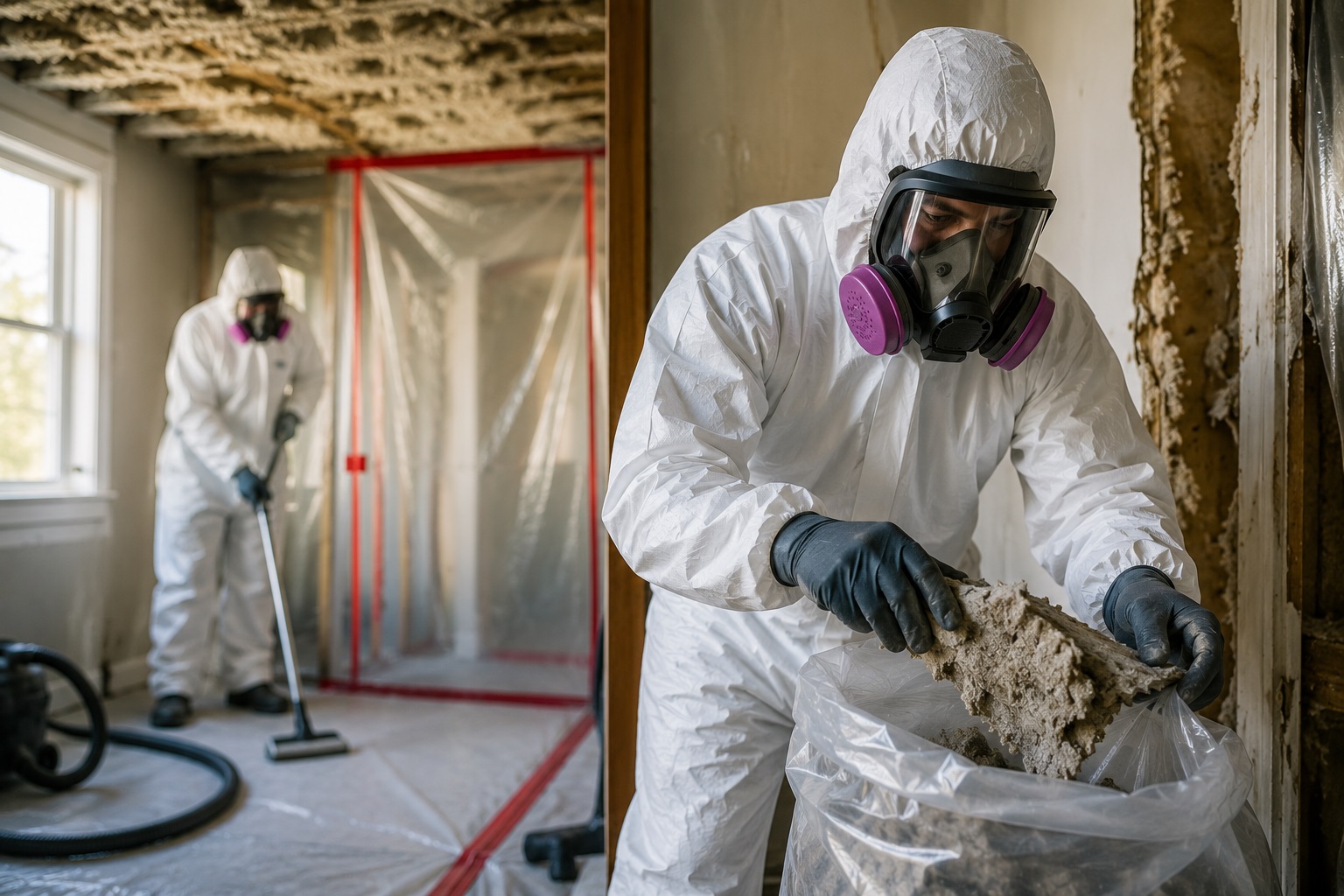
Homeowners often encounter asbestos concerns during renovations, home inspections, or property sales. Materials such as popcorn ceilings, vermiculite insulation, pipe wrap, and older vinyl flooring may contain asbestos, particularly in older homes throughout Newmarket, Oshawa, Scarborough, Markham, and surrounding communities.
When asbestos is suspected, many property owners assume any removal contractor can handle the work. However, certified asbestos removal specialists and general removal contractors perform very different roles. Understanding these differences helps homeowners make informed decisions that protect household safety, renovation timelines, and long-term property value.
Why Safety Standards Differ Between Certified Specialists and General Contractors
The primary difference between certified asbestos removal specialists and general removal contractors lies in how they handle hazardous materials.
Certified asbestos professionals follow strict procedures designed to prevent asbestos fibres from spreading throughout the home. Before any work begins, they establish containment systems that isolate affected areas from the rest of the property.
These safety measures often include:
Negative air pressure systems
Sealed containment barriers
HEPA-filtered equipment
Specialized personal protective equipment
Controlled entry and exit procedures
By comparison, general removal contractors typically focus on demolition, debris removal, and renovation support after hazardous material concerns have been addressed. Their equipment and procedures are not designed to manage asbestos-containing materials safely.
This distinction is particularly important in occupied residential homes, where controlling dust and airborne particles is essential for protecting family health.
How Certified Asbestos Professionals Manage Residential Risks
Older homes throughout Durham Region, Cobourg, Sunderland, Beaverton, and Newmarket may contain building materials that deteriorate over time. Damaged materials can release asbestos fibres when disturbed during renovations.
Certified asbestos removal specialists assess several factors before developing a removal plan:
Material condition
Location within the home
Accessibility of the affected area
Potential exposure risks
Occupancy considerations
For example, removing asbestos-containing vermiculite insulation from an attic requires different containment procedures than removing asbestos floor tiles in a basement renovation.
General contractors may have extensive construction experience, but they typically do not perform the specialized hazard assessments required for asbestos abatement projects.
Certified teams develop removal strategies specifically designed to reduce fibre release and maintain a controlled work environment throughout the project.
Documentation and Liability Considerations
The differences between certified asbestos specialists and general removal contractors extend beyond the physical work itself.
Homeowners often require documentation following asbestos removal, particularly when selling a property or completing major renovations.
Certified asbestos removal experts typically provide records such as:
Removal documentation
Waste disposal records
Clearance-related reports
Environmental documentation
These records help demonstrate that asbestos-containing materials were addressed properly and that appropriate procedures were followed throughout the project.
General removal contractors may only provide standard renovation invoices or debris disposal records because hazardous material abatement is not their primary service.
For homeowners planning future resale, maintaining proper documentation can help support buyer confidence and reduce questions during property inspections.
Why Waste Handling Requires Specialized Procedures
Asbestos-containing materials cannot be treated like ordinary construction waste.
Certified asbestos professionals follow strict handling, packaging, transportation, and disposal procedures designed for regulated materials. These procedures help prevent contamination during every stage of the project.
Removal teams typically:
Carefully contain materials during extraction
Place waste in approved sealed containers
Transport materials according to applicable regulations
Dispose of materials at authorized facilities
General contractors are not typically equipped to manage regulated asbestos waste. If asbestos is discovered during a renovation project, specialized intervention is often required before work can continue safely.
Proper waste handling protects not only the household but also the surrounding community and environment.
Which Properties Benefit Most from Certified Asbestos Removal?
Certified asbestos removal specialists are particularly important when dealing with materials that commonly contain asbestos in residential properties.
Examples include:
Popcorn ceilings
Vermiculite attic insulation
Pipe insulation
Vinyl floor tiles
Adhesives and mastics
Older wall and ceiling materials
When these materials are damaged, deteriorating, or likely to be disturbed during renovations, certified removal procedures provide a significantly higher level of protection than standard demolition methods.
This is especially relevant for homeowners planning:
Kitchen renovations
Basement finishing projects
Attic upgrades
Roofing repairs
Home additions
Major remodelling work
Addressing asbestos concerns before renovation work begins helps reduce project delays and prevents costly disruptions later.
Understanding the Role of Sampling and Laboratory Analysis
Professional decision-making begins with accurate information.
When asbestos is suspected, material sampling helps determine whether asbestos fibres are present. Air Doctors safely collects samples from suspect materials, while accredited laboratories perform the testing and analysis.
This distinction is important because visual inspection alone cannot confirm the presence or absence of asbestos.
Laboratory analysis provides reliable results that help determine:
Whether asbestos is present
The type of material involved
Appropriate safety procedures
Whether removal is necessary
Without laboratory confirmation, renovation planning often involves unnecessary uncertainty and risk.
Why Certified Removal Often Provides Greater Long-Term Value
Some homeowners initially focus on obtaining the lowest quote. However, asbestos-related projects should be evaluated based on the services included rather than cost alone.
Certified asbestos removal typically includes:
Professional sampling
Containment planning
Specialized removal procedures
Waste handling
Cleaning protocols
Clearance-related documentation
These services help protect household safety while reducing the likelihood of future concerns during inspections, renovations, or property sales.
A lower-cost removal approach may appear attractive initially, but unresolved asbestos issues can create additional expenses and delays if concerns arise later.
The Importance of Choosing the Right Approach
Asbestos concerns require more than basic demolition or debris removal. Certified asbestos specialists follow specialized procedures designed to protect residential properties, occupants, and future buyers.
For homeowners in Newmarket, Markham, Cobourg, and surrounding areas, understanding the difference between certified asbestos professionals and general removal contractors is a must. It helps support safer renovation planning and better long-term property protection.
If asbestos-containing materials are suspected, professional sampling should always be the first step. Air Doctors provides residential asbestos sampling and removal services, while accredited laboratories perform the testing and analysis needed to guide the next steps safely and confidently.
Comments
Log in or sign up to join the conversation.