

Discover why carbide drill bits are essential for CNC machines. Learn how they improve precision, durability, and efficiency in high-speed metal drilling.
The Importance of Carbide Drill Bits in Modern CNC Machines
Introduction
CNC machines have transformed modern manufacturing by delivering unmatched precision, speed, and consistency. However, even the most advanced CNC machine cannot perform efficiently without high-quality cutting tools. Selecting the right drilling tool is critical for maintaining accuracy, improving productivity, and reducing machining costs. This is why carbide drill bits have become an essential choice for industries that rely on precision machining.
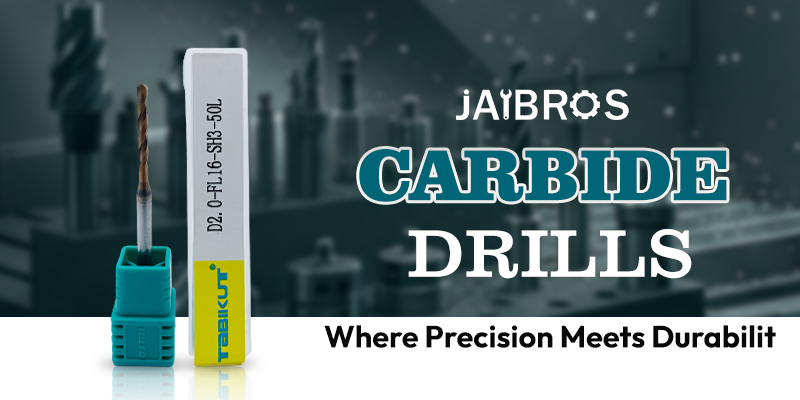
From automotive manufacturing to aerospace engineering, these tools are trusted for their strength, durability, and ability to handle demanding applications. In this blog, we'll explore why they are indispensable for CNC machining and how they contribute to better production performance.
The Importance of Precision in CNC Machining
Every CNC operation requires accurate hole dimensions, smooth surface finishes, and consistent results. Even a slight variation in drilling accuracy can affect the final product and increase production waste.
A premium carbide drill bits solution maintains its cutting edge for longer periods, helping manufacturers achieve consistent hole quality even during long production runs. This reliability is especially important in industries where precision is a top priority.
Superior Hardness and Wear Resistance
One of the biggest advantages of carbide tools is their exceptional hardness. Carbide materials are significantly harder than conventional high-speed steel, allowing them to maintain sharp cutting edges under extreme operating conditions.
Because of this hardness, solid carbide drill bits offer:
Excellent wear resistance
Improved dimensional accuracy
Reduced tool deflection
Longer operational life
Better performance at high cutting speeds
These advantages make them ideal for continuous production environments where downtime must be minimized.
Improved Performance in High-Speed CNC Drilling
Modern machining centers operate at high spindle speeds and feed rates. Standard drilling tools often struggle under these conditions due to excessive heat generation and rapid wear.
A high-quality carbide drill is specifically designed to withstand these demanding conditions. Its rigid construction reduces vibration while ensuring stable cutting performance throughout the machining process.
This results in:
Faster production cycles
Better chip evacuation
Reduced tool breakage
Increased machining efficiency
These benefits make carbide tools an excellent investment for manufacturers focused on productivity.
Ideal for Machining Different Metals
Manufacturers work with a wide range of materials, each presenting unique machining challenges. Choosing the right drilling tool helps maintain quality across different applications.
Premium drill bits for metal are commonly used for machining:
Stainless steel
Carbon steel
Alloy steel
Cast iron
Tool steel
Aluminum alloys
Their ability to maintain precision across multiple materials makes them suitable for both small workshops and large-scale manufacturing facilities.
Better Tool Life Means Lower Costs
Although carbide tools typically have a higher initial purchase cost than conventional drills, they often provide greater long-term value.
Since carbide drill bits remain sharper for longer, manufacturers experience:
Fewer tool replacements
Lower maintenance costs
Reduced machine downtime
Higher production efficiency
Improved return on investment
Over time, these savings outweigh the initial tooling expense.
Supporting Efficient CNC Drilling Operations
Successful CNC drilling depends on several factors, including spindle speed, feed rate, coolant application, and tool quality. Even with perfectly optimized machine settings, poor-quality tools can reduce machining performance.
Using premium carbide tools helps maintain:
Accurate hole positioning
Smooth surface finishes
Consistent chip removal
Stable machining performance
This consistency improves production quality while reducing rejection rates.
Tips for Selecting the Right Carbide Tool
When choosing a drilling tool for CNC applications, consider the following:
Workpiece Material
Different materials require different cutting geometries and coatings. Always match the drill to the material being machined.
Drill Diameter
Choose the correct diameter based on engineering specifications to maintain dimensional accuracy.
Coating Technology
Advanced coatings improve heat resistance and reduce friction, extending tool life.
Coolant System
Internal coolant channels improve chip evacuation and temperature control during high-speed machining.
Selecting the proper tool configuration ensures maximum productivity and longer service life.
Why Industries Depend on Industrial Drill Bits
Manufacturing sectors such as aerospace, automotive, medical, and heavy engineering rely on durable industrial drill bits because of their ability to deliver consistent results under challenging conditions.
These industries demand tools capable of producing thousands of accurate holes while maintaining tight tolerances. Carbide tooling meets these requirements by combining durability, precision, and reliability in a single solution.
As production requirements continue to grow, manufacturers increasingly depend on advanced drilling technologies to remain competitive.
Conclusion
For businesses focused on precision manufacturing, investing in carbide drill bits is a smart decision. Their exceptional hardness, superior wear resistance, and ability to perform during high-speed machining make them an essential component of modern CNC operations. Whether machining stainless steel, cast iron, or hardened alloys, the right drilling solution improves efficiency, accuracy, and overall productivity.
At Jaibros, we provide premium CNC cutting tools and machining solutions designed to meet the evolving needs of modern industries. Our wide range of quality tools helps manufacturers achieve reliable performance, longer tool life, and precision results across every machining application.
Comments
Log in or sign up to join the conversation.