

Here’s the number that made me stop scrolling this week:
82% of stocks are sitting above their 20-day moving average.
That’s not normal. That’s the kind of reading that makes you pause and think — okay, what’s really happening here?
Anything above 80% lands squarely in overbought territory. But before you start planning your crash positions, let’s get something straight: overbought doesn’t mean “sell everything now.” It just means the market’s stretched, and stretched markets typically do one of two things.
They either pullback, or they rotate.
Right now? I’m betting on rotation.
This Isn’t Your Average Rally — It’s a “Lockout”
Want to understand what’s really driving this move? It’s not retail FOMO or meme stock madness.
It’s systematic forced buying.
Here’s how it works: Earlier this year, CTAs and systematic funds got hammered. Their algorithms said “price broke below key levels, reduce exposure.”
So they dumped. Hard. Now those same levels have been reclaimed, and guess what? Their systems are screaming “buy.”
We’re talking pension funds, massive institutional players — they’re not buying because they suddenly love the market. They’re buying because they have to. Their risk models won’t let them stay underexposed when momentum is this strong.
That creates the kind of urgent, relentless buying pressure we’re seeing. No patient waiting for pullbacks. Just “get me in now” buying.
The Breadth Story Everyone’s Missing
Sure, 82% above the 20-day looks extreme. But zoom out and the picture gets interesting.
About 59% of stocks are above their 200-day moving average. That tells you this isn’t some narrow, fragile rally propped up by five mega-cap names. This thing has broad participation.
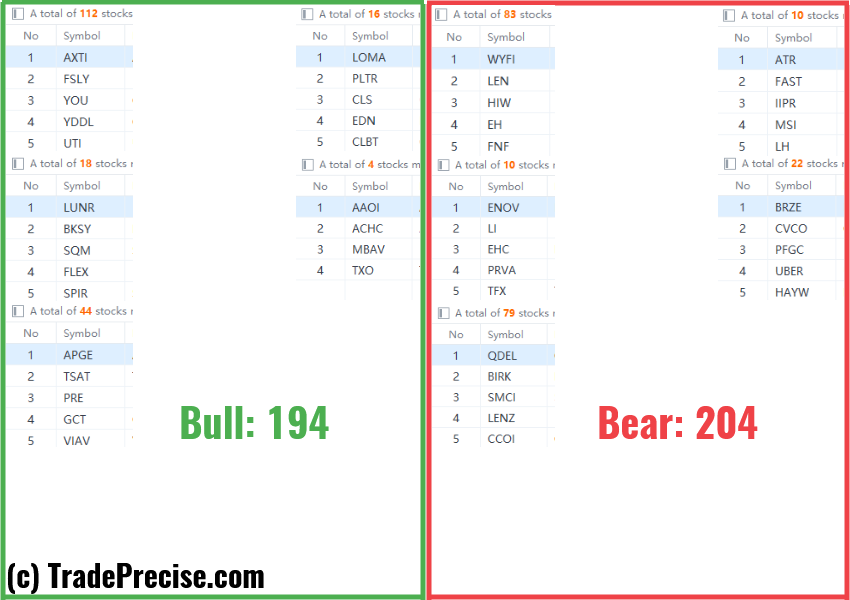
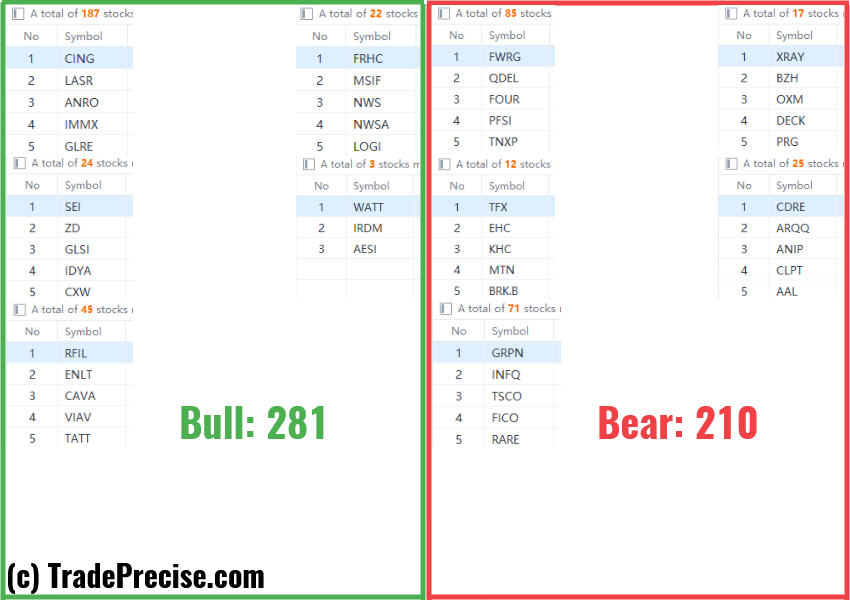
Even better? There are over 900 stocks showing bullish setups right now versus only 30 bearish ones. Cup-and-handles everywhere. Rounding bottoms. Tight flags just waiting to break out.
You know what that means? Money doesn’t need to flee the market. It just needs to rotate from what’s already extended into what’s still coiling.
Price Action That’s Genuinely Surprising
Let me tell you what I was expecting around the 7,000 level.
I figured we’d test that old all-time high, maybe get a shallow pullback, build a little handle, then continue higher. Standard stuff.
Instead? The market just walked right through 7,000 like it wasn’t even there.
No big volume spike. No distribution. No profit-taking wave. Just a clean breakout on normal volume straight to 7,200.
That’s not what usually happens at major resistance levels.
And yesterday? Bears had their shot. Gap down at the open — looked like the moment they’d been waiting for. But by the close, we were sitting near the highs, down less than 1%. The market literally shrugged off the gap.
When bad news can’t push prices down, the underlying bid is strong. Period.
Why the Headlines Don’t Matter Right Now
The news is still ugly. US-Iran tensions. No clear resolution. Plenty of reasons to worry.
But here’s the thing about markets — they price in expectations, not headlines. The worst-case scenario? Already baked in. What’s driving prices now is the belief that some resolution is coming, even if we don’t have details yet.
So when you see the market ignore geopolitical headlines, it’s not because traders are reckless. It’s because the market has already moved past that story.
What I’m Actually Doing Right Now
Am I chasing the photonics stocks that are up 40% in two weeks? Not a chance.
Am I shorting because we’re “overbought”? Also no.
Here’s my actual playbook: I’m hunting rotation setups.
While momentum names take a breather, smart money quietly shifts into the bases that haven’t broken out yet.
If you absolutely must play the extended names, wait for at least 2-3 days of tight consolidation. A short flag. A brief pause. Something that gives you a defined risk level instead of hoping for the best with a massive stop.
The Levels That Actually Matter
The trend is up. Full stop. But if you’re looking for downside targets, here’s what matters:
First level: 7,077 (last Friday’s low)
As long as we hold above this, the immediate upswing stays intact.
Major support: 6,900-7,000 zone
A pullback here wouldn’t be bearish at all. It’d actually be healthy. That’s where I’d expect buyers to flood back in and where fresh setups would emerge.
But honestly? There’s no sign of meaningful supply yet. Not a single candle has committed to the downside. Until real distribution shows up — actual profit-taking pressure — the path of least resistance stays up.
Bottom Line
Look, I get it. The market feels extended. The headlines are scary. Your gut says “this can’t last.”
But markets don’t care about your gut. They care about supply and demand. And right now, demand is winning by a landslide.
Here’s what I’m actually watching:
Don’t chase vertical moves — wait for structure
Hunt rotation plays — find the setups that haven’t moved yet
Respect the trend — it’s up until proven otherwise
Watch 7,077 — that’s your line in the sand
Use any pullback to 6,900-7,000 as opportunity, not panic
The market’s not broken. It’s just running hot. The smart play isn’t calling the top before supply shows up.
Because right now? It hasn’t.
Watch the in-depth analysis below:

Comments
Log in or sign up to join the conversation.