

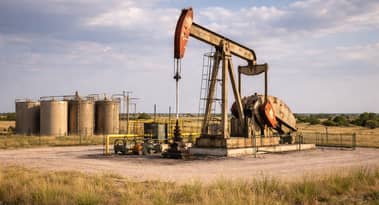
Brent and WTI fell over 5% as the US paused strikes on Iran early Monday.
Traffic through Hormuz stayed severely depressed despite the latest pause.
Analysts said crude was pricing restraint in the conflict, not resolution.
Oil prices fell more than 5% in early Asian trading on Monday as the United States and Iran paused attacks, prompting traders to unwind part of the geopolitical premium built into crude.
Brent crude futures dropped $4.89, or 5.05%, to $91.89 a barrel at 0009 GMT on Monday, after briefly falling below $90.
West Texas Intermediate declined $4.67, or 5.23%, to $84.64. Both benchmarks touched their lowest levels in nearly a week after three consecutive weekly gains.
The decline does not mean the Iran crisis has ended, but reflects a lower probability of an immediate supply shock, while the Strait of Hormuz remains heavily restricted and the pause remains uncertain.
Traders remove part of the war premium
The US decision to suspend its bombing campaign created space for diplomacy after 13 nights of strikes.
Iran said it would also hold fire for as long as Washington maintained its pause, although an Iranian official said that Tehran remained more sceptical than optimistic about the latest lull.
Oil markets often react to changes in the likelihood of disruption.
With an immediate escalation appearing less likely, traders reduced positions that had helped push Brent above $100 as Hormuz shipments slowed and attacks spread towards the Red Sea.
“Hopes are rising that a genuine diplomatic path may be opening,” IG Markets analyst Tony Sycamore said in a note. He said returning to the earlier 14-point memorandum, alongside greater clarity over Hormuz, could provide a starting point for de-escalation.
The fall also followed a powerful rally. Brent gained nearly 10% last week, encouraging profit-taking as the weekend pause reduced the urgency to hold bullish positions.
TD Securities’ macro research team told The Wall Street Journal that crude was “taking a breather”, with markets easing positions in anticipation, or hope, of another ceasefire.
The wording captures the provisional nature of Monday’s selloff: traders are pricing restraint, not resolution.
Hormuz remains the fault line beneath the selloff
The physical oil market has not returned to normal. Fewer than 10 commodity vessels crossed the Strait of Hormuz each day during the weekend, according to Kpler data.
Traffic through the Bab el-Mandeb Strait also declined on Sunday after Houthi attacks on Saudi oil installations along the Red Sea coast.
That route became more important as Gulf producers sought alternatives to heavily restricted Hormuz shipments.
MST Marquee analyst Saul Kavonic told Reuters that any recovery in Hormuz flows would probably be “slow and partial”.
Shipping companies are likely to demand stronger safety assurances before sending more empty tankers into the Gulf.
That gap matters as financial traders can remove a war premium within minutes, but rebuilding tanker traffic, insurance capacity and confidence can take much longer.
A renewed attack on ships or export infrastructure could therefore reverse the decline quickly.



Comments
Log in or sign up to join the conversation.