
You have probably seen the ads: a sleek air purifier humming quietly in the corner, promising to remove ninety-nine percent of mold spores from your home. It is an appealing solution, especially if you have noticed that musty smell or those dark spots creeping along the bathroom ceiling. But here is the hard truth that filter companies do not advertise. Running an probiotic air purification is like scooping water out of a boat while ignoring the hole in the hull. The machine will catch some spores, sure, but as long as the mold colony stays alive and actively growing, it will keep producing fresh replacements faster than any filter can trap them. Understanding why this happens and what actually stops mold requires looking at the biology of the problem rather than the marketing of the solution.
Mold Spores Are Everywhere No Matter How Hard You Filter
Let us start with a basic fact that changes everything. Mold spores are not rare invaders that sneak in occasionally. They are everywhere, all the time, indoors and out. Open a window, walk through a door, or simply let your pet come inside, and you have introduced more spores. A HEPA filter running twenty-four hours a day will capture a percentage of what floats past it, but it will never create a sterile bubble around your home. The air outdoors contains hundreds to thousands of spores per cubic meter, depending on the season and weather. So even if your purifier scrubs the indoor air perfectly, the moment someone opens the front door, the spore count resets. This means that trying to solve mold by filtering air is fundamentally fighting an endless, unwinnable battle against an infinite outdoor source.

What Air Purifiers Actually Remove Versus What They Miss
To be fair, a good HEPA purifier does remove airborne mold spores, and that is not worthless. Reducing airborne spores can help people with mold allergies breathe easier and experience fewer immediate symptoms like sneezing or watery eyes. But here is what the machine misses entirely. It does nothing to remove the surface colony growing on your window sill. It does not kill the hyphae—those threadlike roots—burrowing into your drywall. It does not stop the release of microbial volatile organic compounds, those invisible gases that create that classic musty smell and can cause headaches or fatigue. In fact, some purifiers create enough air movement to disturb settled colonies, actually increasing the spore count temporarily. So while your filter might show a lower particle count on its display, the active mold problem continues evolving right behind your furniture.
The Real Root Cause Hiding in Your Humidity Levels
If spores are not the real problem, what is? Moisture. Plain and simple. Mold is a water-loving organism that cannot colonize dry surfaces. Every single mold outbreak you have ever seen started because humidity stayed above sixty percent for more than forty-eight hours, or because a leak went unnoticed, or because condensation formed on a cold pipe or window. Researchers have known this for decades, which is why industrial hygienists do not reach for air purifiers when called to investigate a mold problem. They reach for moisture meters and thermal cameras. They look for the water source. Once you drop indoor humidity below fifty percent and keep it there, mold cannot establish new colonies, and existing ones dry out and stop releasing spores. An air purifier treats the symptom. Dehumidification treats the disease.
Why Killing Surface Mold Requires Physical Removal
Another common misconception is that something in the air—ozone, UV light, or ionized particles—can kill mold growing on your walls from a distance. That is not how mold biology works. Surface colonies are protected by sticky biofilms and complex root structures that penetrate porous materials. To actually solve a visible mold problem, you must physically remove the colony using mechanical action. Scrubbing with soap and water, wiping with a damp cloth, or in severe cases, cutting out and replacing contaminated drywall or insulation. No air purifier, regardless of price, can reach into your drywall and pull out hyphae. No UV light can bend around corners to hit the back side of your baseboard. The only way to eliminate an established colony is to get your hands dirty and remove it at the source.
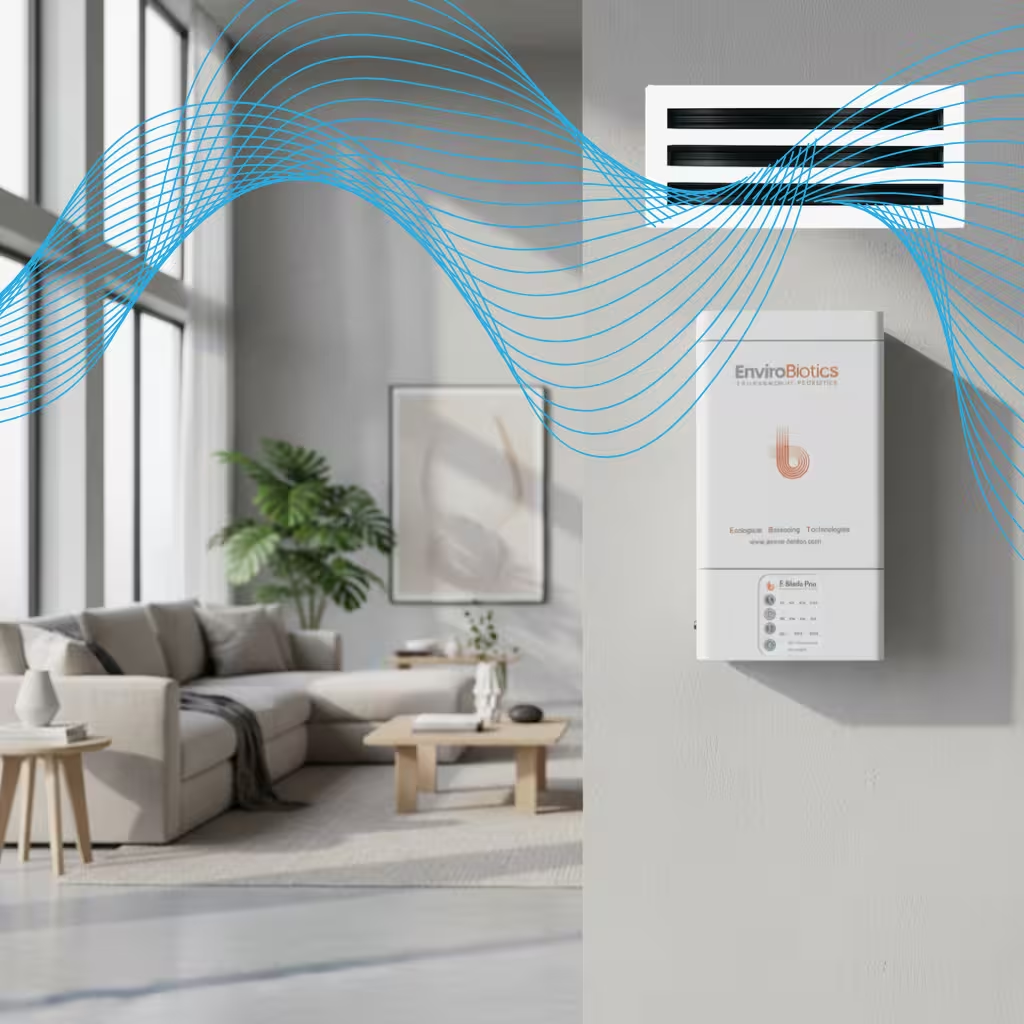
Probiotic Cleaning as a Long-Term Prevention Strategy
So if filtering and killing are both incomplete answers, what actually works for prevention? This is where newer probiotic-based approaches enter the picture. Instead of trying to create a sterile environment—which is impossible anyway—probiotic cleaners introduce beneficial bacterial spores that colonize surfaces and outcompete mold for food and space. These helpful microbes produce enzymes that break down the very organic matter mold would need to eat. They also attach to surfaces in a way that leaves no bare spots for mold spores to land and germinate. Hospitals and schools have used this approach successfully for years, not because it kills mold directly, but because it creates an ecological barrier. Think of it as planting a lawn of good microbes that leaves no bare soil for weeds. Unlike an air purifier that only affects what floats past, probiotic treatments work continuously on every surface they touch.
A Practical Action Plan That Actually Stops Mold
Bringing all of this together, here is a sequence that works far better than buying another air purifier. First, find and fix any water leaks or condensation issues. Second, learn more invest in a dehumidifier or improve ventilation to keep indoor humidity consistently below fifty percent—buy a humidity monitor to check. Third, physically clean any visible mold using soapy water and a scrub brush, wearing gloves and a basic mask. Fourth, for ongoing prevention in problem areas like basements or bathrooms, apply a probiotic surface spray every few weeks to maintain beneficial microbial coverage. Finally, if you still want an air purifier for allergy relief, place a small HEPA unit in your bedroom and run it on low, but understand that it is managing your symptoms, not solving the mold. The peace of mind you are looking for does not come from a filter. It comes from dry walls, steady humidity, and a home that has become genuinely unwelcoming to mold.
Comments
Log in or sign up to join the conversation.