

Learn why accurate edge finding is essential in CNC manufacturing. Improve precision, reduce waste, enhance tool life, and boost productivity.
Why Accurate Edge Finding Is Critical in CNC Manufacturing
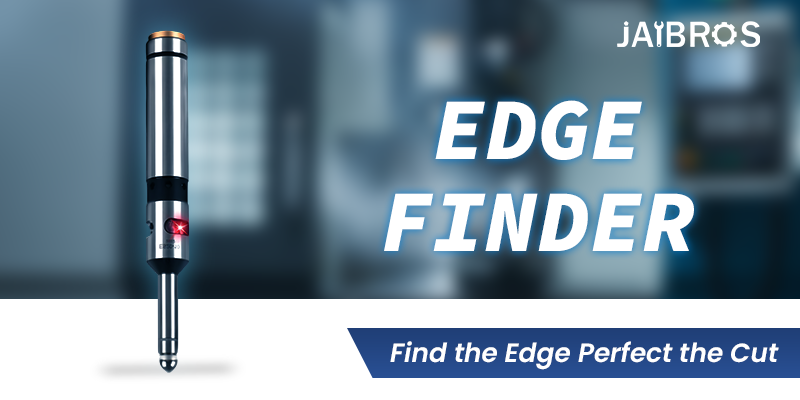
In CNC manufacturing, precision is everything. Even the most advanced machine and cutting tool cannot deliver accurate results if the workpiece's zero point is not established correctly. This is where an edge finder becomes one of the most valuable tools in any machining setup. It helps machinists locate the exact edge of a workpiece, ensuring proper alignment and accurate machining operations.
As industries demand tighter tolerances, higher productivity, and reduced waste, accurate edge detection has become increasingly important. Whether producing aerospace components, automotive parts, molds, or precision-engineered products, proper edge finding directly impacts quality, efficiency, and profitability.
In this blog, we will explore why accurate edge finding is critical in CNC manufacturing, the different types of edge finders, their benefits, and how they contribute to successful machining operations.
What Is an Edge Finder?
An edge finder is a precision tool used to determine the exact location of a workpiece edge relative to a machine spindle. Once the edge position is identified, machinists can establish accurate machine coordinates before beginning cutting operations.
The primary purpose of an edge finder is to eliminate guesswork and ensure that machining starts from the correct reference point. This is particularly important in CNC environments where even a small positioning error can affect the final product.
Modern machine shops use various types of edge finders depending on accuracy requirements, machine capabilities, and production demands.
Why Accurate Edge Finding Matters
Accurate edge location serves as the foundation for every machining operation. If the starting point is incorrect, all subsequent dimensions and tool paths become inaccurate.
Here are several reasons why precision edge finding is essential:
1. Ensures Dimensional Accuracy
CNC machines operate based on programmed coordinates. These coordinates must correspond precisely to the workpiece location.
When an edge is identified accurately:
Hole positions remain correct
Profiles match design specifications
Critical dimensions stay within tolerance
Assembly parts fit properly
A small setup error can multiply across an entire production run, resulting in costly rework or scrap.
2. Reduces Material Waste
Incorrect workpiece positioning often leads to damaged parts and wasted raw material.
Accurate edge finding helps:
Prevent machining outside intended boundaries
Reduce scrap rates
Improve material utilization
Lower production costs
In industries working with expensive metals such as titanium or stainless steel, avoiding waste can significantly impact profitability.
3. Improves Process Consistency
Manufacturers strive for repeatable results across multiple production batches.
Consistent edge detection enables:
Repeatable setups
Uniform part quality
Reduced variation
Improved process control
This consistency becomes particularly important in high-volume production environments.
4. Enhances Machine Efficiency
Machine downtime during setup directly affects productivity.
Accurate edge-finding procedures:
Reduce setup time
Minimize trial cuts
Improve workflow efficiency
Increase machine utilization
When operators can establish work coordinates quickly and accurately, machines spend more time producing parts.
The Role of Edge Finding in CNC Manufacturing
Every CNC program relies on a reference coordinate system. Before machining begins, operators must establish the relationship between the machine spindle and the workpiece.
This process involves:
Securing the workpiece
Locating reference surfaces
Setting work offsets
Verifying alignment
Starting production
An edge finder provides the precision needed to complete these steps effectively.
Without accurate edge location, even the best CNC programming cannot guarantee quality results.
Types of Edge Finders Used in CNC Shops
Several edge-finding technologies are commonly used in modern machining environments.
Mechanical Edge Finder
A mechanical edge finder is one of the most traditional and widely used solutions.
It consists of:
A shank mounted in the spindle
A spring-loaded contact tip
Precision-ground components
As the rotating tool approaches the workpiece edge, the tip suddenly shifts when contact occurs, indicating the edge location.
Benefits include:
Affordable cost
Simple operation
Reliable performance
Long service life
Many machine shops continue to rely on mechanical designs for routine setup work.
Electronic Edge Finder
An electronic edge finder uses electrical conductivity to detect contact between the tool and workpiece.
Advantages include:
Higher accuracy
Faster setup
Improved visibility
Reduced operator error
Electronic models often feature LED indicators that signal contact instantly, making them especially useful in modern CNC environments.
Dial Edge Finder
A dial edge finder incorporates a precision dial indicator to measure edge location.
Key benefits include:
Exceptional accuracy
Visual measurement feedback
Precise center finding
Reduced setup uncertainty
These tools are frequently used in applications requiring extremely tight tolerances.
Common Errors Caused by Poor Edge Finding
Failure to establish accurate workpiece coordinates can create numerous manufacturing problems.
Misaligned Features
Incorrect edge location may result in:
Off-center holes
Misplaced slots
Uneven pockets
Poor part geometry
These issues often require rework or complete part replacement.
Tool Breakage
Improper setup can cause cutting tools to engage material unexpectedly.
Potential consequences include:
Tool chipping
Premature wear
Spindle overload
Increased maintenance costs
Protecting valuable cutting tools starts with proper setup procedures.
Assembly Problems
Parts manufactured with incorrect dimensions may not fit correctly during assembly.
This can lead to:
Production delays
Customer complaints
Increased inspection costs
Reduced product reliability
Accurate edge detection helps maintain dimensional integrity throughout manufacturing.
How Edge Finders Improve CNC Tool Performance
Every cnc tool relies on accurate positioning to perform efficiently.
Proper edge finding contributes to:
Better Tool Life
Correct workpiece positioning ensures:
Consistent cutting engagement
Reduced tool stress
Lower vibration levels
Extended cutter lifespan
Improved Surface Finish
Accurate setup helps maintain intended tool paths.
Benefits include:
Smoother finishes
Better dimensional control
Reduced chatter
Enhanced product quality
Higher Productivity
Reliable setups reduce interruptions and corrections during production.
This leads to:
Faster cycle times
Fewer machine stoppages
Increased throughput
Greater operational efficiency
Edge Finding and Tight-Tolerance Manufacturing
Industries such as aerospace, medical device manufacturing, and automotive engineering demand extremely precise components.
In these sectors:
Tolerances may be measured in microns
Minor setup errors can cause failure
Quality requirements are strict
Traceability is essential
Accurate edge finding becomes a critical first step in maintaining these standards.
Manufacturers producing high-precision parts often combine advanced measuring equipment with high-quality edge finders to achieve exceptional accuracy.
Best Practices for Accurate Edge Finding
To achieve reliable results, machinists should follow proven setup procedures.
Keep Tools Clean
Contamination can affect measurement accuracy.
Always:
Clean contact surfaces
Remove chips
Eliminate coolant buildup
Inspect tool condition
Verify Machine Alignment
Machine geometry influences measurement accuracy.
Regularly check:
Spindle alignment
Table squareness
Machine calibration
Workholding stability
Use Appropriate Equipment
Different applications require different edge-finding methods.
Choose tools based on:
Required tolerance
Material type
Production volume
Machine capabilities
Train Operators Properly
Even advanced equipment depends on correct usage.
Operator training should cover:
Setup procedures
Measurement techniques
Calibration methods
Error prevention strategies
Selecting the Right Edge Finder
Choosing the correct edge finder depends on machining requirements.
Factors to consider include:
Accuracy Requirements
High-precision applications may benefit from:
Electronic systems
Dial indicators
Advanced probing solutions
Production Volume
For frequent setups, faster systems can significantly improve efficiency.
Material Type
Conductive materials often work well with electronic edge finders, while traditional options remain suitable for a broad range of applications.
Budget Considerations
The edge finder price varies depending on design, accuracy, and features.
While basic mechanical models are economical, premium electronic systems offer enhanced precision and productivity.
The right investment should balance cost with operational requirements.
Future Trends in Edge Finding Technology
As manufacturing evolves, edge-finding technology continues to advance.
Emerging trends include:
Wireless measurement systems
Integrated machine probing
Automated setup routines
Smart manufacturing integration
Real-time data collection
These innovations support Industry 4.0 initiatives by improving efficiency, accuracy, and process monitoring.
Although advanced automation is becoming more common, traditional edge finders remain essential tools in many machining operations due to their simplicity and reliability.
Conclusion
Accurate edge finding is one of the most important steps in CNC manufacturing. Establishing precise workpiece coordinates ensures dimensional accuracy, reduces material waste, improves tool life, and increases production efficiency. Whether using a mechanical, electronic, or dial-based solution, selecting the right edge-finding method can significantly impact machining performance and product quality.
For manufacturers seeking consistent results and tighter tolerances, investing in reliable setup tools is just as important as selecting the right cutting equipment.
About Jaibros
Jaibros is a trusted name in precision machining solutions, offering high-quality cutting tools and manufacturing products designed to meet modern industrial requirements. With a strong focus on performance, accuracy, and reliability, Jaibros helps machine shops and manufacturers improve productivity while maintaining exceptional machining standards.
FAQs
1. What is the purpose of an edge finder in CNC machining?
An edge finder is used to locate the exact edge of a workpiece so operators can establish accurate machine coordinates before machining begins.
2. Which is better: a mechanical or electronic edge finder?
Both have advantages. Mechanical models are cost-effective and reliable, while electronic versions offer faster operation and higher accuracy.
3. How accurate are dial edge finders?
Dial edge finders provide very high precision and are commonly used in applications requiring tight tolerances and accurate measurements.
4. Does accurate edge finding affect tool life?
Yes. Proper workpiece positioning reduces cutting stress, prevents unexpected tool engagement, and helps extend tool life.
5. How should I choose the right edge finder?
Consider factors such as accuracy requirements, production volume, material type, machine capability, and budget when selecting an edge finder.
Comments
Log in or sign up to join the conversation.