

The Importance of Precise Edge Finding in Modern CNC Machining
Introduction
Precision is the foundation of modern CNC manufacturing. Whether producing aerospace components, automotive parts, industrial machinery, or custom-engineered products, every machining operation depends on accurate positioning and alignment. Even a minor setup error can lead to dimensional inaccuracies, tool damage, material waste, and production delays.
One of the most important tools used to improve machining accuracy is an edge finder. This precision instrument helps machinists locate the exact edge of a workpiece before cutting operations begin. By establishing accurate reference points, edge finders ensure that machining operations start from the correct coordinates.
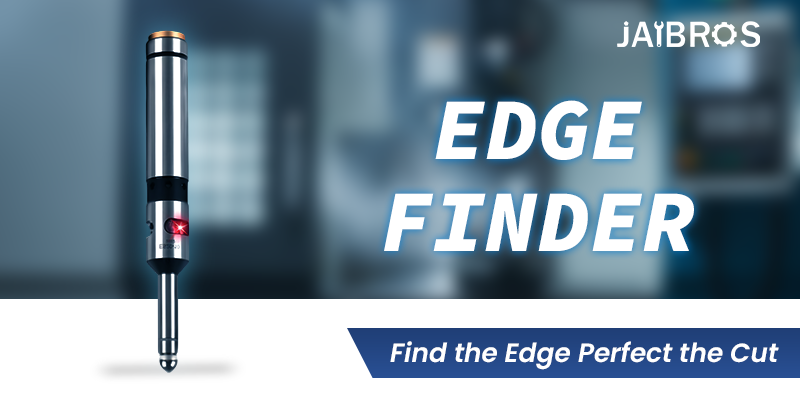
In modern CNC workshops, accurate edge finding is not just a setup procedure—it is a critical step that directly affects machining quality, productivity, and profitability. This article explains why edge finding is so important in CNC manufacturing, explores different types of edge finders, and highlights how proper edge detection improves overall machining performance.
What Is an Edge Finder?
An edge finder is a precision measuring tool used on milling machines and CNC machining centers to determine the exact location of a workpiece edge. Once the edge is identified, machinists can establish accurate X and Y reference points for machining operations.
An edge finder helps improve:
Setup precision
Machining accuracy
Repeatability
Production consistency
Tool positioning
Without accurate edge detection, machining errors become more likely, especially during high-precision manufacturing operations
Why Accuracy Matters in CNC Manufacturing
CNC machining depends heavily on precise coordinates. Every tool movement is programmed according to exact measurements. If the workpiece is not aligned correctly, the entire machining process can fail.
Poor setup accuracy can lead to:
Incorrect dimensions
Misaligned holes
Surface finish issues
Tool breakage
Increased scrap rates
Production downtime
Accurate edge finding eliminates these risks and helps maintain machining consistency throughout production cycles.
How Edge Finding Works
The edge-finding process involves locating the exact boundary of a workpiece using a rotating or electronically activated tool.
The general process includes:
Mounting the edge in the spindle
Rotating or activating the tool
Moving the spindle toward the workpiece
Detecting contact with the edge
Setting machine coordinates
A properly used edge finder allows machinists to establish reliable reference points before machining begins.
The Role of Edge Finding in CNC Accuracy
Improved Dimensional Precision
Modern CNC components often require extremely tight tolerances.
Even slight setup errors can affect:
Hole locations
Slot dimensions
Surface alignment
Thread positioning
Accurate edge detection ensures the workpiece is positioned correctly before machining operations begin.
Better Repeatability
Manufacturing environments require consistency across multiple production cycles.
finders help machinists:
Reproduce accurate setups
Maintain consistent dimensions
Reduce variation between parts
This is especially important for high-volume production environments.
Reduced Material Waste
Incorrect workpiece alignment often results in scrap parts.
Accurate edge finding reduces the chances of:
Misaligned cuts
Incorrect hole patterns
Machining outside tolerances
Reducing scrap improves production efficiency and lowers manufacturing costs.
Increased Productivity
Fast and accurate setup procedures reduce machine downtime.
Operators can complete setups more efficiently, allowing machines to spend more time cutting parts instead of adjusting coordinates
Types of Edge Finders Used in CNC Manufacturing
Different machining applications require different edge-finding methods.
Mechanical Edge Finder
A mechanical edge uses physical movement to identify the edge of a workpiece.
These tools usually feature:
Spring-loaded mechanisms
Rotating contact tips
Visual edge indication
Mechanical systems are widely used because they are simple, reliable, and cost-effective.
Electronic Edge Finder
An electronic edge finder uses electrical conductivity to detect contact between the tool and the workpiece.
When contact occurs:
A light activates
An audible signal sounds
The machinist identifies the edge position
Electronic systems are popular in CNC environments because they improve setup speed and reduce human error.
Dial Edge Finder
A dial edge finder includes an indicator dial that improves visual precision during setup operations.
These tools are commonly used when extremely accurate positioning is required.
Why Edge Finding Is Critical for CNC Machines
Modern CNC machines operate at high speeds and tight tolerances. Even minor positioning errors can become costly.
Precision Machining Requirements
Industries such as aerospace and medical manufacturing demand micron-level precision.
Accurate edge finding helps maintain:
Geometric accuracy
Positional tolerances
Surface quality
Automation and Repeatability
CNC manufacturing depends heavily on repeatable setups.
Reliable edge detection supports automated machining operations and improves process stability.
Multi-Axis Machining
Complex CNC operations require precise coordinate systems.
Edge finding ensures:
Correct work offsets
Proper tool alignment
Accurate machining paths
Reduced Human Error
Manual setup mistakes can cause serious machining problems.
Using a reliable finder helps minimize operator-related errors and improves production consistency.
Manual vs Electronic Edge Finders
Both manual and electronic systems offer unique advantages.
Manual Edge Finders
Advantages:
Affordable
Durable
Easy to maintain
Suitable for traditional machining
Limitations:
Requires operator skill
Slower setup process
Visual interpretation required
Electronic Edge
Advantages:
Faster setups
Higher repeatability
Easier operation
Improved precision
Limitations:
Higher cost
Requires batteries or power
More sensitive to coolant contamination
Choosing the right solution depends on machining requirements and production goals.
The Relationship Between Edge Finding and CNC Tools
Edge finders work alongside various advanced cnc tool systems used in precision machining environments.
Typical CNC setups may include:
End mills
Drills
Chamfer tools
Thread mills
Boring tools
Edge
Each tool contributes to machining accuracy, efficiency, and product quality.
Proper workpiece alignment ensures all CNC tools perform correctly during machining operations.
Common Problems Caused by Poor Edge Finding
Improper edge detection can create several manufacturing challenges.
Incorrect Tool Paths
Inaccurate coordinates cause tools to machine incorrect locations.
Poor Surface Finish
Misalignment often affects cutting consistency and surface quality.
Increased Tool Wear
Incorrect setups can overload cutting tools and reduce tool life.
Higher Production Costs
Scrap parts, machine downtime, and rework increase manufacturing expenses.
Accurate edge finding helps prevent these problems before machining begins.
Factors to Consider When Choosing an Edge Finder
Several factors influence tooling selection.
Machine Type
Determine whether the tool will be used on:
CNC milling machines
Manual mills
Tool room equipment
Accuracy Requirements
High-precision applications may benefit from electronic systems.
Operator Experience
Beginners often find electronic tools easier to use.
Workshop Environment
Harsh industrial conditions may favor mechanical systems.
Budget Considerations
The overall edge finder price should be evaluated alongside long-term productivity and performance benefits.
Best Practices for Accurate Edge Finding
Following proper procedures improves setup accuracy.
Keep Tools Clean
Dirt and chips can affect positioning accuracy.
Use Correct Spindle Speeds
Proper spindle speed improves edge detection reliability.
Minimize Machine Vibration
Stable machine setups improve precision.
Regularly Inspect Tools
Damaged edge may produce inaccurate readings.
Train Operators Properly
Operator skill plays a major role in setup quality.
Future of Edge Finding in CNC Manufacturing
As manufacturing technology advances, edge-finding systems continue evolving.
Emerging trends include:
Smart sensing systems
Digital setup technologies
Automated probing systems
Advanced CNC integration
Real-time measurement feedback
These innovations help manufacturers achieve even greater accuracy and efficiency.
Conclusion
Accurate edge finding is one of the most important setup procedures in CNC manufacturing. Proper workpiece alignment improves machining precision, reduces scrap, increases productivity, and helps maintain consistent product quality. Whether using a manual or electronic system, selecting the right edge finder can significantly improve machining performance and operational efficiency.
For manufacturers seeking dependable machining solutions, Jaibros offers a wide range of precision-engineered tooling products designed for modern manufacturing industries. From CNC cutting tools and edge-finding solutions to advanced machining accessories, Jaibros supports businesses with reliable products that help improve accuracy, productivity, and machining excellence.
FAQs
1. What is the main purpose of an edge finder?
An edge finder is used to locate the exact edge of a workpiece before machining operations begin.
2. Why is accurate edge finding important in CNC machining?
Accurate edge finding improves dimensional precision, reduces scrap, and ensures consistent machining quality.
3. What is the difference between mechanical and electronic edge finders?
Mechanical edge finders use physical movement for detection, while electronic edge use electrical signals to identify contact.
4. Which industries use edge finders most frequently?
Industries such as aerospace, automotive, medical manufacturing, and precision engineering commonly use edge finders.
5. How do edge finders improve productivity?
They reduce setup time, minimize machining errors, and help operators establish accurate reference points quickly.
Comments
Log in or sign up to join the conversation.