

Publishing news online has never been easier, yet building a profitable, high-converting digital publication feels harder than ever. Thousands of news blogs launch every single month, pouring massive effort into daily reporting, breaking headlines, and search engine optimization.
Yet, the harsh reality is that nearly eight out of ten news blogs fail to convert casual visitors into loyal readers, newsletter subscribers, or paying members. Most site owners blame their content strategy, the relentless social media algorithms, or declining reader attention spans.
While those factors play a role, the core issue is usually much simpler: your website's structural presentation is active working against you. If your site feels overwhelming, slow, or disorganized, readers bounce within seconds regardless of how brilliant your journalism is.
The Core Reasons News Blogs Struggle with Reader Conversion
1. Visual Overload and Layout Chaos
The classic news site trap is trying to show everything at once. When a user lands on a home page plastered with twenty different breaking news banners, competing sidebars, pop-ups, and auto-playing videos, their brain experiences immediate cognitive overload.
Instead of choosing an article to read, they choose to leave. Modern digital readers scan in an F-shaped pattern, looking for clear hierarchy, clean margins, and distinct content sections. When everything screams for attention, nothing gets read.
2. Slow Loading Speed on Mobile Devices
News readers are impatient, and the vast majority access content via smartphones while commuting or multitasking. If your article takes more than three seconds to load because of unoptimized scripts or bloated design elements, more than half your audience will hit the back button before reading a single headline.
Google prioritizes mobile-first indexing, meaning speed is not just a user experience metric—it directly impacts your organic search visibility.
3. Weak Internal Content Pathways
A reader clicks on your article from social media or Google, reads to the end, and then... nothing. There is no clear next step. If your site lacks intuitive related-content triggers, contextual links, or logical category pathways, you are leaking traffic.
Converting a reader requires increasing their dwell time. Every article should act as a gateway to three more related pieces of content.
4. Distracting Monetization Tactics
Monetization is essential, but aggressive ad placements ruin trust. Banner ads that shift content while reading, intrusive full-screen overlays, and deceptive sponsored content blocks signal to readers that your publication values short-term ad pennies over long-term reader trust.
High-converting news outlets balance revenue generation with clean, uninterrupted reading experiences.
How to Restructure Your News Blog for Maximum Retention
Fixing a low-converting news blog requires moving away from chaotic design and adopting a structured, reader-centric editorial layout.
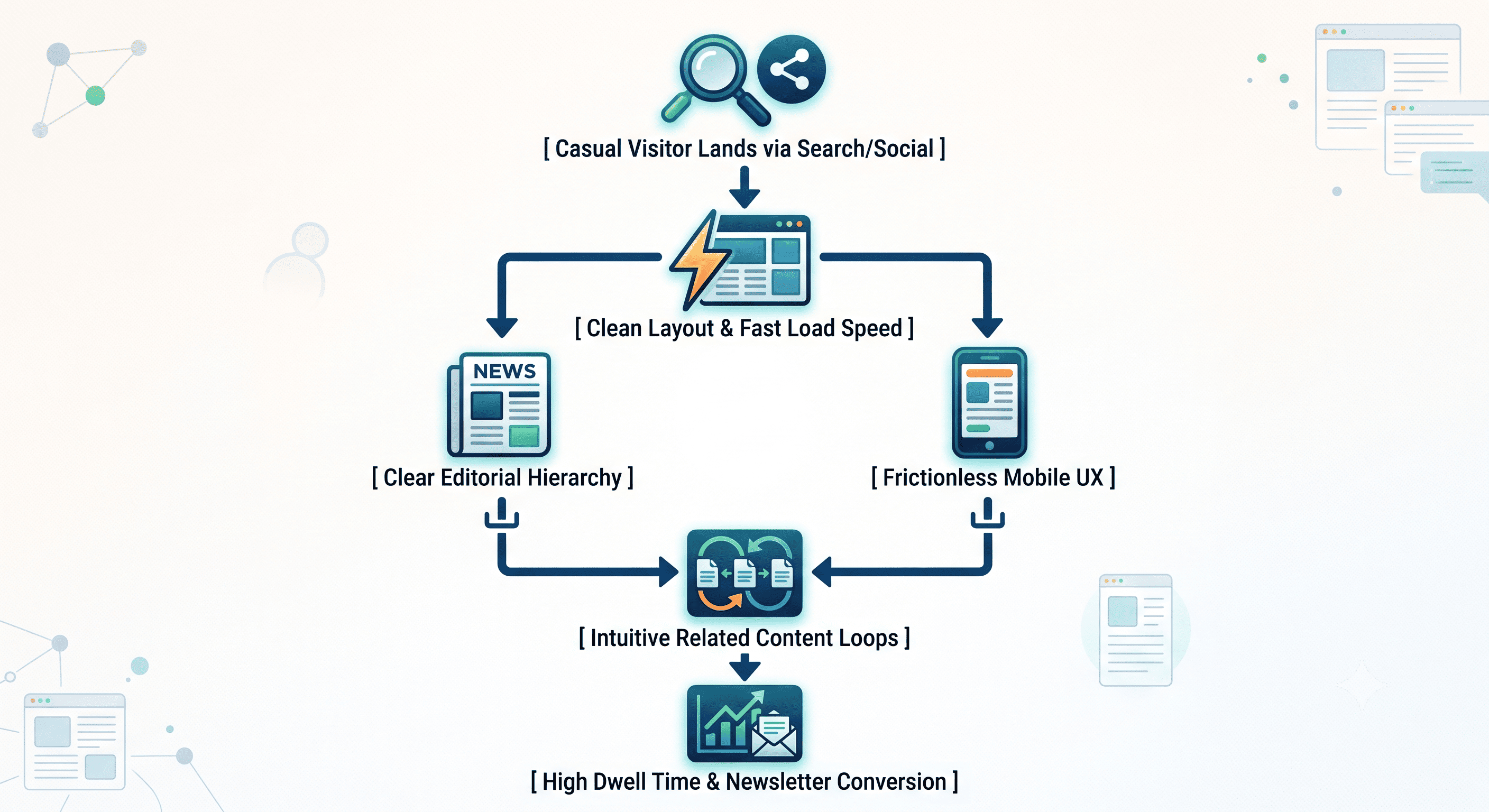
Optimize Your Editorial Visual Hierarchy
Your primary goal is to guide the reader’s eye effortlessly. Use bold, clear typography for headlines, distinct subheadings to break up long text blocks, and strategic whitespace to let your content breathe.
Structuring your home page into clear visual buckets—such as featured stories, trending topics, and category grids—helps users find topics of interest in seconds rather than searching through endless chronological feeds.
Upgrade to a Purpose-Built Layout Engine
Generic blogging themes are simply not engineered to handle the complex content volume of a busy news outlet. To showcase multiple categories dynamically while keeping load times exceptionally fast, modern digital publishers rely on specialized design frameworks.
Upgrading to a dedicated magazine theme gives you out-of-the-box access to responsive news grids, featured content sliders, breaking news tickers, and clean ad spaces designed specifically for media sites.
When searching for the best WP themes for news publishing, prioritize lightweight code, modular layout builders, and deep integration with popular SEO plugins to ensure your site scales gracefully as your readership grows.
Master the Art of the Content Loop
Never let a reader reach a dead end on your website. At the end of every article, feature hand-picked related stories rather than randomized posts.
Incorporate inline links within your body text to send readers deeper into your archive. Use sticky navigation bars with clear "Trending Now" links so readers always have an inviting next click readily available.
Streamline Your Conversion Opportunities
If your main goal is growing an email list or digital subscription base, stop using aggressive exit-intent pop-ups on every page. Instead, embed clean, contextually relevant signup boxes directly within your content stream or at the base of high-traffic articles.
Offer tangible value such as a daily morning news roundup or an exclusive investigative report rather than a generic "Subscribe to our newsletter" prompt.
Conclusion
Publishing successful online news isn't just about outputting high content volume; it is about building an ecosystem where readers feel informed, respected, and engaged. By eliminating layout clutter, optimizing your mobile experience, and adopting a dedicated magazine theme tailored for media publishing, you can transform your news blog from a high-bounce landing page into a thriving digital publication. Focus on user experience first, and conversions will naturally follow.
Comments
Log in or sign up to join the conversation.