


An increasing number of people will be entering first-time-home-buyer age, according to recent population estimates released by the Census Bureau. This suggests a stronger market for new construction, even if the first-timers buy existing houses.
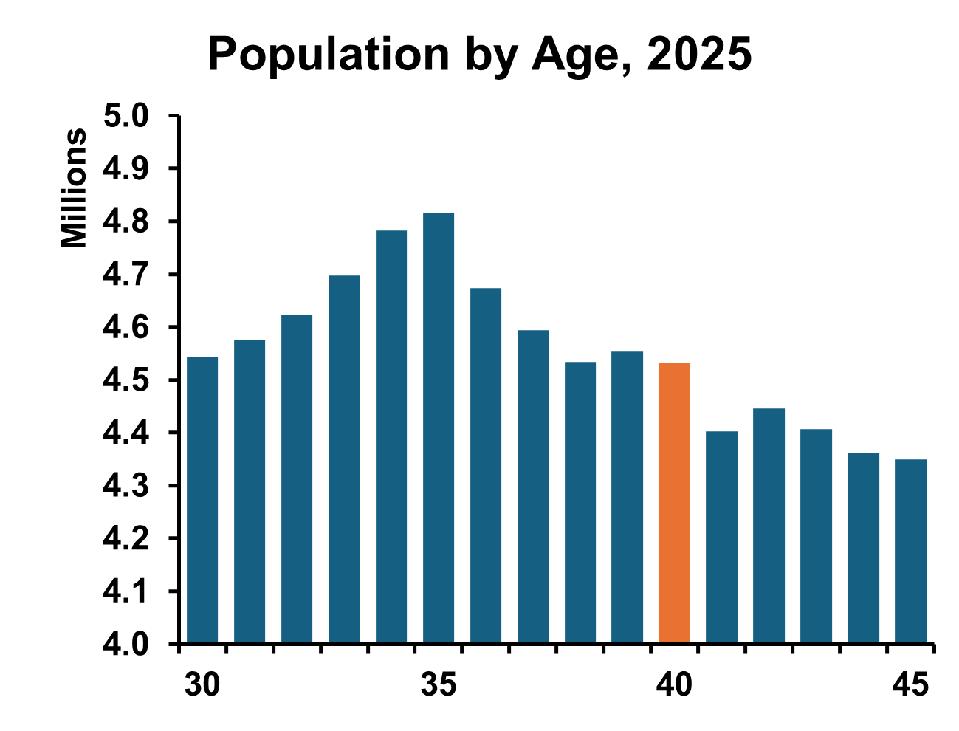
The National Association of Realtors reported last year that the median age of first-time home buyers was 40 years old. The number of 40-year-olds will rise in the coming years, boosting demand. The nearby chart shows the number of people by age, with the 40-year-olds in orange. (Data for all ages from zero to 100 are available; here we narrow in on the ages most important for first-time home buying.) Look at all of those 35-year olds. In five years, they will be 40. They outnumber current 40-year-olds by 280,000 people.
To put this into perspective, last year just over one million new single family houses were built. If those 280,000 additional buying-age people pair up to form 140,000 buying couples, they will boost demand for houses by about 14%.
These calculations are pretty crude. The 40-year-old median age was a record high and may not be repeated. Other surveys suggest a slightly lower median age. If the median age is lower, then the increase in demand will come sooner, maybe in just two or three years. Not all of the current 35-year-olds will live to be 40, but most of them will: 98.9% according to the most recent life expectancy tables.
Having more first-time home buyers will actually boost demand for newly-built houses, even though first-time buyers most often buy existing houses. Their purchases of older existing homes enable the sellers to move up into newly built houses. Increased demand anywhere on the age curve will boost demand for the new houses.
This demographic boost to home sales may sound surprising given the generally slow total population growth expected in the coming years. The most recent Census Bureau projections (2023 vintage) forecast less than one million annual natural increase in population in the next five years. “Natural increase” refers to the number of births minus deaths. Those projections also anticipated substantial net foreign immigration, which looks unlikely during the Trump administration. Even if a Democrat succeeds Donald Trump, the new president probably won’t repeat Joe Biden’s immigration policies. So how can we anticipate needing one million new houses when the total population increases by fewer than one million people?
The demand for housing of all types depends on the number of households rather than the population. Our average household size is falling, so we have more households relative to the total population. Over the past five years, we added 10 million new residents but six million new households.
The senior citizen population are mostly staying in their single family houses. Homeownership of people over 65 years old is high at 79%. And despite an aging population, the number of seniors will continue to increase for years, as we have many people in the 55 to 64 years old category.
The age pattern of our population and falling household size indicate a rising demand for single family houses, at the expense of apartment tenancy. This won’t trigger a boom—that would require substantially lower interest rates. But a solid increase in demand will help homebuilders and support house prices.


Comments
Log in or sign up to join the conversation.