
Introduction
Nataraja, the "Lord of Dance," is one of the most iconic and philosophically rich forms of Lord Shiva in Hindu tradition. Depicting Shiva as the eternal cosmic dancer, the Nataraja form captures the rhythm of creation, preservation and destruction that governs the universe. Revered across South India and celebrated as a masterpiece of Tamil bronze artistry, Nataraja represents far more than a dance pose — it embodies the very cycle of existence.
For devotees and art lovers alike, the Nataraja form is a profound symbol of balance, energy and divine grace, making it one of the most sought-after images in both temple worship and home devotion.
1. Who Is Nataraja and What Does the Form Represent?
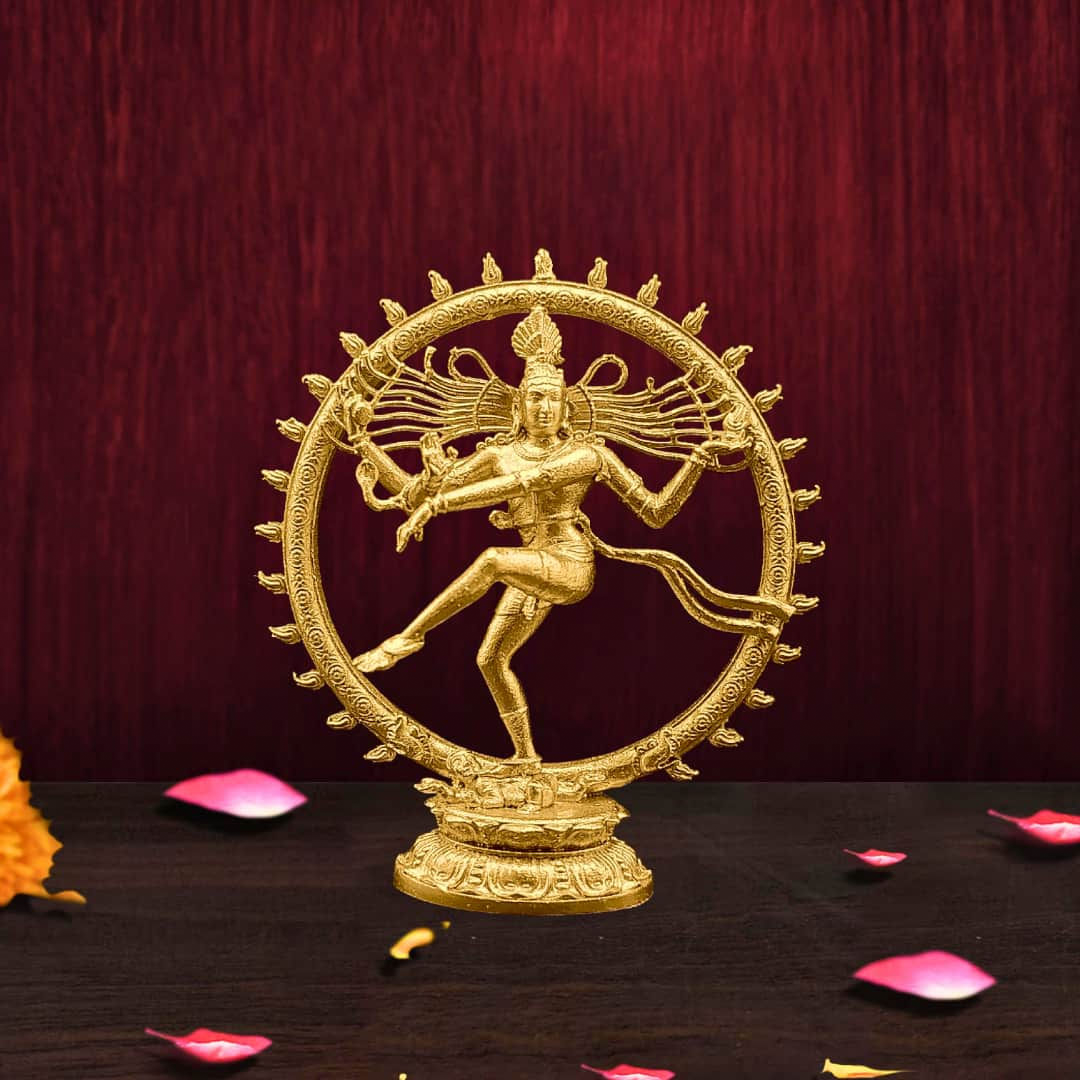
Nataraja is the dancing form of Lord Shiva, shown performing the Ananda Tandava, the "Dance of Bliss," within a circle of cosmic fire. This dance represents the five fundamental acts of the divine: creation, preservation, destruction, concealment and liberation.
Each element of the Nataraja icon carries deep meaning. The upper right hand holds a small drum (damaru) symbolizing the sound of creation, while the upper left hand carries fire, representing destruction. The lower right hand shows the gesture of protection (abhaya mudra), and the raised foot signifies spiritual liberation for the devotee.
2. The Symbolism Behind Nataraja's Cosmic Dance
Beneath Nataraja's feet lies the demon Apasmara, representing ignorance being crushed by divine knowledge and awareness. The encircling ring of fire, known as the Prabha Mandala, represents the boundless cycle of the cosmos itself, with Shiva as its eternal, unmoving center.
This union of movement and stillness within a single form has made Nataraja a subject of deep philosophical reflection, symbolizing how the universe is sustained through continuous, rhythmic change guided by divine order.
3. Mythology and Origins of the Nataraja Form
According to tradition, the Nataraja form is closely associated with the temple town of Chidambaram, believed to be the site where Shiva performed his cosmic dance before a gathering of sages. This event is central to Tamil Shaivite tradition and forms the philosophical foundation for how Nataraja is worshipped today.
Over centuries, the Nataraja icon became a defining symbol of the Chola bronze-casting tradition, with sculptors perfecting the dynamic yet balanced form now recognized as one of the greatest achievements of Indian temple art.
4. Nataraja Temples and Festivals
The Thillai Nataraja Temple in Chidambaram remains the most important center of Nataraja worship, where the deity is honored as both a cosmic dancer and the formless, supreme reality of Shiva. Festivals here, especially during Aani Thirumanjanam and Margazhi Thiruvadhirai, draw devotees who witness elaborate rituals celebrating the divine dance.
These celebrations reflect the deep devotional and artistic reverence Tamil tradition holds for Nataraja, blending spirituality, music and dance into a single sacred expression.
5. Nataraja Worship and Brass Idols for Home Pooja
Beyond temple worship, a Nataraja idol holds a special place in home pooja spaces, symbolizing balance, spiritual discipline and the rhythm of life itself. Crafted traditionally in brass, these idols are prized for their intricate detailing and the graceful energy they bring into a space.
A handcrafted brass Nataraja idol allows devotees to reflect daily on the deeper meaning of Shiva's cosmic dance — the harmony between creation and dissolution. For those seeking a traditionally crafted piece, IdolBrass offers a finely detailed Brass Nataraja Idol suited for home worship or devotional display.
Conclusion
Nataraja stands as one of the most profound representations of divine energy in Hindu art and philosophy, uniting movement, stillness, destruction and creation within a single sacred form. His dance continues to inspire devotion, art and reflection across generations.
For those wishing to bring this timeless symbolism into their own homes, IdolBrass's collection of traditional brass idols, including the Nataraja idol, offers a meaningful way to honor Lord Shiva's eternal cosmic dance.
Comments
Log in or sign up to join the conversation.