

The Fierce Village Guardian God, His Horse, Festival and Traditional Worship
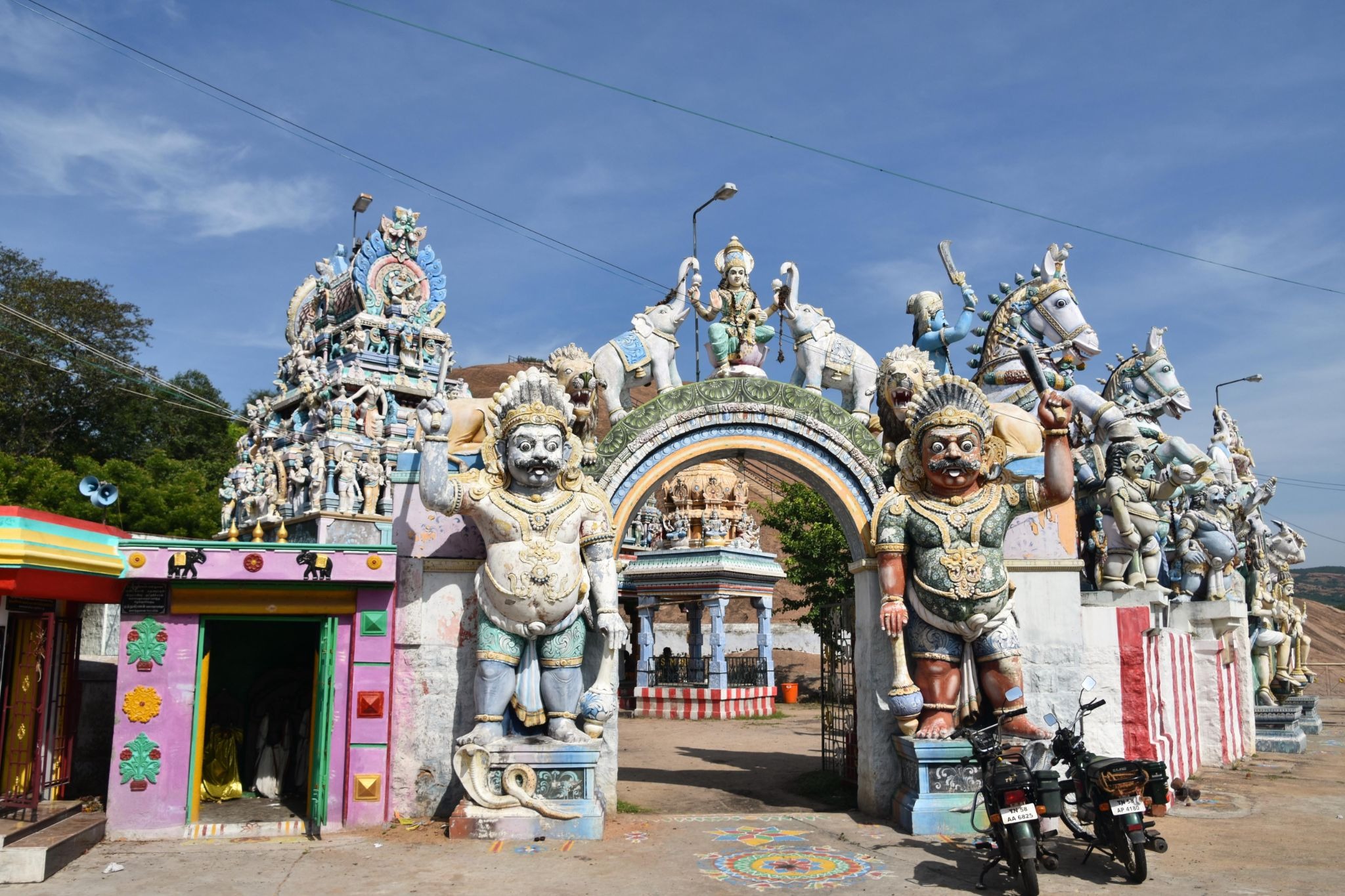
At the edge of many Tamil villages, where the houses end and fields, roads or open land begin, you may find a powerful-looking deity standing with a moustache, weapons and a horse.
His name is Karuppasamy.
He is not usually portrayed as a calm deity sitting quietly inside a grand temple. Instead, he is often shown as a fierce protector, ready to guard the village, its people, cattle, fields and temple boundaries.
For generations, rural communities have worshipped Karuppasamy as a Kaval Deivam — a guardian deity. His worship is especially associated with Tamil folk religious traditions and village life.
Who Is Karuppasamy – The Kaval Deivam of the Village?
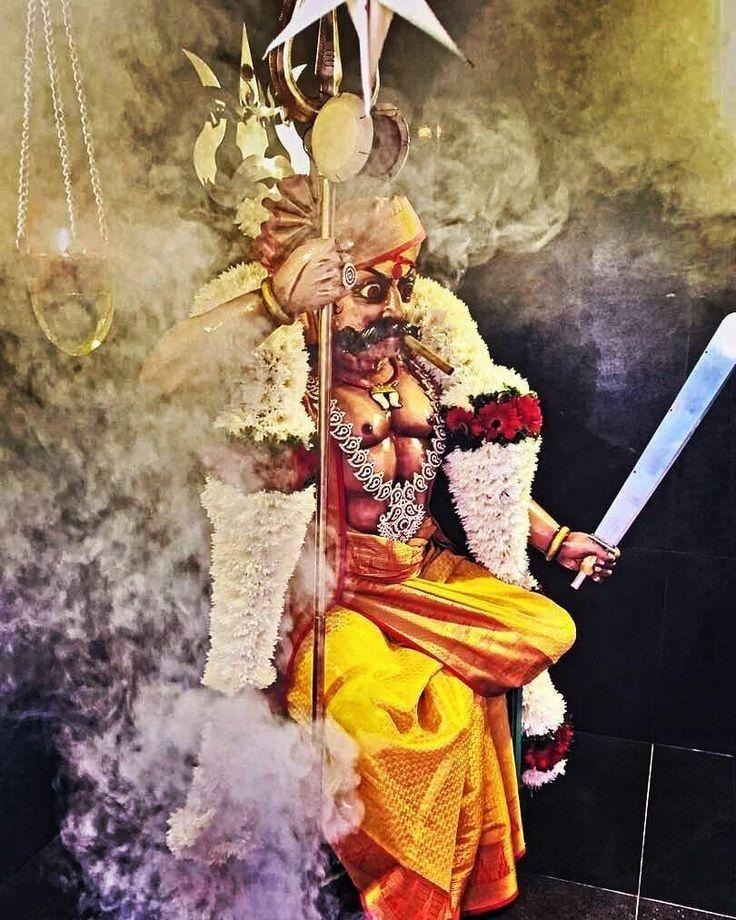
Good people should feel protected. Wrongdoing should be feared.
Why Is Karuppasamy Shown With a Horse?
The horse is one of the most recognisable features associated with Tamil village guardian traditions.
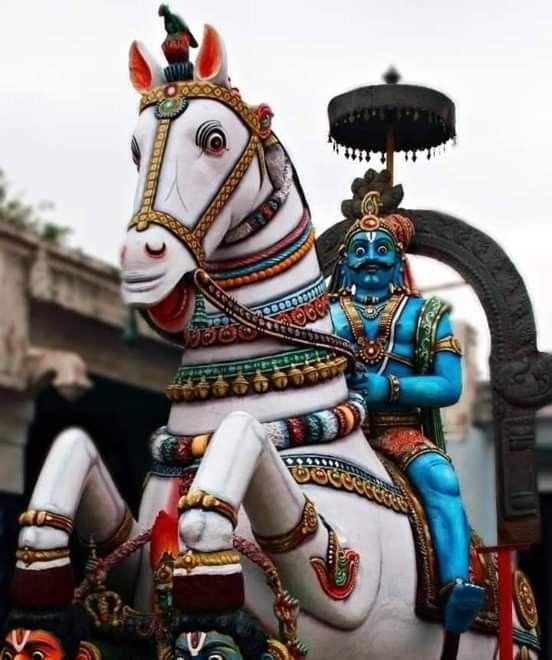
A horse represents speed, movement, strength and readiness.
A guardian who has to protect a village cannot remain in one place.
In traditional belief, guardian deities such as Ayyanar are associated with riding around the village boundary, and Karuppasamy is closely connected with this protective system.
That is why horses are such an important visual element around many rural guardian shrines.
What Weapon Does Karuppasamy Carry?
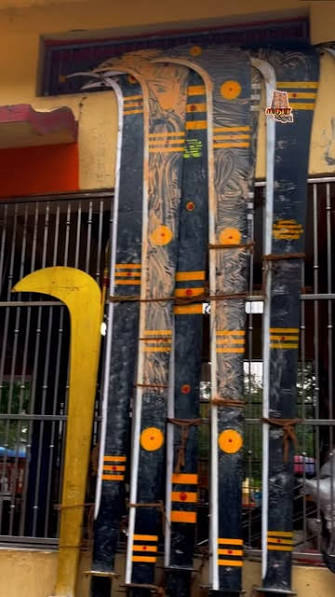
One of the most famous weapons associated with Karuppasamy is the aruval, a traditional curved sickle or billhook.
Karuppasamy festivals are often deeply connected with the local village community.
In many places, the annual celebration is known as a Kodai festival, although names, dates and rituals vary from village to village.
The festival may include:
Special pooja
Village processions
Drumming and traditional music
Decorations
Community gatherings
Pongal preparation
Offerings
Family prayers
Traditional vows
In some traditions, trance or sami aadal
These celebrations are not simply temple events.
They can become a whole-village occasion, bringing families together and strengthening the community's connection with its ancestral traditions.
What Food Is Traditionally Offered to Karuppasamy?
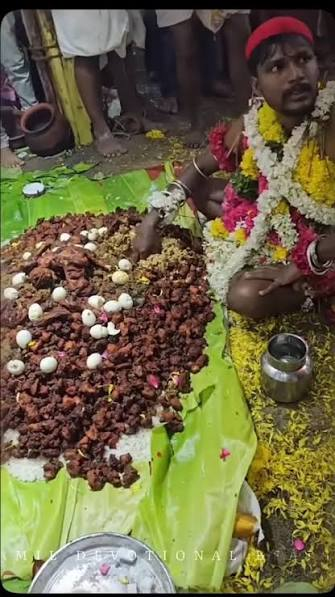
Karuppasamy traditions also include non-vegetarian offerings, including goat or rooster, and in some communities traditional offerings of toddy. These practices are not universal and vary according to the particular temple and local custom
For example, Tamil Nadu Tourism's description of Navaladi Karuppasamy Temple notes that devotees offer cock and goat and prepare Pongal at the temple as part of its local tradition.
Conclusion
The Guardian Who Never Sleeps
Karuppasamy is one of the most powerful figures in Tamil village religious tradition.
Karuppasamy — the Kaval Deivam of the Tamil village, standing strong at the boundary and watching over his people. 🙏
Comments
Log in or sign up to join the conversation.