

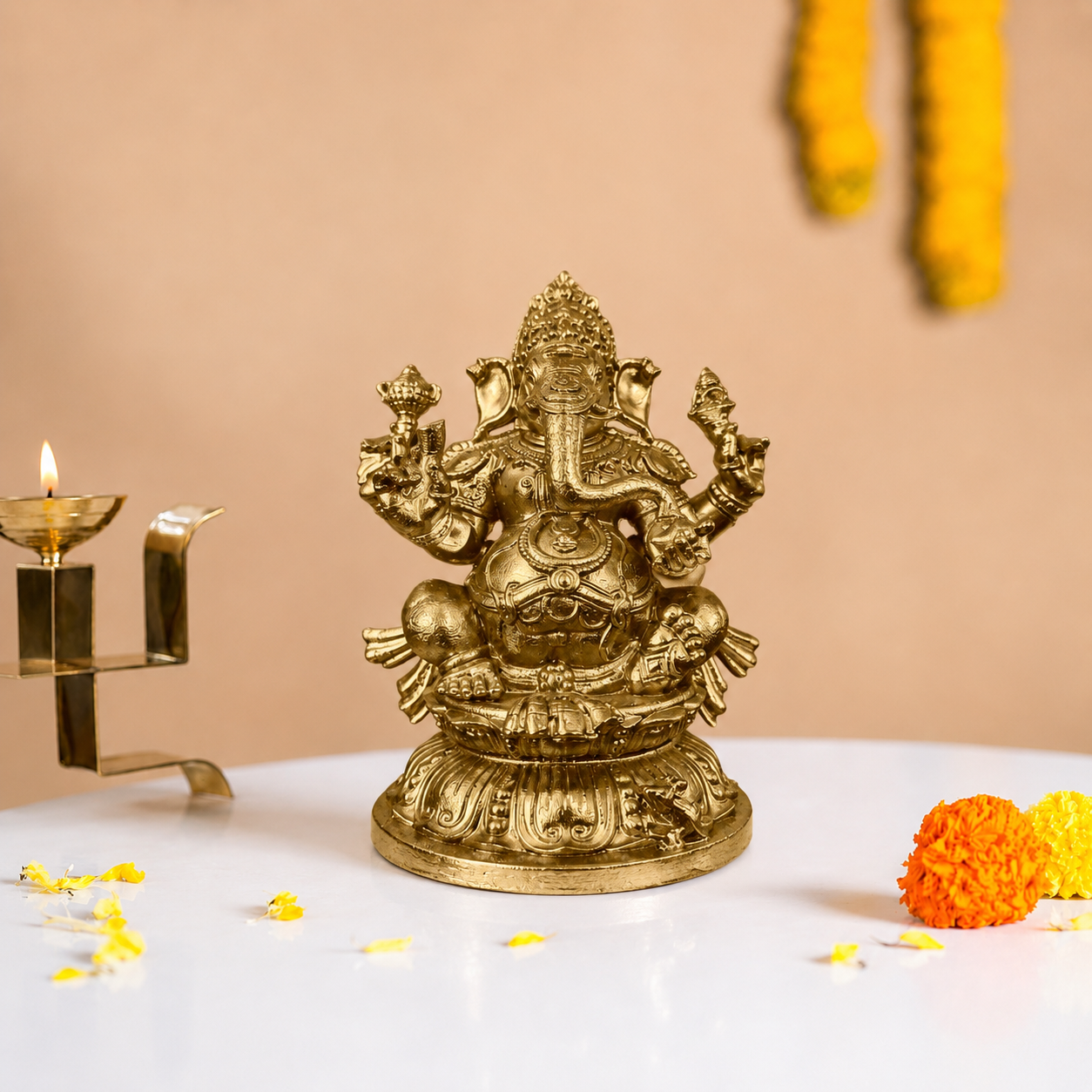
Lord Ganesha is the first deity invoked before any new beginning — a wedding, a housewarming, a new business, even the start of a puja to another god. It's no surprise, then, that a Ganesha idol is one of the most common murtis found in Indian homes. But not every Ganesha idol suits every home. The posture, the direction of the trunk, and the material all carry meaning in Hindu tradition and Vastu Shastra — and getting them right makes a real difference to how the idol is worshipped and cared for over the years.
Here's a practical breakdown of what to look for, including why a brass idol of Ganesha remains the most popular choice for everyday worship.
Trunk Direction: Left or Right?
The single most-asked question when choosing a Ganesha idol is which way the trunk should curve.
Left-facing trunk (Vamamukhi) is the form most commonly recommended for home worship. It's associated with domestic harmony, gentle prosperity, and ease of daily ritual — this form doesn't demand the strict, unbroken worship routine that the right-facing form does, which makes it practical for a regular household.
Right-facing trunk (Dakshinamukhi, sometimes called Siddhi Vinayaka) is considered a more intense, powerful form of the deity. It's traditionally associated with temples and highly disciplined worshippers who can commit to strict daily rituals, rather than casual home use.
For the vast majority of homes, a left-trunk Ganesha idol is the safer, more sustainable choice — easier to live with, and just as auspicious for everyday blessings.
Sitting or Standing?
Beyond the trunk, posture matters too. A seated Ganesha, often shown in a relaxed or royal-ease pose, is generally preferred for the home. The sitting posture is read as a sign of permanence — Ganesha settling in and staying to bless the household — while standing or dancing forms are usually reserved for décor pieces or spaces outside the main pooja area, since they carry a more active, restless energy.
Where to Place the Idol
Vastu guidance for Ganesha idol placement is fairly consistent across tradition:
The northeast corner (Ishan Kona) is considered the most auspicious spot in the home, since it's regarded as the meeting point of positive cosmic energies. North or east-facing placements are also considered favorable.
Keep the idol elevated — on a shelf, platform, or dedicated mandir — never directly on the floor.
Avoid the bedroom. Classical Vastu treats the bedroom as a space of rest rather than worship, so a separate pooja corner or cabinet is preferred.
Avoid placing the idol against a wall that backs onto a bathroom, and steer clear of spots under a staircase or near clutter.
Keep the surrounding area clean — stale flowers, dust, and general clutter around the idol are considered to block the flow of positive energy.
Why Brass Remains the Preferred Material
You'll find Ganesha idols in wood, marble, clay, silver, and stone — but brass idols for pooja room use remain the most common choice across Indian households, for a few clear reasons:
Ritual-friendly. Brass holds up to daily abhishekam, kumkum, sandalwood paste, and regular cleaning far better than painted or unfinished materials.
Ages well. A well-maintained brass statue develops a richer glow over time rather than wearing out.
Low-maintenance. A simple soft-cloth wipe or occasional natural polish keeps a brass idol looking cared for, without specialized upkeep.
Flexible in size. From a palm-sized Ganesha for a small altar to a larger brass sculpture for a dedicated pooja room, brass scales comfortably either way.
Because of this, brass is often the default recommendation whenever someone asks which material to choose for daily home worship — it strikes the balance between sanctity, durability, and ease of care.
Brass Idol in Chennai: A Region Known for the Craft
Tamil Nadu, and towns close to Chennai such as Swamimalai, have practiced traditional bronze and brass idol-making — including the ancient lost-wax casting method — for generations. A brass idol in Chennai sourced from an experienced workshop typically reflects this inherited craftsmanship: precise iconography, correctly proportioned features, and a smooth, well-finished cast.
When choosing a brass sculpture of Ganesha from this region, it helps to check for:
Clean, symmetrical features and a properly shaped trunk, ears, and belly.
A smooth, unbroken finish on the base and back of the statue.
Whether the piece is hand-finished, which generally holds fine detail better over decades than a purely machine-cast piece.
Pairing Ganesha with Other Brass God Idols
Ganesha is rarely worshipped in isolation. Many households keep a small collection of brass god idols together — most commonly Ganesha paired with Goddess Lakshmi, since Ganesha is invoked to remove obstacles while Lakshmi brings prosperity once the path is clear. A Ganesha-Lakshmi brass pair is one of the most widely kept combinations in Indian pooja rooms, especially around Diwali.
Ganesha Brass Idols as Return Gifts
Small Ganesha idols have become one of the most popular return gift choices at Indian celebrations — housewarmings, weddings, baby ceremonies, and Ganesh Chaturthi gatherings in particular. A compact brass Ganesha works well as a return gift because:
It's auspicious and appropriate for religious or family occasions, unlike generic gift items.
Smaller sizes keep the cost manageable even when gifting an entire guest list.
It's something guests are genuinely likely to place in their own home rather than set aside.
Caring for a Brass Ganesha Idol
A little regular care keeps a brass idol looking its best for years:
Wipe with a soft, dry cloth after each use to prevent buildup from kumkum, turmeric, or oil.
Use a mild, natural cleaner rather than harsh chemicals when polishing.
Keep the idol away from prolonged direct moisture.
Support larger or antique brass sculptures at the base when moving them, since older pieces can be more delicate at the joints.
Final Thoughts
If you're bringing home a Ganesha idol for daily worship, the safest combination is a left-facing trunk, seated posture, placed in the northeast, and made of brass. It's a form that's easy to live with, easy to maintain, and considered auspicious for practically every household. Whether it's a small brass idol for a home shelf, a larger centerpiece for a dedicated pooja room, or a set of small Ganesha idols picked out as return gifts for a family celebration, choosing thoughtfully on material and form makes the idol something you'll keep — and worship — for years to come.
Contact Us
Comments
Log in or sign up to join the conversation.