

Brochure paper is not just about thickness or shine. The best paper for custom brochure printing depends on what you want the brochure to do. If you need vibrant product images, glossy paper often works well. If you want a premium and elegant feel, matte or silk finishes are commonly preferred. For brochures that contain heavy text, writable areas, or a more sophisticated look, uncoated paper can be a practical choice. Choosing the right paper affects durability, readability, and how customers perceive your brand from the first touch.
Businesses often spend time perfecting design elements but overlook the material itself. The reality is that paper choice can influence how people interact with your brochure and whether they keep it or throw it away.
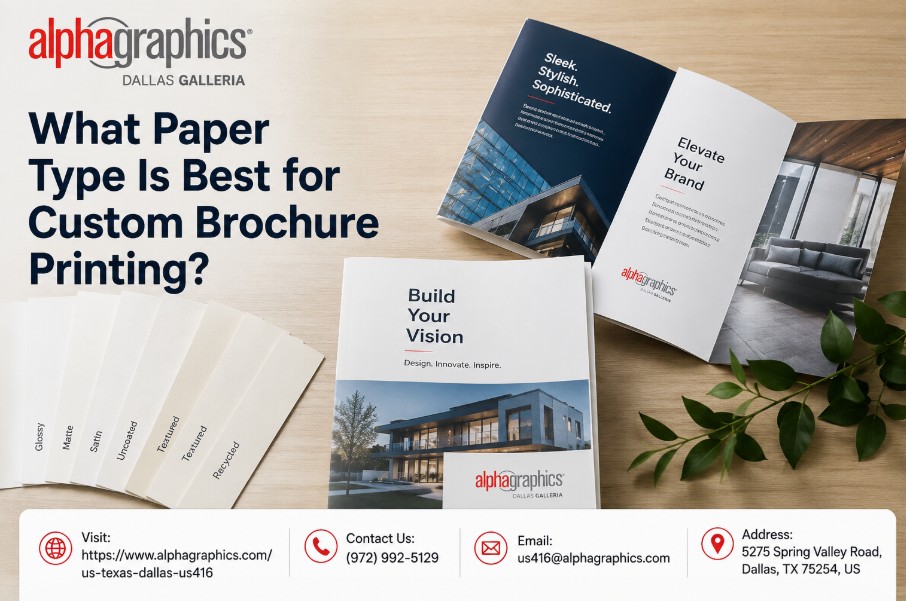
Why Does Paper Type Matter in Custom Brochure Printing?
A brochure acts as a physical representation of your business. Before someone reads a headline or sees an offer, they notice how the brochure feels in their hands.
Paper selection affects:
· Color appearance and print quality
· Durability during handling
· Overall presentation
· Customer perception
· Cost of production
For example, a luxury real estate brochure and a restaurant takeaway brochure have completely different requirements. One needs a premium finish, while the other may focus on affordability and practical distribution.
Many businesses working with a professional print shop dallas provider ask about paper options before finalizing the design because the material directly impacts the final result.
What Are the Most Common Paper Types for Brochures?
Different projects call for different materials. Here are some widely used options in custom brochure printing services.
Gloss Paper
Gloss paper has a shiny surface that makes colors appear brighter and images more vibrant.
Best for:
· Product catalogs
· Travel brochures
· Fashion brochures
· Marketing pieces with heavy visuals
Advantages:
· High color contrast
· Strong visual impact
· Professional appearance
Things to consider:
The glossy surface can sometimes create glare under bright lighting and may be difficult to write on.
Matte Paper
Matte paper provides a smooth finish without the reflective shine.
Best for:
· Corporate brochures
· Educational materials
· Luxury branding
Advantages:
Easy readability
Sophisticated appearance
Fingerprints are less noticeable
Many brands prefer matte because it balances professionalism with a premium feel.
Uncoated Paper
Uncoated paper has a natural texture and absorbs ink differently compared to coated materials.
Best for:
· Appointment cards inside brochures
· Writing-friendly documents
· Eco-conscious brands
Advantages:
· Easy to write on
· Natural appearance
· Minimal glare
Silk or Satin Paper
Silk paper sits between matte and gloss finishes.
Best for:
· High-end promotional brochures
· Business presentations
· Event marketing materials
Advantages:
· Smooth texture
· Rich colors without heavy reflection
· Premium feel
How Thick Should Brochure Paper Be?
Thickness matters as much as finish. Paper thickness is generally measured in GSM (grams per square meter).
Common brochure ranges include:
100–130 GSM
Suitable for:
· Folded flyers
· Large-volume distribution
150–170 GSM
Suitable for:
· Standard marketing brochures
· General business use
200–300 GSM
Suitable for:
· Premium brochures
· Luxury branding pieces
Thicker does not always mean better. Very thick paper can become difficult to fold, especially for brochures with multiple panels.
An experienced printing team can usually suggest practical options based on purpose and design.
How Does Design Influence Paper Selection?
Design and paper work together. A strong design placed on the wrong paper can reduce impact.
For example:
· Image-heavy brochures often look stronger on glossy paper.
· Text-focused brochures may perform better on matte surfaces.
· Premium minimalist designs often benefit from silk finishes.
Businesses investing in graphic design dallas tx services frequently consider paper selection during the design stage instead of treating it as a final step.
Design professionals understand how colors, spacing, and imagery interact with different materials.
This is one reason many local businesses consult experienced providers such as AlphaGraphics Dallas Galleria during planning rather than after completing artwork. Paper recommendations often become part of the discussion alongside layout and printing requirements.
How Can You Choose the Right Paper for Your Business?
Before selecting a paper type, ask these questions:
Who will receive the brochure?
A luxury audience and a general consumer audience often respond differently.
What is the brochure's purpose?
Is it intended for branding, information sharing, events, or direct sales?
How long will it be used?
Temporary promotions may not need premium stock.
Does the design rely heavily on images?
Image-rich content usually benefits from coated paper.
What is the printing budget?
Paper choices influence total production cost.
Businesses looking for guidance often discuss these details with professionals at AlphaGraphics Dallas Galleria because recommendations vary from project to project rather than following one fixed approach.
The best paper for custom brochure printing depends less on trends and more on purpose. Gloss, matte, silk, and uncoated materials all have advantages depending on audience, design style, and business goals. A brochure should not only look attractive but also support the message you want to deliver.
If you are planning a brochure project and want practical advice on design, paper selection, and printing quality, working with experienced teams such as AlphaGraphics Dallas Galleria can help you make informed decisions while keeping your marketing materials aligned with your goals.
Frequently Asked Questions (FAQ)
What paper weight is best for custom brochure printing?
For standard brochures, 150–170 GSM works well. Premium brochures commonly use 200–300 GSM paper.
Is glossy paper better than matte paper?
Neither is universally better. Glossy paper enhances images, while matte paper improves readability and creates a softer premium appearance.
Can brochures be printed on eco-friendly paper?
Yes. Many printing providers offer recycled and sustainable paper options for environmentally conscious businesses.
Does thicker paper improve quality?
Not always. Extremely thick paper can make folding difficult. The right balance depends on the brochure style and purpose.
Should I choose paper before designing the brochure?
Yes. Paper affects color output and presentation, so selecting it early often produces better results.
Comments
Log in or sign up to join the conversation.