
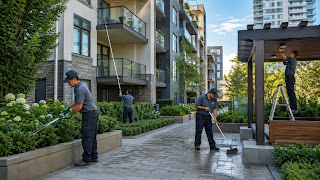
Most warehouse managers wait too long before calling in outside help. The floor gets swept in-house for months, sometimes years, until someone notices grime building up in corners or a forklift operator mentions the surface feels slippery near the loading bay. By then, what could have been a quick maintenance job turns into a deep clean that takes days instead of hours. Knowing the right time to bring in a professional crew saves both money & risk.
Signs Your Current Routine Isn't Enough
In-house cleaning usually covers the basics, sweeping & the occasional mop pass. But warehouses deal with oil drips, concrete dust & packaging debris that regular tools can't fully lift. If floors look dull even right after cleaning or if dust resettles within a day, that's a sign the surface needs equipment beyond what most staff have access to, like industrial scrubbers or pressure washing systems. Keep your property in top condition with expert strata property maintenance - explore online now.
When Safety Becomes the Deciding Factor
Once slip incidents start showing up in safety logs, that's no longer a maintenance question, it's a liability one. Facilities managing large teams often compare notes with strata property maintenance standards used in commercial buildings, where cleaning schedules are tied directly to safety compliance rather than appearance. Warehouses are catching up to that mindset, treating floor condition as part of workplace safety audits instead of a cosmetic task.
Seasonal and Operational Triggers
Warehouses handling heavy freight or seasonal stock surges usually see faster floor wear during peak months. Rain & mud tracked in from outside during certain seasons also speeds up buildup near entry points. Scheduling a professional clean before these high-traffic periods, rather than after problems appear, keeps the floor from becoming a hazard when foot as well as vehicle traffic is at its highest.
The Bigger Shift in Facility Care
Across the cleaning industry, warehouses are moving toward the same preventive model long used in strata property maintenance for residential & commercial complexes, scheduled upkeep instead of reactive fixes. This shift is driven by insurance requirements as well as stricter safety audits, both of which now look at floor condition as a measurable risk factor.
If your facility is seeing more dust resettling, visible oil stains or reports of slippery patches, that are the point to bring in a professional company rather than stretching an in-house routine further.
Author Resource:-
David Alexander is an independent content writer specializing in property maintenance and cleaning service industries. You can find his thoughts at building cleaning blog.
Comments
Log in or sign up to join the conversation.