
Every year, hundreds of ambitious founders set their sights on Thailand as their next market. The opportunity is real: a growing economy, a strategic location in the heart of ASEAN, and a government that has made real strides in welcoming foreign capital. But talk to anyone who has actually gone through the process, and you'll hear a common theme. The businesses that struggle usually don't fail because Thailand is a hard market. They fail because they tried to figure it out alone.
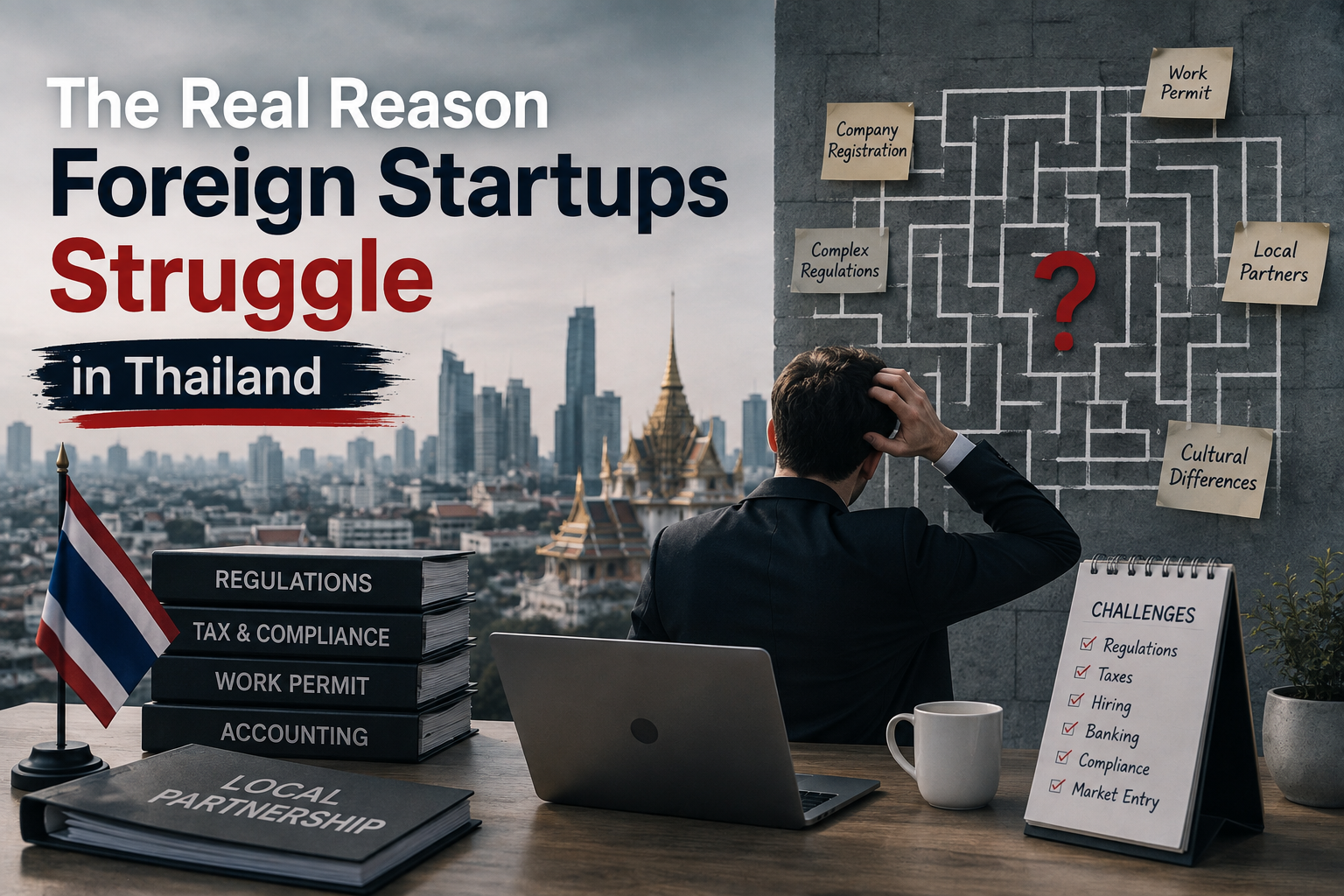
The good news is that most of these mistakes are avoidable once you know what to look for. Working with a knowledgeable business consultant thailand founders rely on can mean the difference between a smooth market entry and months of unnecessary delays. Below are the five most common missteps, and what a smarter approach looks like.
1. Choosing the Wrong Legal Structure From the Start
One of the earliest decisions founders face is which type of entity to register. Many assume a private limited company is automatically the right choice, without weighing alternatives like a branch office, representative office, or joint venture with a Thai partner. Each structure comes with different implications for taxation, liability, and how much of the company foreigners are permitted to own.
Getting this decision wrong doesn't just cause paperwork headaches. It can limit what the business is legally allowed to do, cap growth potential, or trigger a costly restructuring down the line. The fix is simple in theory: map out the business's actual goals, industry, and ownership plans before filing anything, not after.
2. Underestimating Capital and Ownership Requirements
Foreign ownership rules in Thailand vary significantly by industry. Some sectors are fully open to 100% foreign ownership, while others are restricted or require a Thai majority shareholder unless specific conditions, like investment promotion approval, are met. Founders who skip this research often discover the restriction only after they've already started the registration process, forcing a last-minute scramble to adjust shareholder structures.
Minimum capital requirements can also catch people off guard, particularly when the business plans to sponsor foreign work permits, which typically come with their own capital thresholds. Knowing these numbers upfront prevents delays that can push back a launch timeline by weeks or months.
3. Treating Compliance as an Afterthought
Registration is just the beginning. Once a company is operational, it enters a cycle of ongoing obligations, monthly tax filings, VAT reporting, payroll processing, and social security contributions. Founders who come from markets with simpler compliance calendars are sometimes surprised by how much ongoing administrative work is required just to stay in good standing.
Missing a filing deadline or submitting incorrect documentation can result in fines or, in more serious cases, complications that affect the company's standing with regulators. Businesses that build compliance into their operating rhythm from day one, rather than reacting to deadlines as they appear, tend to avoid this problem entirely.
4. Overlooking Visa and Work Permit Logistics
Bringing foreign employees or executives into a Thai entity involves more than just applying for a visa. Work permits are tied to the registered company, and there are often ratios that dictate how many Thai employees a business must have relative to each foreign work permit holder. Founders who don't plan for this early can find themselves unable to bring in the international talent their business actually needs.
There are also ongoing obligations once a permit is issued, including periodic immigration reporting and renewal deadlines. Missing these isn't just a compliance risk, it can directly affect an employee's legal status to remain and work in the country.
5. Trying to Manage Everything With Disconnected Providers
It's common for early-stage businesses to piece together support from multiple sources: one firm for incorporation, another for accounting, a separate lawyer for contracts, and an HR consultant for hiring. While each provider might be competent individually, the lack of coordination between them often creates gaps. Deadlines get missed because no single party has the full picture, and founders end up spending valuable time acting as the go-between.
Businesses that consolidate these functions under a more coordinated advisory relationship tend to move faster and catch issues earlier, simply because there's better visibility across the entire operation.
What a Better Approach Looks Like
None of these mistakes are unique to Thailand. They're the kind of pitfalls that show up whenever founders try to navigate an unfamiliar regulatory environment without local expertise. The businesses that avoid them share a common trait: they bring in the right guidance early, before decisions are locked in, rather than after problems surface.
This doesn't mean founders need to hand over control of their business. It means having someone in their corner who understands the local landscape well enough to flag risks before they become expensive mistakes, and who can help translate Thailand's regulatory requirements into a clear, manageable plan.
Getting It Right the First Time
Thailand isn't a difficult place to do business. It's a place that punishes shortcuts. Founders who rush through registration, skip the research on ownership rules, or try to juggle compliance without local support usually don't run into trouble because the system is hostile to outsiders. They run into trouble because they treated a regulated market like an unregulated one.
The founders who succeed tend to follow the same pattern regardless of industry: they slow down just enough at the start to get the structure right, they build compliance into their operating routine instead of scrambling around it, and they bring in local expertise before problems appear rather than after. None of this requires giving up control of the business. It just requires acknowledging that local knowledge isn't optional in a market like this one, it's the thing that separates a smooth launch from a stalled one.
Comments
Log in or sign up to join the conversation.