
Thailand's growing commercial environment has attracted entrepreneurs from many parts of the world. Foreign founders may see opportunities in professional services, technology, trading, hospitality, manufacturing, and other sectors. However, establishing a company as a foreign entrepreneur requires careful attention to corporate, ownership, immigration, and operational considerations.
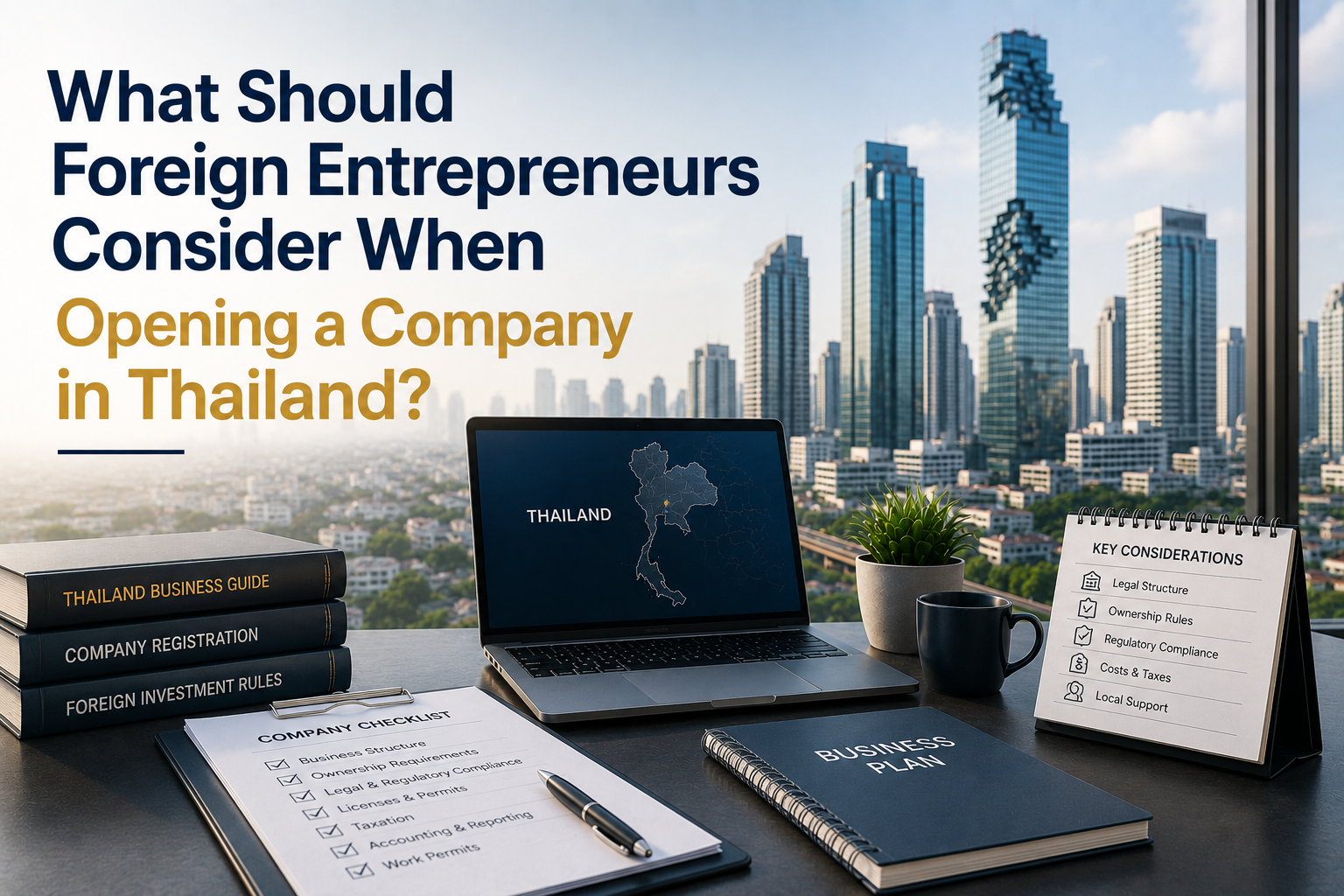
Foreign entrepreneurs researching open a company in thailand should first determine whether their proposed business activity is permitted under the applicable rules and whether foreign ownership creates additional licensing requirements. The Foreign Business Act restricts certain activities, while some businesses can operate through approved structures or applicable permissions.
Start With Market Research
Before incorporating, entrepreneurs should confirm that there is genuine demand for their products or services. Market research can help identify competitors, pricing, customer expectations, distribution channels, and potential partners.
A business plan should also estimate startup costs and ongoing expenses. This helps founders determine how much funding is required before revenue becomes predictable.
Choose the Right Structure
The appropriate corporate structure depends on the business model and ownership. A private limited company is a common option, but foreign founders should not automatically assume it is suitable for every situation.
The intended activity and percentage of foreign ownership can affect licensing and compliance requirements.
Understand Foreign Business Rules
Foreign investors should review the Foreign Business Act before committing to incorporation. Official guidance states that certain activities are restricted and that permission may be required for businesses operating within relevant categories.
For promoted investment activities, different options may be available. The BOI provides guidance on company establishment and foreign-business permissions for qualifying investors.
Prepare Company Documents
Opening a company requires proper corporate documentation. Founders may need to prepare information relating to the company name, objectives, shareholders, directors, capital, and registered office.
Thailand's official guidance also describes name reservation and filing of the Memorandum of Association as important parts of the establishment process.
Plan for Operations
After incorporation, entrepreneurs need to turn the registered entity into a functioning business. This can involve opening a corporate bank account, implementing accounting systems, arranging tax registrations, hiring employees, preparing contracts, and meeting licensing obligations.
Foreign founders who intend to personally work in Thailand should separately consider visa and work authorization requirements.
FAQs
1. Can a foreigner open a company in Thailand?
Yes, but foreign ownership and business activities can be subject to specific legal requirements.
2. Does owning a company automatically allow a foreign owner to work in Thailand?
No. Company ownership and personal work authorization are separate matters.
3. What should be researched before incorporation?
The business activity, ownership structure, licensing requirements, market demand, costs, and ongoing compliance obligations should all be reviewed.
4. Can foreign businesses receive investment promotion?
Some businesses may qualify for investment promotion depending on the activity and applicable criteria.
Conclusion
Opening a company in Thailand can provide international entrepreneurs with access to a dynamic regional market. The strongest approach is to combine market research with careful legal and corporate planning. Understanding foreign ownership, business activities, documentation, and operational requirements can help entrepreneurs establish a more sustainable presence.
Comments
Log in or sign up to join the conversation.