

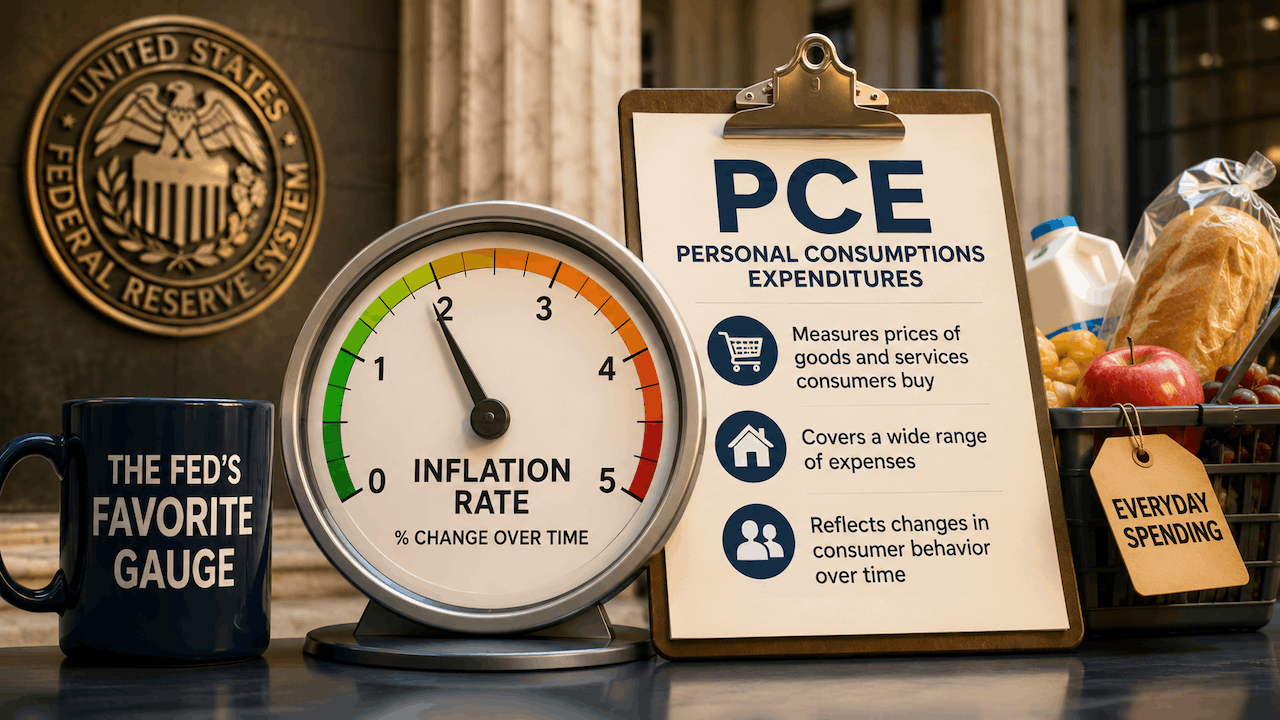
When we talk about inflation, we usually focus on the Consumer Price Index (CPI). However, the Federal Reserve’s “preferred” inflation measure is the Personal Consumption Expenditure (PCE) index. What’s the difference and why does the Fed prefer the PCE?
The two price inflation measures rely on significantly different methodological approaches, and central bankers prefer the PCE because it understates price inflation more than the CPI.
Keep in mind that neither of these metrics measures “inflation” as historically defined by economists (a rise in the supply of money and credit). CPI and PCE measure price inflation (a symptom of monetary inflation).
CPI
As the name suggests, the CPI measures changes in prices paid by consumers. The Bureau of Labor Statistics produces CPI data utilizing household surveys and price collection.
To determine the (price) inflation rate, the BLS uses a “basket” of goods. They created various spending categories, including shelter, food, energy, healthcare, etc., using household surveys. Analysts collect around 80,000 prices from retailers and service providers each month and calculate the change in the price of that entire basket using a complex system of formulas and hedonic adjustments.
This basket of goods remains fixed, generally for about 2 years, and allows much less substitution between categories than the PCE. Even if the price of beef skyrockets, the formula generally assumes consumers will continue buying the same amount of beef until the next basket update.
Many economists prefer CPI for long-term planning because it doesn’t attempt to estimate substitution effects (an extremely subjective undertaking) and is rarely revised after publication, making it a more stable metric for contracts and cost-of-living adjustments.
However, the CPI has its limitations. We know the CPI understates price inflation because the formula was adjusted to do so in the 1990s. Based on the formula used in the 1970s, CPI is closer to double the official numbers. So, if the BLS used the old formula, we’d be looking at CPI closer to 6 percent. And using an honest formula, it would probably be worse than that.
PCE
The PCE is a much broader measure of prices and is a component of GDP. This metric not only includes purchases made directly by households, but it also factors in purchases made on behalf of consumers, including employer-provided health insurance and spending by non-profit organizations serving households.
The Bureau of Economic Analysis generates the PCE report.
Instead of asking consumers what they buy, the PCE compiles data based on what businesses sold. It compiles information from a wide variety of sources, including Census Bureau retail surveys, manufacturer shipment data, hospital and physician revenues, utility revenues, airline ticket sales, and financial services, along with other business and government data.
Analysts use this data to estimate total consumer spending in each category. They then weight each category based on how much consumers actually spent by calculating current expenditure shares. They update the weight assigned to each category monthly.
Significantly, BEA analysts try to estimate the substitution effect when prices rise. Their formulas assume people will buy less beef when the price spikes, and the formula will reflect this assumption.
You can think of the difference between the CPI and the PCE this way:
CPI asks: "How much more expensive is it to buy the same basket of goods and services?"
PCE asks: "How much more expensive is it to maintain the same overall standard of consumption, even if consumers adjust what they buy?"
Why Does the Fed Love the PCE?
As I mentioned, the Federal Reserve prefers the PCE. It officially set 2 percent core PCE as its target in 2012.
Why?
Central bankers will tell you the PCE provides broader coverage of consumer spending, that its chain-weighting formula better captures evolving consumer behavior, that it is consistent with other data sets, including the GDP, and that the frequent revisions improve accuracy.
That all sounds good, but there’s a simpler explanation.
The PCE understates price inflation even more than the CPI.
In other words, it consistently tells a better inflation story. And central bankers like nothing better than a sanguine inflation story. If they can convince you inflation isn’t that bad, they can expand the money supply at a faster rate without you throwing a fit.
The PCE generally runs 0.2 to 0.4 percentage points lower than CPI over longer periods.
Both the CPI and PCE formulas create multiple opportunities to skew the numbers lower. Each assumption built into the formula was made up by a government functionary with a bias and agenda.
The PCE’s substitution metrics create a powerful way for number crunchers to skew the data and make price inflation look tamer than it is.
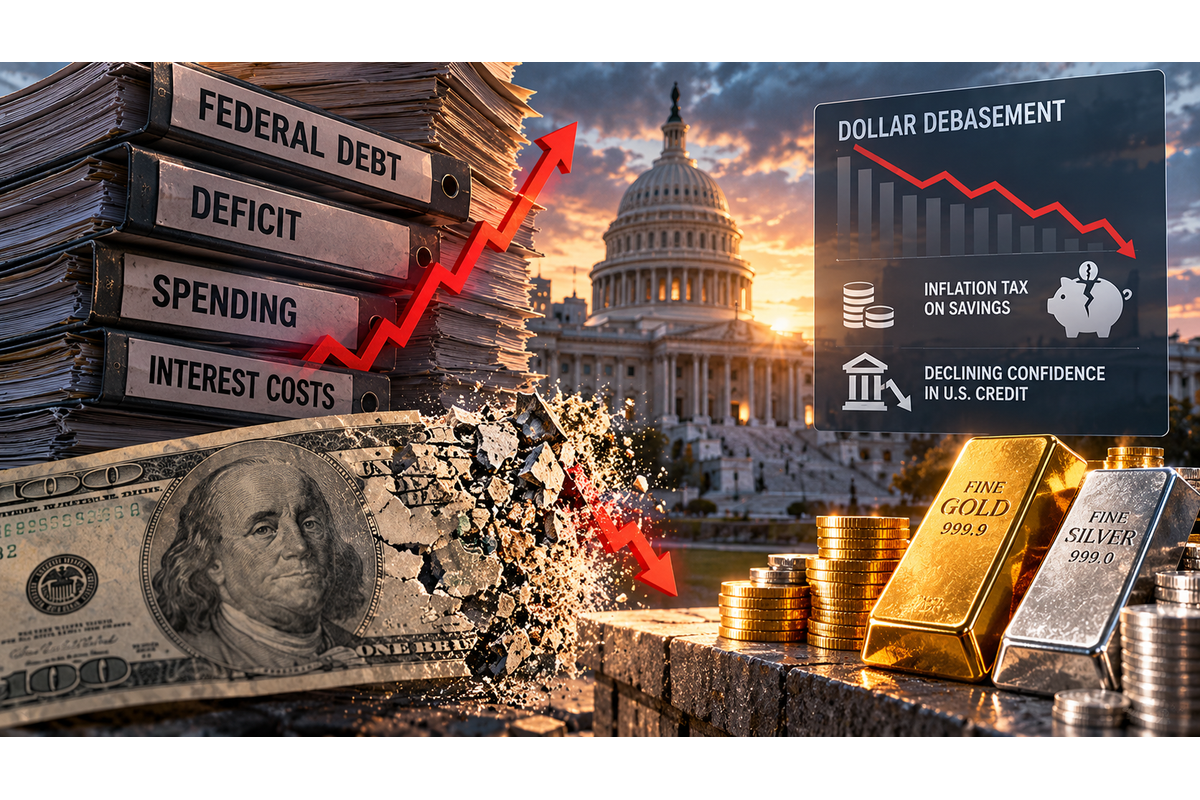
Never forget that government people have a vested interest in making inflation look as tame as possible. In their minds, inflation isn’t a bug. It’s a feature. Their ability to inflate the money supply lays the foundation for big government borrowing and spending. But monetary inflation comes with a nasty side-effect – price inflation. The better they can hide this monetary debasement, the longer they can get away with it without unpleasant political backlash from the citizenry.
Government number-crunchers also want to keep price inflation as low as possible because the PCE is used to “deflate” GDP. If price inflation is lower, it makes real growth look better.
Government data should always be taken with a grain of salt. Never assume that government number-crunchers are unbiased seekers of truth. The numbers may give us some sense of reality. And they are what we have, so we have to use them. However, the government always operates with an underlying propaganda motive. Keep that in mind as you digest the data and the spin.

Comments
Log in or sign up to join the conversation.