

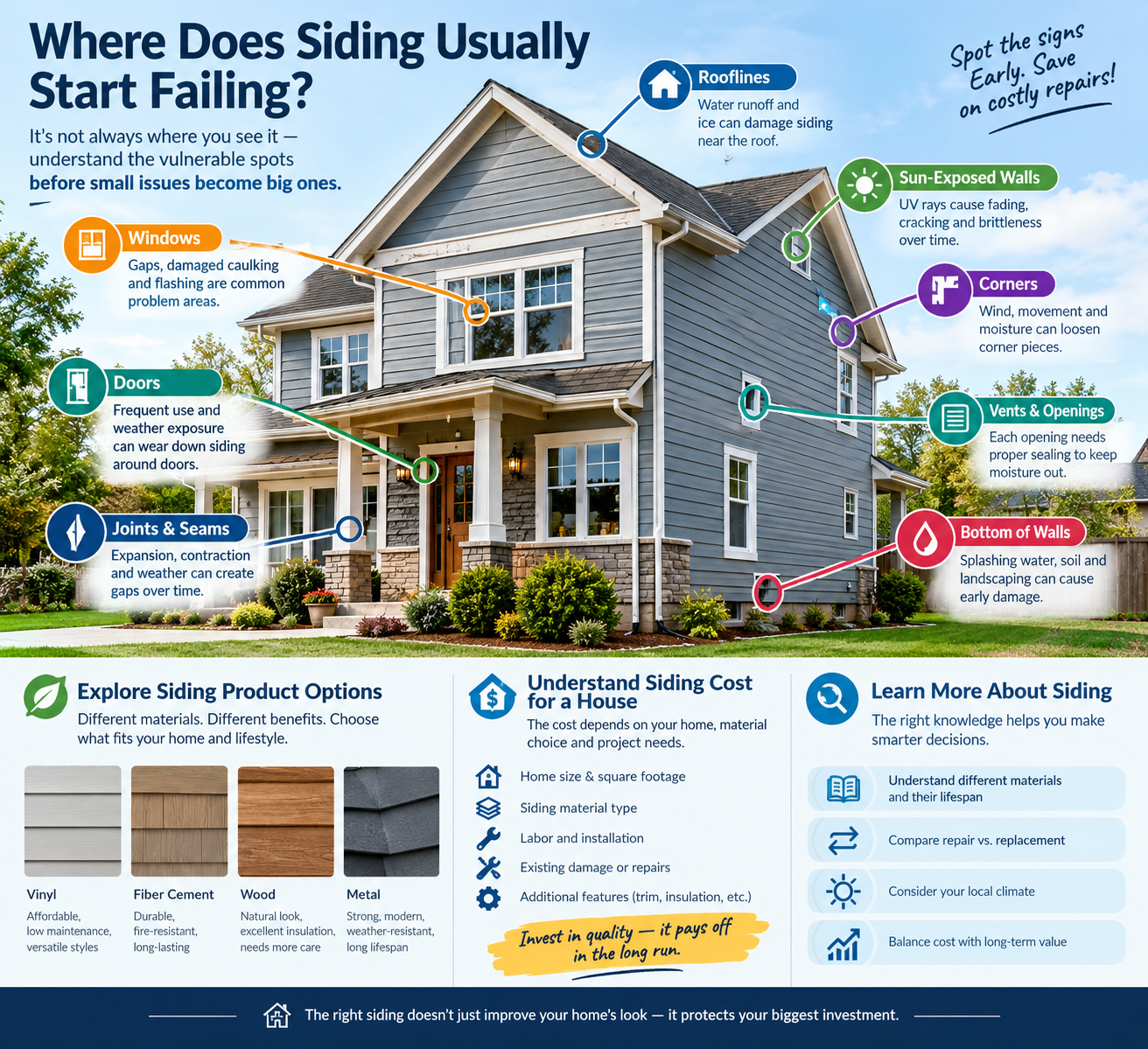
Siding does not usually fail everywhere on a house at the same time. In most cases, siding problems begin in specific areas that receive more moisture, sunlight, wind, physical impact, or weather exposure than other parts of the home. Understanding where siding usually starts failing can help homeowners identify problems early and prevent small damage from turning into expensive siding repair or siding replacement. The first areas where siding commonly begins showing signs of failure are often around windows and doors, near the bottom of exterior walls, around rooflines, corners, joints, and areas exposed to excessive water. These locations experience more stress than large, flat sections of siding. Regular inspection of these vulnerable areas can help protect your home and extend the life of your siding.
Why Does Siding Usually Start Failing in Specific Areas?
Every part of your home's exterior faces different conditions. One wall may receive direct sunlight for several hours every day, while another may remain damp because it receives less sunlight. Some areas are exposed to heavy rain and strong winds, while other sections are protected by roofs, porches, or nearby structures. Because of these differences, siding often begins deteriorating in the areas experiencing the greatest environmental stress.
Water is one of the biggest reasons siding problems develop. Rain, snow, humidity, and poor drainage can repeatedly expose certain areas of the house to moisture. Temperature changes can also cause siding materials to expand and contract. Over many years, this movement can affect joints, seams, fasteners, and the siding material itself. Physical impact from lawn equipment, falling branches, hail, and everyday activity can also damage lower sections of siding.
The key to preventing major siding damage is understanding which areas should receive the most attention during regular exterior inspections.
Siding Around Windows Is Often One of the First Areas to Fail
Windows are one of the most common places where siding problems can begin. A window creates an opening in the exterior wall, which means the siding must connect with trim, flashing, and other materials around it. If these components become damaged, loose, improperly installed, or worn over time, gaps can develop.
Water can enter around poorly protected windows, especially during wind-driven rain. Even if you do not see water inside your house, moisture may be affecting the area behind the siding. Homeowners should inspect the siding and trim around windows for cracks, gaps, separated materials, loose trim, damaged caulking, or discoloration.
The bottom corners of windows are especially important because water naturally moves downward. Proper drainage and flashing help direct moisture away from vulnerable areas. When these systems are not functioning correctly, the surrounding siding may begin showing signs of damage.
Door Areas Can Also Develop Siding Problems Early
Like windows, doors interrupt the main exterior wall surface. The siding around doors connects with trim and other exterior components, creating multiple joints and transition points. These areas can become vulnerable when materials begin separating or deteriorating.
Doorways also experience frequent movement and physical activity. Exterior materials near entrances may be exposed to impact, moisture, and repeated use. Homeowners should inspect the siding around doors for gaps, loose trim, cracks, and signs of deterioration.
A small problem around a doorway may not immediately cause water to enter the house. However, repeated exposure to rain and moisture can gradually worsen the condition. Early siding repair can often prevent a larger issue from developing.
The Bottom of Exterior Walls Often Experiences Heavy Damage
The lower sections of a house are frequently exposed to conditions that can cause siding to deteriorate. Rainwater can splash upward from the ground and repeatedly hit the bottom sections of siding. Snow can accumulate near exterior walls, and melting water may remain close to the house.
Sprinklers can also repeatedly spray water against the same areas of siding. Over time, constant moisture exposure can affect certain materials and increase the risk of damage. Poor drainage around the foundation can make the problem worse by allowing water to remain near the exterior walls.
The lower siding can also be damaged by lawn equipment, bicycles, outdoor furniture, pets, and other physical impacts. Homeowners should regularly inspect the bottom edges of their siding because these areas often experience more damage than upper sections.
Corners of the House Can Be Vulnerable to Siding Failure
Exterior corners are another common location for siding problems. Corners connect multiple sections of siding and may experience strong wind exposure. If corner materials become loose or damaged, the surrounding siding can become more vulnerable.
Strong winds can place pressure on exterior corners, especially during severe storms. Over time, this pressure may cause materials to shift or separate. Small gaps can become larger and create areas where moisture and debris can enter.
Inspecting corners after storms is a good practice. Look for loose pieces, cracks, separation, or siding that no longer sits properly against the wall.
Rooflines and Areas Near Gutters Can Cause Siding Damage
Siding located near rooflines and gutters can experience problems when water is not properly controlled. Gutters and downspouts are designed to move rainwater away from the house. When gutters become clogged, damaged, or improperly positioned, water may overflow onto the siding.
Repeated water exposure can cause staining, deterioration, and moisture-related problems. Areas below leaking gutters are especially important to inspect because they may receive more water than other sections of the house.
Roof problems can also affect siding. Water running from damaged roof areas may repeatedly hit exterior walls and cause localized deterioration. If the same section of siding continues showing damage, homeowners should investigate whether a gutter, roof, or drainage problem is contributing to the issue.
Joints and Seams Are Common Starting Points for Siding Problems
Large sections of siding may remain in good condition while problems begin at joints and seams. These areas connect different pieces of siding and can be affected by movement, weather, and aging.
Over time, materials can expand and contract because of changing temperatures. This repeated movement may affect how tightly siding pieces fit together. If gaps develop, moisture and wind can reach areas behind the visible surface.
Seams should be inspected carefully during regular siding maintenance. Homeowners should look for separation, unusual gaps, loose panels, or sections that appear uneven compared with surrounding areas.
Areas That Receive the Most Sun Can Age Faster
Direct sunlight can gradually affect siding materials. Ultraviolet exposure may cause fading and surface deterioration over many years. Depending on the siding material, intense sunlight may also contribute to brittleness or changes in appearance.
The side of a house receiving the strongest daily sunlight may begin showing signs of aging before other sides. Fading alone does not always mean siding replacement is necessary, but fading combined with cracking, chalking, warping, or brittleness may indicate that the material is becoming weaker.
Comparing different sides of your house can help identify uneven aging. If one exterior wall looks significantly more deteriorated than the others, sunlight and weather exposure may be contributing to the difference.
Areas With Poor Airflow Can Hold Moisture Longer
Some parts of a house receive less sunlight and have limited airflow. These areas may remain damp longer after rain. Moisture that does not dry quickly can increase stress on exterior materials.
Shaded areas behind trees, near fences, under decks, or between closely positioned structures may experience different conditions than open sections of the house. Homeowners should inspect these areas for discoloration, surface changes, and signs of excessive moisture.
Keeping vegetation properly trimmed away from the house can improve airflow and reduce unnecessary contact between plants and siding.
Siding Near Ground Contact Can Fail Faster
Siding that sits too close to the ground can be exposed to constant moisture, soil, insects, and physical damage. Proper clearance between siding and the ground is important for helping exterior materials remain dry and protected.
When soil, mulch, or landscaping materials are placed too high against siding, moisture can remain trapped near the wall. This can create conditions that increase the risk of deterioration.
Homeowners should check landscaping around the house and make sure exterior materials are not unnecessarily exposed to constant moisture or direct contact with wet ground.
Areas Around Vents and Exterior Openings Need Regular Inspection
Your house may have vents, electrical boxes, pipes, outdoor fixtures, and other components that pass through the exterior wall. Each opening creates another transition in the siding system.
These areas must be properly protected to prevent gaps from developing. Over time, surrounding materials may shift, crack, or deteriorate. A small opening may not immediately cause an interior leak, but repeated exposure to rain can gradually create problems behind the siding.
Regular inspection of exterior openings can help homeowners identify issues before they become more serious.
Storm Damage Often Starts in the Most Exposed Areas
Severe weather can damage siding in specific locations depending on wind direction and exposure. The side of the house facing strong winds may experience more pressure during storms. Corners, edges, and loose sections can be particularly vulnerable.
Hail can create cracks, dents, or impact damage that may not be immediately obvious. Flying debris can damage individual panels and trim. Even small storm damage should be inspected because future weather exposure can worsen the affected area.
Checking your siding after major storms can help identify problems before they develop into larger repairs.
How Small Siding Problems Become Major Damage
Most major siding problems do not begin as major problems. They often start with a small crack, loose edge, damaged corner, separated seam, or gap around an opening. When these issues are ignored, repeated weather exposure can make them worse.
A small gap may gradually become larger. A loose panel may experience more movement during strong winds. A cracked area may expand because of temperature changes. Moisture may repeatedly reach materials behind the siding.
Taking action early can often reduce the amount of work needed later. Regular siding maintenance is usually easier than waiting until multiple sections become damaged.
When Should You Repair the First Signs of Siding Damage?
Siding repair should be considered when you notice cracks, loose panels, damaged trim, gaps, warping, or localized deterioration. Not every problem requires complete siding replacement. If the damage is limited and the remaining siding is in good condition, repairing the affected area may be an effective solution.
However, it is important to understand why the damage occurred. If a siding problem is caused by overflowing gutters, poor drainage, repeated water exposure, or another exterior issue, simply replacing the damaged section may not solve the long-term problem.
A proper inspection can help identify both the visible damage and its underlying cause.
When Does Siding Replacement Become the Better Solution?
Siding replacement may be necessary when problems are widespread or when the existing material is reaching the end of its useful life. Multiple damaged sections, repeated repairs, widespread cracking, extensive warping, and major surface deterioration can indicate that replacing the siding may be more practical than continuing with individual repairs.
Homeowners considering new siding should explore different siding product options before making a decision. Different siding materials offer different benefits related to durability, appearance, maintenance, weather resistance, and long-term performance.
Understanding the available siding options can help homeowners choose a solution that matches their home's style, climate, maintenance preferences, and budget.
Learn More About Siding Before Making a Major Decision
Before repairing or replacing your exterior, it is helpful to learn more about siding and understand how different materials perform. Every home is different, and the best siding solution depends on several factors, including the age of the house, local weather conditions, the existing exterior structure, and the homeowner's long-term goals.
Learning about siding can help homeowners understand the difference between cosmetic damage and serious exterior problems. It can also make it easier to compare repair options with complete siding replacement.
Taking time to understand your siding before making a major investment can help you make a more informed decision and avoid choosing a solution based only on appearance.
Understanding Siding Cost for a House
One of the most common questions homeowners ask is about the siding cost for a house. The total cost can vary significantly depending on the size of the home, the type of siding selected, labor requirements, the condition of the existing exterior, and whether additional repairs are needed.
A small siding repair will generally cost less than replacing the entire exterior. However, repeatedly repairing old or severely damaged siding can sometimes become more expensive over time than investing in a larger solution.
When calculating siding cost for a house, homeowners should consider more than the initial price. Material durability, maintenance needs, expected lifespan, energy efficiency, and future repair requirements can all affect the long-term value of a siding investment.
Comparing several siding product options and getting professional guidance can help homeowners understand which choice offers the best balance between cost and long-term performance.
Regular Siding Inspections Can Prevent Expensive Repairs
The best way to identify early siding failure is through regular inspection. You do not need to wait until water enters your house or a major panel falls off the wall. Walking around your property and checking vulnerable areas can help identify problems early.
Pay special attention to windows, doors, lower walls, corners, seams, rooflines, gutters, exterior openings, and areas exposed to excessive sunlight or moisture. These are often the places where siding begins showing signs of stress first.
A professional siding inspection can provide additional information when you notice damage but are unsure about its cause.
The First Part of Your House to Show Siding Failure May Not Be Obvious
There is no single area where siding always fails first because every house experiences different weather conditions and environmental exposure. However, the most common starting points are usually around windows and doors, near the bottom of exterior walls, at corners and seams, around rooflines, and in areas exposed to excessive moisture.
These locations experience additional stress because they contain joints, transitions, openings, or increased exposure to water and weather. A small problem in one of these areas can gradually become larger if it is ignored.
The best approach is to inspect your home's exterior regularly and respond to early warning signs. Cracks, loose panels, gaps, warping, damaged trim, and unusual surface changes should be investigated before they become major problems.
Your siding protects much more than the appearance of your house. It plays an important role in protecting the exterior wall system from weather and environmental exposure. By knowing where siding usually starts failing and understanding the warning signs, homeowners can make better decisions about siding repair, maintenance, replacement, siding product options, and the overall siding cost for a house. Taking action early can help protect your investment, improve your home's appearance, and prevent small exterior problems from becoming expensive repairs.
Comments
Log in or sign up to join the conversation.