
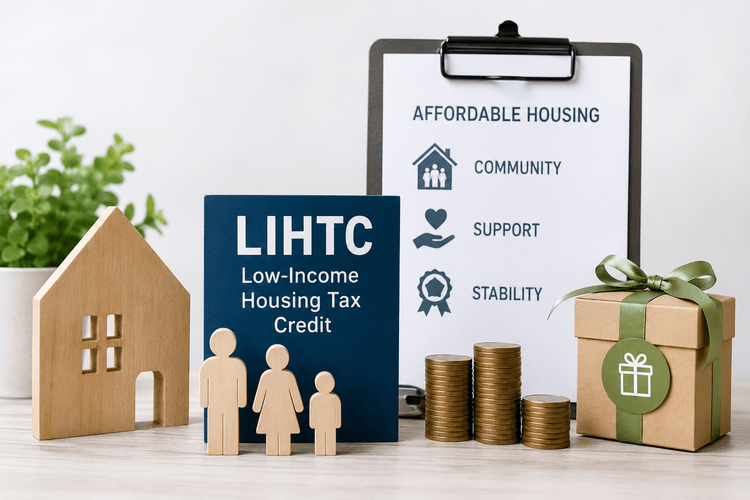
If you own or manage affordable housing properties, you've likely come across the term LIHTC. But understanding what it actually means and how it connects to resident experience can make the difference between a property that just meets compliance and one that truly thrives.
What Is LIHTC?
The Low-Income Housing Tax Credit (LIHTC) is a federal program that incentivizes private developers and investors to build or rehabilitate affordable rental housing. In exchange for tax credits, property owners agree to rent a portion of units to income-qualified residents at below-market rates for a set compliance period, often 15 to 30 years.
For CEOs and portfolio managers, LIHTC isn't just a financing mechanism; it's a long-term commitment. That commitment comes with strict compliance requirements, income verification processes, and a resident base that depends on stability and trust in their housing provider.
Learn more about: LIHTC for Resident Rewards Programs
How LIHTC Shapes the Resident Experience
Because LIHTC properties operate under tighter margins and regulatory oversight, resident satisfaction and retention become critical business levers. Turnover is expensive, such as re-leasing, re-certifying income eligibility, and unit turnover costs add up fast. Keeping residents happy and engaged isn't just good ethics; it's good economics.
This is where thoughtful resident perks come into play. Offering discounts on everyday essentials, moving services, or local amenities gives residents tangible value beyond their lease, which builds loyalty and reduces churn.
Why Resident Rewards Matter in LIHTC Communities
Resident rewards programs give property owners a low-cost, high-impact way to differentiate their communities. In a sector where rent increases are capped, and competition for renewal is fierce, resident perks can be the deciding factor in whether a resident chooses to stay another year.
For companies operating across the real estate sector, layering rewards on top of the resident journey think savings on insurance, streaming services, or local retailers creates a stickier, more satisfying living experience without requiring additional capital investment in the property itself.
Automatic Payments: A Win-Win for Compliance and Convenience
One overlooked but powerful piece of the resident experience puzzle is payment convenience. LIHTC compliance depends on timely, accurate rent collection and record-keeping. Encouraging residents to enroll in automatic payments reduces late payments, simplifies audit trails, and cuts down on administrative overhead for property teams.
Pairing automatic payments with resident rewards, for example, offering a small perk or discount for enrolling. Creates a natural incentive that benefits both sides: residents get convenience and savings, while owners get more predictable cash flow and cleaner compliance records.
The Bottom Line for CEOs and Property Owners
LIHTC properties operate under a unique set of pressures: regulatory compliance, thin margins, and a resident population that values stability. Building a resident rewards strategy around resident perks and automatic payments isn't just a nice-to-have; it's a practical tool for improving retention, streamlining operations, and strengthening your position in the competitive real estate market.
For leaders looking to modernize their affordable housing portfolios, the message is clear: resident experience and compliance aren't separate goals. They're two sides of the same strategy.
Comments
Log in or sign up to join the conversation.