

You hear it all over the news: "the U.S. dollar is strong" yet somehow this spells trouble for the economy and, in particular, for corporate earnings. Often times, we hear "strength" and think that this implies good things, especially when it comes to economics.
A "strong" or a "weak" dollar are generalizations used in the foreign exchange market to describe the relative value and strength of the U.S.dollar against other currencies. It usually does not refer to the impact that inflation is having on the dollar, nor does factor in economic specific news. Ultimately, it's just how much the dollar is worth relative to all other money in the world.
We are currently in a period of a strong dollar, so what exactly does that really mean?
Firstly, it isn't necessarily a good thing. Weaker currency implies that the goods and services out of a particular economy are much cheaper to buy (and are therefore much more attractive to buy) relative to other economies. This means that American goods and services are now more expensive for foreign countries, so as a result, they will seek out economies where their money will go farther or keep their buying/selling local. Ultimately, this results in a rise in imports and a decrease in exports. A healthy level of exports are necessary to keep a country's GDP strong, without it the country will run into a heavy deficit.
We buy foreign oil because it's cheaper, we import fruits and vegetables from overseas because they're cheaper than local goods -- not good for the U.S. economy.
This also impacts a lot of companies' earnings results, especially if the U.S. dollar is stronger than it was a year or two prior. A strong dollar is usually a scapegoat for companies to explain why demand in foreign markets for their goods or services was so weak.
So what is the alternative? A balance has to be obtained among major world currencies and there is an ebb and flow to this over time. Keep tuning into GradMoney to learn ways in which a country can weaken it's currency to attract foreign investors.
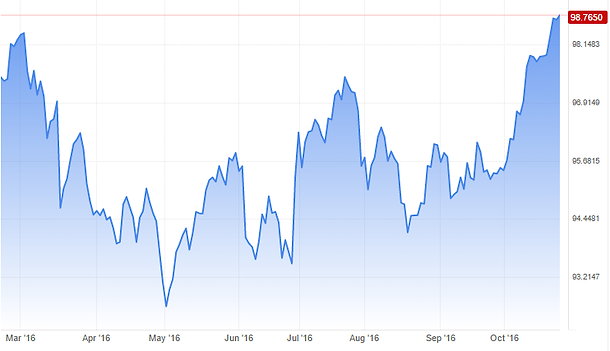
(This is a chart of the U.S. dollar index over the past year from TradingEconomics; currently at its highest level all year.)


Comments
Log in or sign up to join the conversation.