

As the war in Iran drags on (including a re-escalation last week), oil prices have moved back over $90, putting oil companies back in the spotlight.
BP (BP), the London-based multinational oil giant, has an impressive 4.6% dividend yield. In this tumultuous environment, can shareholders expect to continue receiving the current $0.52 per share quarterly dividend?
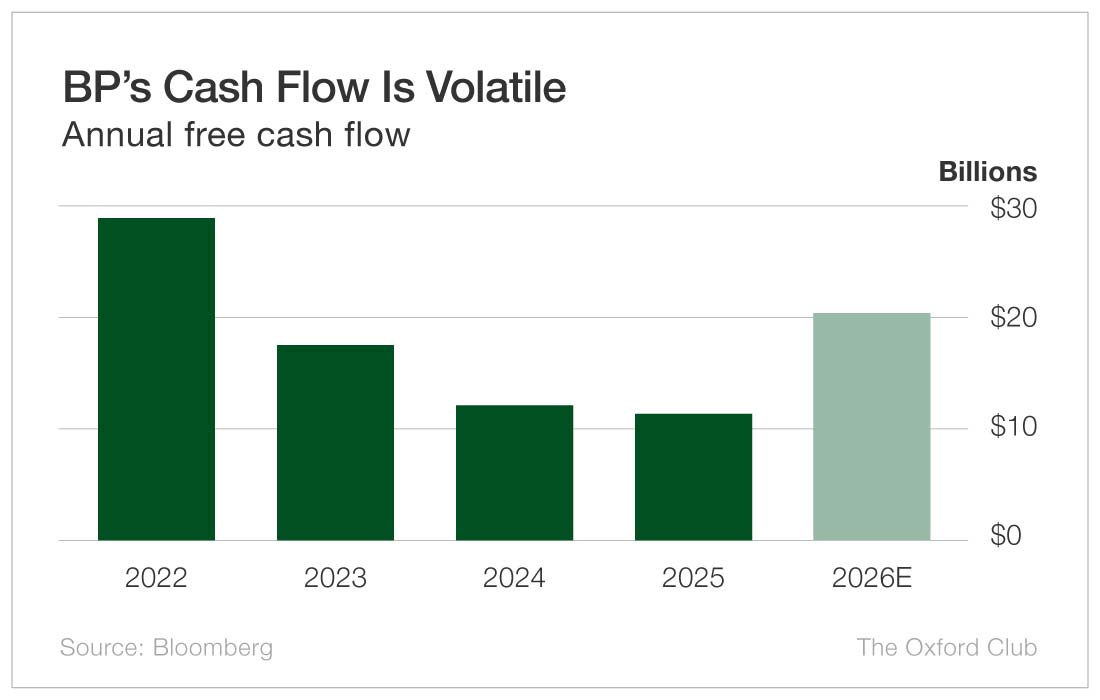
Last year, BP generated $11.3 billion in free cash flow, which was below the $12 billion it made in 2024.
The Safety Net model penalizes stocks’ dividend safety ratings when their free cash flow is falling. Even if a company has plenty of cash flow to pay the dividend, declining free cash flow is sometimes (though certainly not always) an early warning sign of trouble for the business.
BP’s Safety Net rating is also a victim of some unfortunate timing.
The model looks at one- and three-year cash flow growth. We’ve already established that growth over the past year was negative.
The total in 2025 is also compared with the figure from 2022, which was when oil prices spiked to over $120 a barrel, causing free cash flow to spike to $28.9 billion. That makes three-year free cash flow growth negative as well.
The good news for BP, though not necessarily for drivers, is that oil prices are up again. As a result, free cash flow is forecast to grow to $20.3 billion this year.
The company’s payout ratio is low, which is another positive.
Last year, BP paid shareholders $5.1 billion, or 45% of its free cash flow. Because of the expected spike in cash flow this year, the payout ratio is projected to drop to just 26%.
So BP’s cash flow easily covers the dividend.
In August 2020, during the pandemic, BP slashed its dividend in half as cash flow plummeted.
Despite being raised every year since then, the dividend has not yet returned to its previous level of $0.63 per share from before the cut.
BP is an interesting situation. The company can easily afford its dividend, yet cash flow is volatile and somewhat dependent on outside forces. Lastly, management has shown that when the spit hits the fan, it panics − at least when it comes to the dividend.
I don’t suspect the dividend is in immediate danger, but if oil prices sink and free cash flow reverses lower, it’s quite possible that management will reduce the dividend to preserve capital once again.
We’ll keep a close eye on cash flow in 2027 to see whether a dividend cut becomes more or less likely.
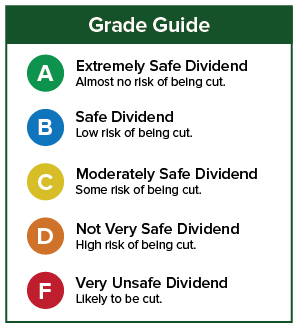
Dividend Safety Rating: D



Comments
Log in or sign up to join the conversation.