
In heavy fabrication, handling large welded structures is never simple. Components are bulky, weight distribution is uneven, and internal stresses build up quickly after welding. In real production, I’ve seen large fabricated frames distort after machining simply because stress relieving was not done properly. That’s where a bogie hearth furnace becomes extremely useful.
A bogie hearth furnace is designed specifically for heavy and oversized components. Instead of loading parts manually inside a hot chamber, the furnace uses a movable bogie platform that carries the load into the heating chamber. This simple design change makes a big difference in safety, productivity, and temperature uniformity.
When used correctly, a bogie hearth furnace improves metallurgical consistency, reduces handling risks, and supports large-scale fabrication processes like stress relieving, annealing, and tempering. Let’s look at the key benefits in practical terms.
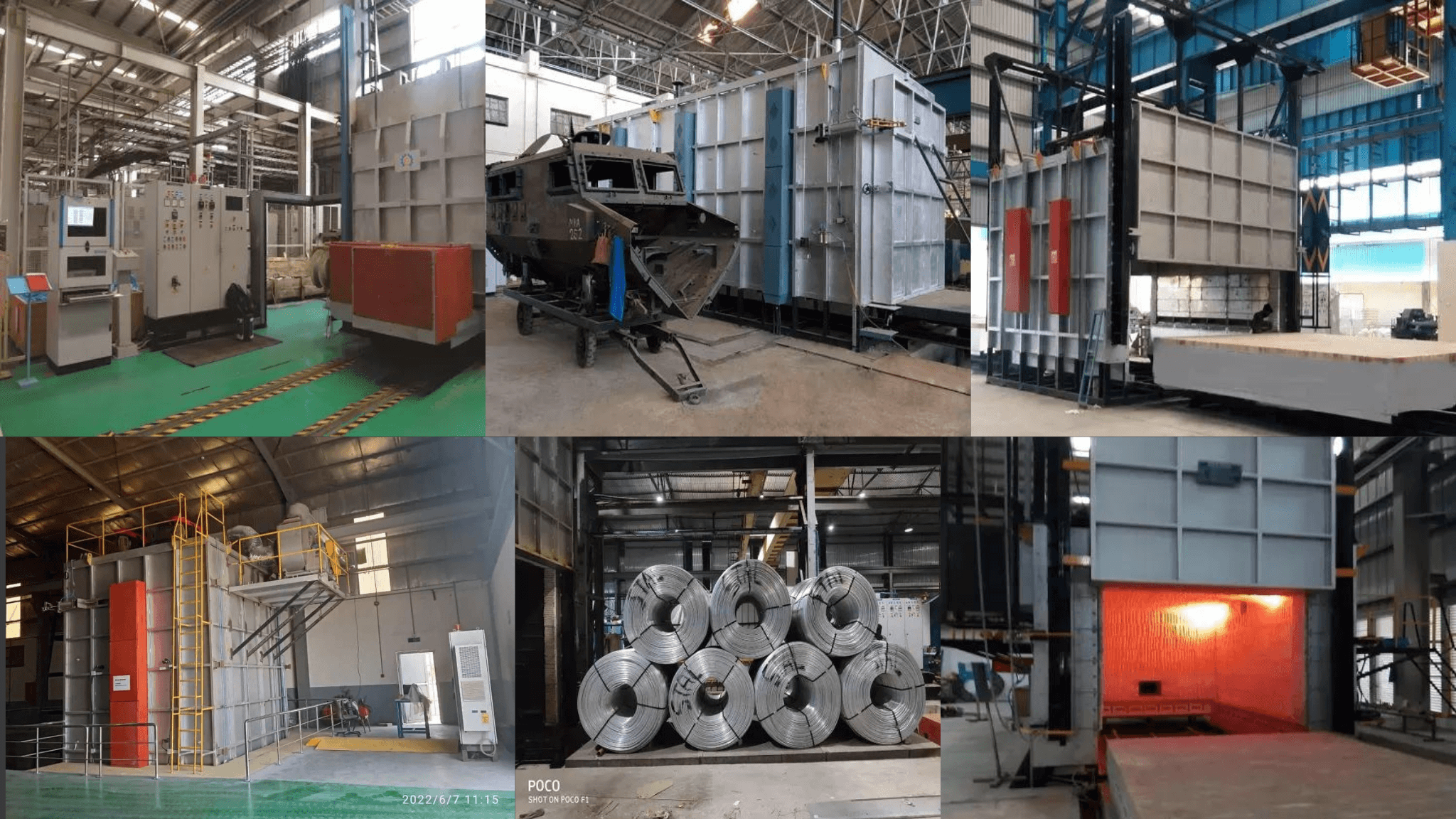
Why Bogie Hearth Furnace Is Ideal for Heavy Fabrication
Heavy fabrication involves large weldments such as structural frames, pressure vessels, heavy plates, fabricated beams, and large shafts. These components require uniform heating and controlled cooling to avoid distortion.
One common issue I’ve seen is uneven stress relief in large weldments. If one area heats faster than another, the part can warp. A bogie hearth furnace solves this by providing controlled airflow and consistent heat distribution across the entire chamber.
Because the load sits on a movable bogie, operators can position the component properly before heating begins. This reduces mistakes and improves process reliability.
Safe Handling of Large and Heavy Components
Safety is one of the biggest advantages of using a bogie hearth furnace. In traditional furnaces, loading heavy components inside the chamber can be risky. Workers must use cranes in tight spaces, and alignment becomes difficult.
With a bogie hearth furnace, the loading happens outside the furnace. The platform rolls out completely, allowing operators to load heavy fabrication parts comfortably. Once positioned, the bogie moves into the furnace smoothly.
What actually happens is this:
The component stays stable during loading
Crane movement becomes easier
Operator exposure to heat reduces
Risk of damage during loading decreases
This setup is especially helpful for oversized fabricated structures where precise placement matters.
Excellent Temperature Uniformity for Large Fabrications
Uniform temperature distribution is critical in heavy fabrication. Large weldments develop residual stresses during fabrication, and uneven heating can create new distortions.
A bogie hearth furnace uses circulating air, high-quality insulation, and well-placed heating elements to maintain consistent temperature throughout the chamber. This ensures the entire component heats evenly.
In real production, this prevents:
Warping of large plates
Distortion in fabricated frames
Uneven stress relief
Dimensional instability after machining
Uniform heating also improves metallurgical properties, which is important for structural reliability.
Ideal for Stress Relieving Large Welded Structures
Stress relieving is one of the most common applications in heavy fabrication. Large welded components hold internal stresses that can cause cracking or distortion later.
A bogie hearth furnace allows slow and controlled heating, followed by soaking at the required temperature. This process reduces residual stress without affecting material strength.
Typical components treated include:
Heavy fabricated bases
Structural frames
Pressure vessels
Large welded pipes
Fabricated housings
After stress relieving, components remain dimensionally stable and easier to machine.
Easy Loading and Reduced Handling Time
Heavy fabrication shops often lose time during loading and unloading. When parts are oversized, positioning them inside a fixed furnace takes effort.
A bogie hearth furnace simplifies this. The movable hearth allows loading in open space. Operators can adjust alignment before pushing the load inside.
This improves:
Loading speed
Position accuracy
Workflow efficiency
Operator convenience
Reduced handling time directly improves productivity, especially when processing multiple large components.
Energy Efficiency for Large Batch Processing
Heating large fabrication parts consumes significant energy. A bogie hearth furnace reduces heat loss using proper sealing and insulation.
Once the bogie moves inside, the door closes tightly, preventing heat escape. Modern insulation materials maintain temperature stability with lower power consumption.
In practical use, this results in:
Lower operating cost
Reduced fuel consumption
Stable temperature cycles
Better process repeatability
For heavy fabrication industries, this energy efficiency becomes important during continuous operation.
Versatility for Multiple Heat Treatment Processes
A bogie hearth furnace supports several heat treatment processes required in heavy fabrication. Instead of using multiple furnaces, one system can handle different operations.
Common processes include:
Stress relieving
Annealing
Normalizing
Tempering
Preheating before welding
This flexibility makes the furnace suitable for fabrication shops handling different materials and component sizes.
Strong Construction for Heavy-Duty Operation
Heavy fabrication environments are demanding. Furnaces must handle large loads, repeated heating cycles, and continuous operation.
A bogie hearth furnace is built with a heavy-duty structure. The hearth platform supports high load capacity, and the chamber lining withstands repeated thermal cycles.
In real-world conditions, this leads to:
Long service life
Reliable operation
Low maintenance
Consistent performance
This durability is essential for fabrication units working with large steel structures.
Improved Workflow in Fabrication Shops
A bogie hearth furnace fits naturally into heavy fabrication workflow. Large components move from welding to stress relieving and then to machining.
Because loading happens outside the furnace, crane movement remains smooth. This prevents production bottlenecks and keeps material flow steady.
This improves:
Production planning
Handling efficiency
Equipment utilization
Overall shop productivity
Many fabrication shops rely on this setup to manage oversized components efficiently.
Applications of Bogie Hearth Furnace in Heavy Fabrication
In heavy fabrication, bogie hearth furnaces handle a wide range of components. These include:
Fabricated structural beams
Pressure vessel shells
Large welded frames
Heavy steel plates
Fabricated machine bases
Industrial housings
Large shafts and rollers
These parts require uniform heating and controlled cooling, which the bogie hearth furnace provides effectively.
Why Engineers Prefer Bogie Hearth Furnace for Large Components
From an engineering perspective, the biggest advantage is control. Large fabricated components behave differently during heating. Uneven expansion can distort geometry.
A bogie hearth furnace gives:
Controlled heating rate
Uniform temperature
Stable soaking
Predictable cooling
This reduces risk and improves consistency in heavy fabrication processes.
Comments
Log in or sign up to join the conversation.