

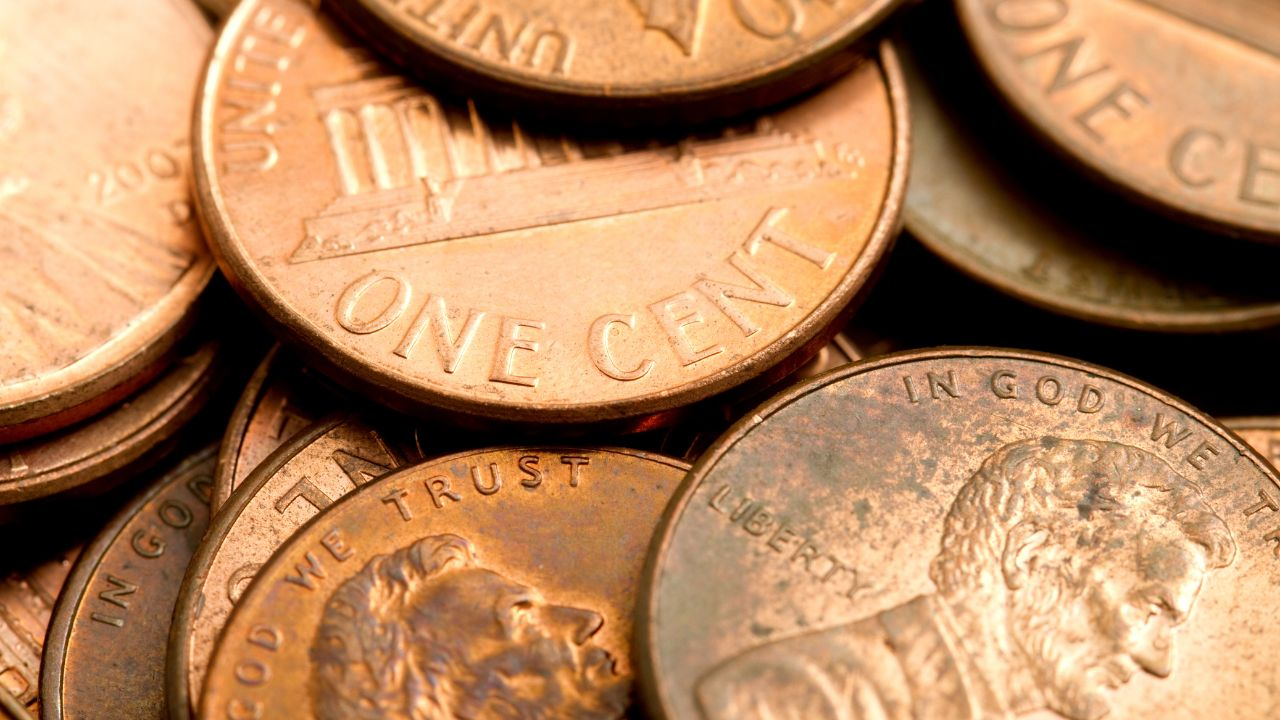
What are pennies made out of? Most people assume pennies are made of copper. After all, they look copper, feel copper, and have been associated with the metal for generations. But that assumption hasn't been true for decades.
In reality, today's U.S. penny is mostly zinc, with only a thin outer layer of copper. Even more surprising, many coins that appear silver, like nickels and quarters, actually contain more copper than the penny itself.
So what changed?
The answer involves rising metal prices, government cost-cutting, and a long shift away from coins having real intrinsic value. Understanding what pennies are made of is not just a matter of chemistry: it's a window into how modern money works.
In this guide, we'll break down the penny's composition today, how it has changed over time. More importantly, we'll explore why those changes matter to collectors, investors, and anyone curious about the true value of U.S. coinage.
Quick Answer
What Are Pennies Made Out Of Today?
Modern U.S. pennies are made of 97.5% zinc and 2.5% copper plating. Before 1982, most pennies were made of 95% copper.
Many people ask what metal pennies are made out of today, and the answer is primarily zinc with a thin copper coating. Pennies have a composition of 97.5% zinc. The remainder of its alloy comes from copper, which coats the coin to give it a copper hue. The penny has retained this composition since 1982, when the U.S. Mint first implemented it.
Today's composition looks like this:
Component | Percentage |
|---|---|
Zinc (core) | 97.50% |
Copper (plating) | 2.50% |
This means the familiar copper appearance is mostly cosmetic. Beneath the surface, the coin is a lightweight zinc core designed to keep production costs down. In fact, many Americans are surprised to learn that coins like nickels and quarters actually contain more total copper than the penny.
What Were Pennies Made Out Of Historically?
For much of American coinage history, pennies had a primarily copper composition. The composition changed several times for various reasons. Sometimes it was in response to wartime needs. Often, it was because of changes in metal prices.
Period | Composition | Notes |
|---|---|---|
Pre-1909 (Indian Head) | 95% copper, 5% tin and zinc | Bronze alloy |
1909–1942 (Lincoln Wheat) | 95% copper, 5% tin and zinc | Standard bronze cent |
1943 | Steel with zinc coating | Wartime emergency issue |
1944–1982 | 95% copper, 5% zinc | Return to copper alloy |
1982–Present | 97.5% zinc, 2.5% copper | Modern composition |
The 1943 steel penny stands out as a one-year anomaly. Congress created it to conserve copper, a vital metal for World War II munitions. Aside from that exception, copper dominated penny production for nearly two centuries.
Why Did Pennies Change from Copper to Zinc?
Congress moved away from minting copper pennies for a simple reason: metal costs exceeded the coin's face value.
By the late 20th century, the price of copper had risen to the point where producing a copper penny became economically unsustainable. The U.S. Mint faced a growing problem: each coin cost more to make than it was worth in circulation.
So, Congress solved that problem by switching the coin's composition to zinc. Zinc is a significantly cheaper metal than copper. It is more widely available and easier to manufacture at scale.
Plating the zinc core with a thin layer of copper preserved the coin's classic look. However, it also saved the Mint a significant amount of money by dramatically cutting costs.
There's also a deeper monetary shift behind this change. Earlier coins were tied to their intrinsic metal value.
Modern coins are fiat currency. That means their value comes from government decree, rather than the metal inside them.
In other words, the penny did not just change materials: its entire nature changed. It reflects a broader transition from “real money” to modern currency systems, where perception and policy matter more than metal content.
Are Pennies Really Made of Copper?
At a glance, the penny appears to be the only “copper” coin in circulation. However, its appearance is very misleading.
Modern pennies are mostly zinc, containing only a thin copper coating. Ironically, coins that look silver, such as nickels, dimes, and quarters, actually contain a greater amount of copper in their core than pennies.
This creates a weird inverse reality:
The only copper-colored coin is barely copper
The silver-colored coins are largely made of copper underneath
This confusion is common and shows how appearance no longer reflects intrinsic value. Today's coinage is designed for durability and cost efficiency, not to mirror the value of the metal itself.
What Are Other U.S. Coins Made Of?
To fully understand the penny, it helps to compare it with other coins in circulation.
Coin | Primary Composition | Key Insight |
|---|---|---|
Penny | 97.5% zinc, 2.5% copper | Mostly zinc despite copper appearance |
Nickel | 75% copper, 25% nickel | Contains more copper than a penny |
Dime | Copper core, nickel-clad | Appears silver but copper inside |
Quarter | Copper core, nickel-clad | Same structure as the dime |
This comparison highlights a key point: modern U.S. coins are engineered alloys, not stores of metal value.
Is a Penny Worth More Than Its Metal?
For most modern pennies, the answer is no. The zinc core has very little intrinsic value.
However, pre-1982 pennies contain roughly 95% copper. That alloy can be worth more than one cent based on current spot prices.
That said, there are several important things to note:
It is illegal to melt down U.S. coins for their metal content
The value is only theoretical unless laws change
Premiums for copper fluctuate with commodity markets
Still, many collectors and “stackers” set aside pre-1982 pennies as a form of low-cost exposure to copper. Others collect them for potential numismatic value, as rare editions of old coins can have significantly more value.
Why Is the Penny Still Produced?
Despite its low value and rising production costs, the penny remains in circulation. Several factors can explain this, including the following:
Transaction Convenience
Pennies allow for precise pricing. Without them, cash transactions would need to be rounded, which raises concerns about fairness and consistency.
Public Familiarity
The penny has been part of American life for generations. Eliminating it would require a cultural shift many would resist.
Economic Debate
It often costs more than one cent to produce a penny. Critics argue this is wasteful, while supporters claim pennies still serve a purpose in circulation.
Political Inertia
Even widely discussed changes can take years, or decades, to implement. Currency reform is rarely quick.
Some countries, such as Canada, have already eliminated their lowest-denomination coins. Whether the U.S. follows remains an open question.
Collector Insights: How to Tell Copper vs. Zinc Pennies
For collectors and investors, knowing the difference between copper and zinc pennies matters.
Here are two ways to identify them:
Check the Date
Pre-1982: Mostly copper
Post-1982: Mostly zinc
1982: Mixed compositions (requires further testing)
Weigh the Coin
Copper penny: 3.11 grams
Zinc penny: 2.5 grams
A small digital scale can quickly confirm what you have.
Because copper pennies are heavier and contain more valuable metal, they are often saved in bulk by collectors.
The Bigger Picture: What Pennies Reveal About Modern Money
The evolution of the penny tells a larger story.
At one time, coins were valued for the metal they contained. Today, that connection is largely gone. Pennies, alongside all other modern coins, are tokens of value. They are not stores of value.
This fundamental shift reflected the broader transition to fiat currency, where money is backed by trust in government rather than physical commodities.
That distinction is crucial for investors and collectors. While precious metals like gold and silver still hold intrinsic value, everyday coinage has become a tool of convenience rather than a measure of wealth.
Frequently Asked Questions About Penny Composition
Are pennies still made of copper?
No, modern U.S. pennies are not made of solid copper. Since 1982, they have been made of 97.5% zinc with a thin 2.5% copper coating. Older pennies (before 1982) were mostly copper.
What metal are pennies made of today?
Today's pennies are primarily made of zinc, with a thin outer layer of copper to maintain their traditional appearance.
When did pennies stop being made of copper?
The U.S. Mint transitioned away from copper in 1982. That year is unique because both copper and zinc pennies were produced.
Why did the U.S. stop using copper in pennies?
Copper became too expensive. By the early 1980s, the cost of producing a copper penny exceeded its face value. Switching to zinc significantly reduced production costs.
Final Thoughts
So, what are pennies made out of?
Today, pennies have a composition mostly made from zinc. They only have a thin coating of copper. Historically, however, these coins had real copper compositions with a meaningful metal value. The change reflects rising costs, shifting monetary systems, and the realities of modern economics.
Understanding the penny's composition offers more than trivia fun facts. That knowledge can provide insight into how U.S. currency has evolved. More importantly, it reveals why the metals that once defined currency still matter to investors today.



Comments
Log in or sign up to join the conversation.