
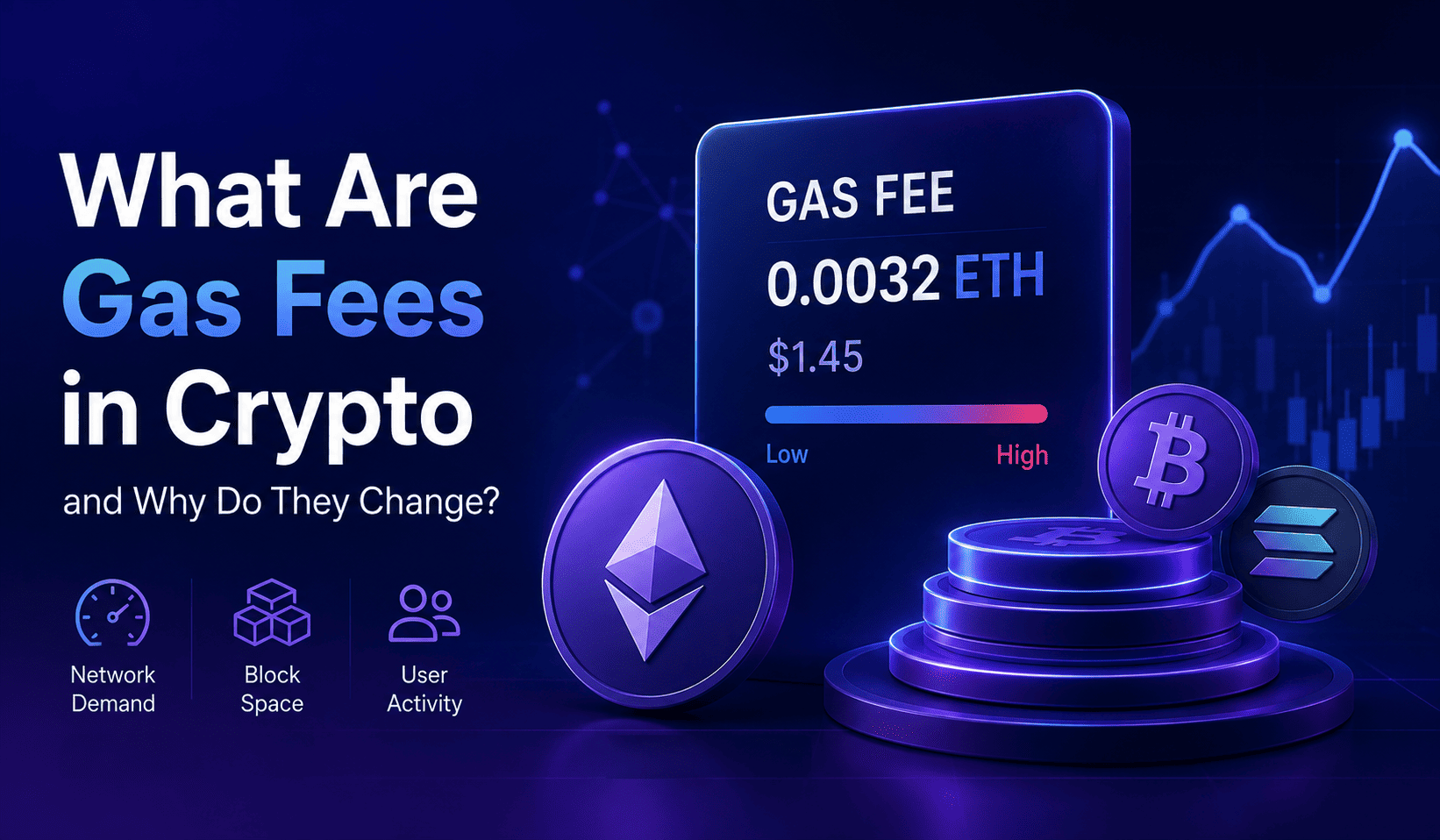
If you have ever sent crypto and noticed a small extra charge on top, you have paid a gas fee. These fees often confuse newcomers, especially when they seem to change from one day to the next for no obvious reason. This guide explains what gas fees actually are, why they move around so much, and how you can keep them under control.
What Are Gas Fees?
Gas fees are small payments made to keep a blockchain network running smoothly. Every time you send crypto, swap tokens, or interact with a smart contract (a self-executing piece of code that runs on the blockchain), someone has to process that action. On networks such as Ethereum, this work is carried out by validators, and gas fees are how you pay them for their effort.
Think of it a bit like postage on a letter. You are not paying for the letter itself, you are paying for the service of getting it delivered safely. Gas fees work in a similar way. They cover the computing power needed to confirm your transaction and record it permanently on the blockchain.
Why Do Gas Fees Change So Often?
Gas fees are not fixed, and this is one of the most common frustrations for new crypto users. Here are the main reasons behind the shifts.
Network Congestion
When lots of people use a blockchain at the same time, demand for space in each block increases. Validators naturally pick transactions offering higher fees first, since it is more profitable for them to do so. This pushes prices up during busy periods, a bit like surge pricing on a taxi app during rush hour.
Transaction Complexity
Simple transfers cost less gas than complicated ones. Sending crypto from one wallet to another usually keeps fees low. Interacting with a smart contract, such as swapping tokens on a decentralised exchange, requires far more computing work, so the fee climbs accordingly.
Network Design and Upgrades
Different blockchains handle gas in different ways. Ethereum's fees can spike sharply during high demand, while newer networks are often built to keep costs low and predictable. Upgrades to a blockchain's underlying code can also change how fees are calculated over time.
How Gas Fees Affect Your Everyday Crypto Spending
Gas fees matter beyond simply sending and receiving crypto. They can also affect how you spend it day to day. If you use a virtual crypto card to pay for everyday purchases, understanding these costs helps you plan transfers sensibly and avoid unwanted surprises when moving funds between your wallet and your card balance.
Getting Comfortable With Your Crypto Card
Timing matters too. Many people check network activity before topping up their card, choosing quieter periods to save a little money. It is a simple habit, but it adds up over time, especially if you top up regularly. If you are new to this, it is worth learning how to use a virtual crypto card for spending, so you understand exactly how fees and balances interact before relying on one day to day.
Tips to Manage Gas Fees
You cannot remove gas fees entirely, but there are sensible ways to keep them under control. Staying in charge of your own funds also helps, which is part of why self-custody is becoming the preferred choice for many crypto users, since it puts you in direct control of when and how you transact.
A few practical habits worth adopting:
Transact during off peak hours, such as early mornings or weekends, when networks are quieter
Choose blockchains with lower average fees for smaller, everyday transactions
Set a gas limit so you never overpay by accident
Batch several actions into one transaction where possible, rather than sending several small ones
Final Thoughts
Gas fees are simply the cost of using a blockchain network, and they change based on demand, transaction type, and how the network itself is designed. Once you understand the basics, they become far less confusing and much easier to plan around.
If you are still deciding which blockchain suits you best, it is worth comparing your options properly. Our guide on Bitcoin vs. Ethereum vs. Solana, covering which one beginners should choose, breaks down how each network handles fees and everyday use, helping you pick the one that fits your needs.
Recommended articles you might like:
Why Self-Custody Is Becoming the Preferred Choice for Crypto Users
Bitcoin vs. Ethereum vs. Solana: Which One Should Beginners Choose?
Comments
Log in or sign up to join the conversation.