

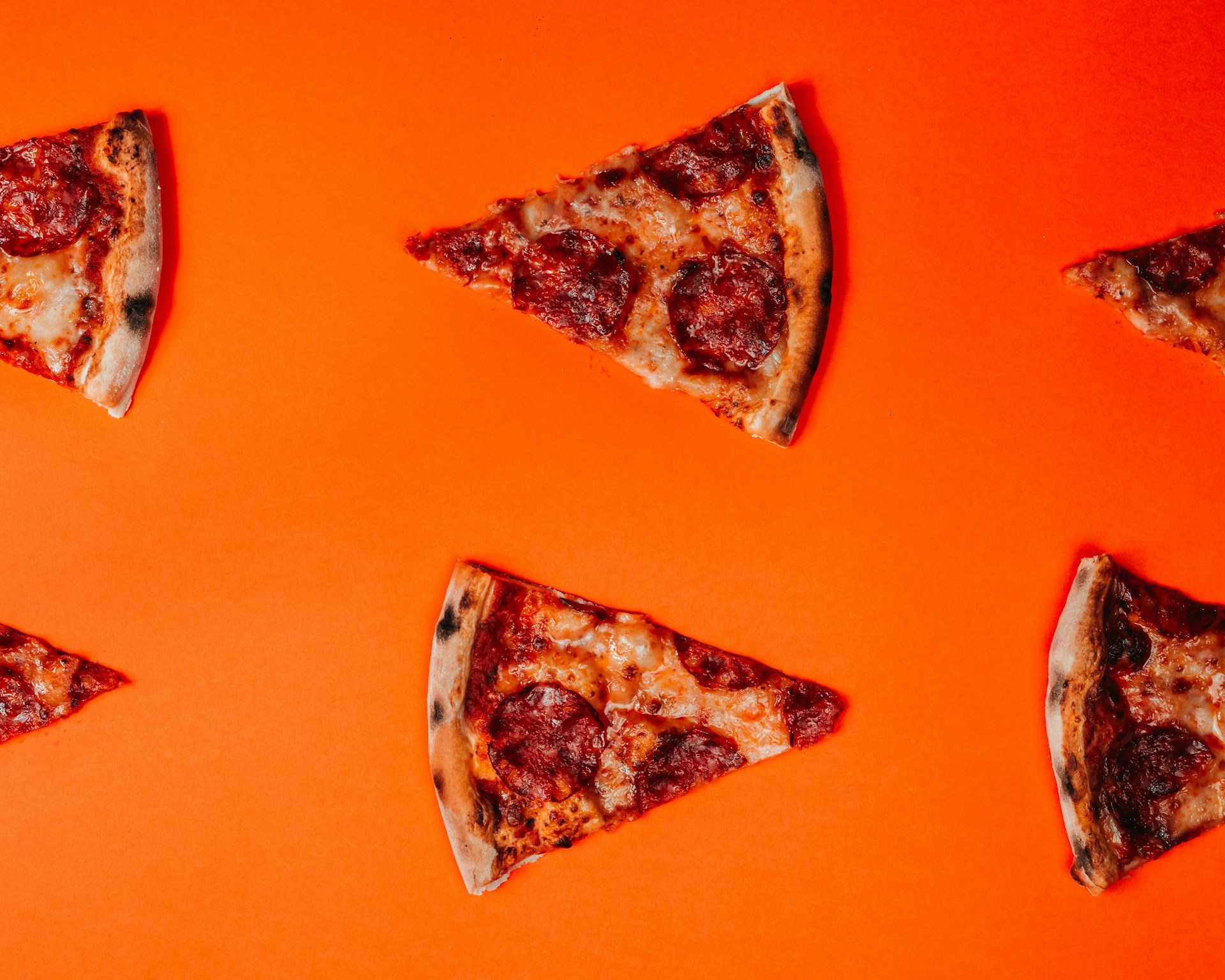
I lost a pizza eating contest on purpose. My best friend still brings it up 35 years later.
I’ve been going down memory lane over the past few weeks, and this day keeps coming back. My best friend and I went to a local Pizza Hut with a lunch buffet.
We were both athletes, he a baseball player and I a swimmer, and we both had a competitive streak. What started as “let’s go eat a bunch of pizza” quickly became a contest to see who could eat the most.
We sat down to a mound of slices and the classic red plastic tumblers sweating on the table. The buffet tray clattered behind us as another batch of fresh pizza was loaded in.
The contest began. I really did think I could win, and I had a strategy.
First, I wouldn’t fill up on soda. Second, I’d hunt for the smaller slices, the ones that are never cut evenly.
My friend had no strategy. He grabbed whatever topping he liked best and powered forward.
When I finished my 17th slice, he was on 19. I realized I wasn’t going to win.
I changed the game. If I couldn’t win the contest, I’d win another way.
I went back to the buffet and brought 6 more slices to the table. Seeing that, my friend went and got 8 more and attacked his plate.
I had no intention of eating mine, and I ate only one. He was determined to beat me and finished all 8.
He sat there in pain, realizing he had won the contest at a high cost. I had lured him into eating 27 slices by piling slices on my plate that I never planned to eat.
You may be thinking I wasn’t a very good friend. It was all in fun, and we’ve laughed about that day many times over the years.
That day I behaved like an institutional or high-frequency trader.
Probing the market with small orders is an old technique. In Edwin Lefèvre’s Reminiscences of a Stock Operator, published in 1923, the main character tests the market with small positions before committing real size.
He watches how price responds. Algorithms do the same thing today.
A small order is cheap information. A trader can place a modest buy near a key high to see who else shows up.
If other buyers join and price clears the high, the trader builds the position. If no one joins and sellers push back, the trader exits and may even reverse.
You’ve seen this in your own trading. Price reaches a key level, pushes higher, and you identify a breakout.
You buy, expecting the next bullish run. Instead the candle prints a long upper wick, sellers rush in, and your stop is triggered.
The trade is dead. You were trapped, and the traders who pushed price higher never intended to stay long.
That was my pizza. My 6 slices cost me almost nothing, and they cost my friend a great deal.
The traders who create a fakeout carry little risk. Only the traders who commit to the breakout are exposed.
Follow through and volume separate a real move from a probe. My slices pushed our combined total past the high with no volume behind them, because I never ate them.
When price breaks a high or a resistance level on average or light volume, treat it as unconfirmed. A probe can lure you into a quick, painful loss.
The pizza buffet and the market, side by side
At the buffet | In the market |
|---|---|
My 6 slices (I ate only 1) | The small probe order near the highs |
My friend piling on 8 more | The trader who chases the breakout |
The uneaten slices on my plate | A breakout on light volume with no follow through |
His stomachache | The stopped-out trade |
Before you trust a breakout, check three things
Each of these three checks does real work, and a breakout that passes all three has earned your capital:
Volume: the breakout candle trades at least 1.5x the 20-period average volume.
Close: the candle closes above the level, rather than just wicking through it.
Retest: price pulls back to the broken level and holds it.
If the breakout fails all three, you may be looking at someone else’s probe.
Those 45 slices from 35 years ago still teach a lesson about price discovery. Remember my friend’s stomachache, and don’t trust a breakout without follow through and volume.
You may think you’re winning the contest while the other side plays a different game. Your costs may be higher than you expect.
Check the plate before you chase the breakout.


Comments
Log in or sign up to join the conversation.