

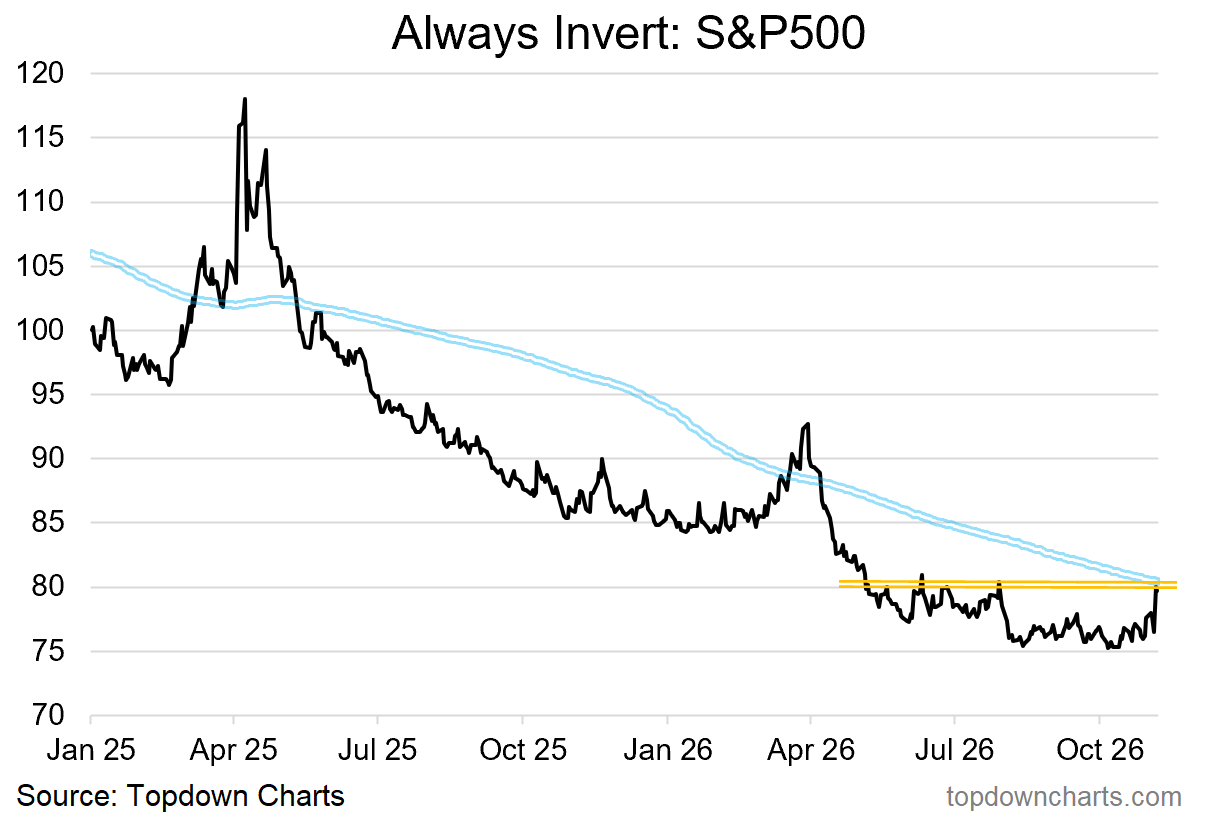
1. Inversion Confluence: kicking off this week with an upside down chart for an upside down world. Currently the S&P500 is down almost -6% off the October 6th peak. That has the -inverted- S&P500 looking rather bullish, but for it to “break out” (not a good thing) it would need to clear the confluence of: short-term resistance + the 200-day moving average. This week will be literally make-or-break.
Topdown Charts Professional
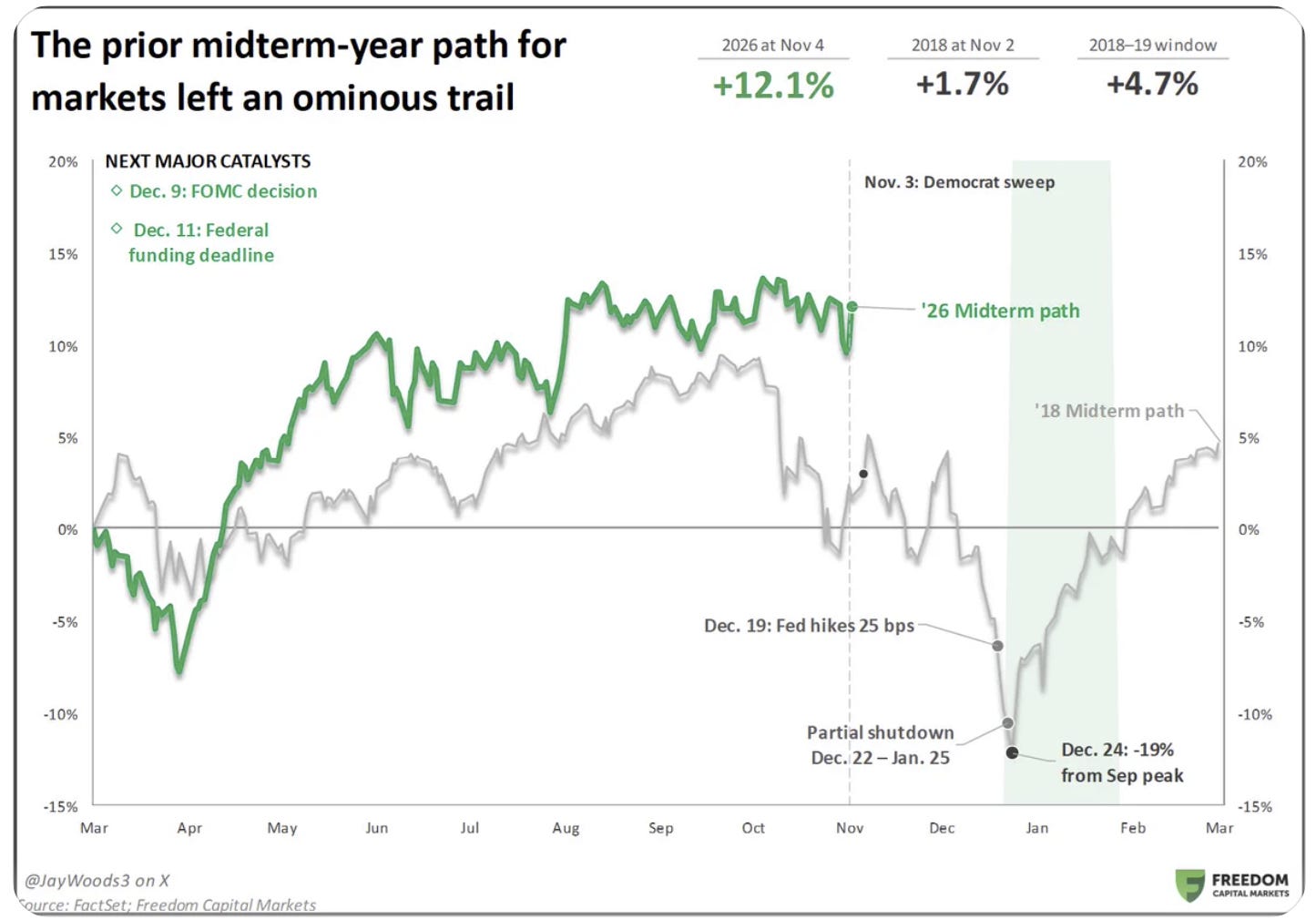
2. Deja vu all over again: for the bears it couldn’t get much better or simpler than this — a possible replay of 2018 (when the previous Trump presidency also saw R’s lose the House to D’s).
Back then it was a combination of Trade War, Fed Rate Hikes + Government Shutdown that sank markets. This time? Similar stuff: possible Fed rate hike in Dec, Federal funding deadline, possibly more on trade and geopolitics (along with the recent rattles in AI).
Source: @JayWoods3
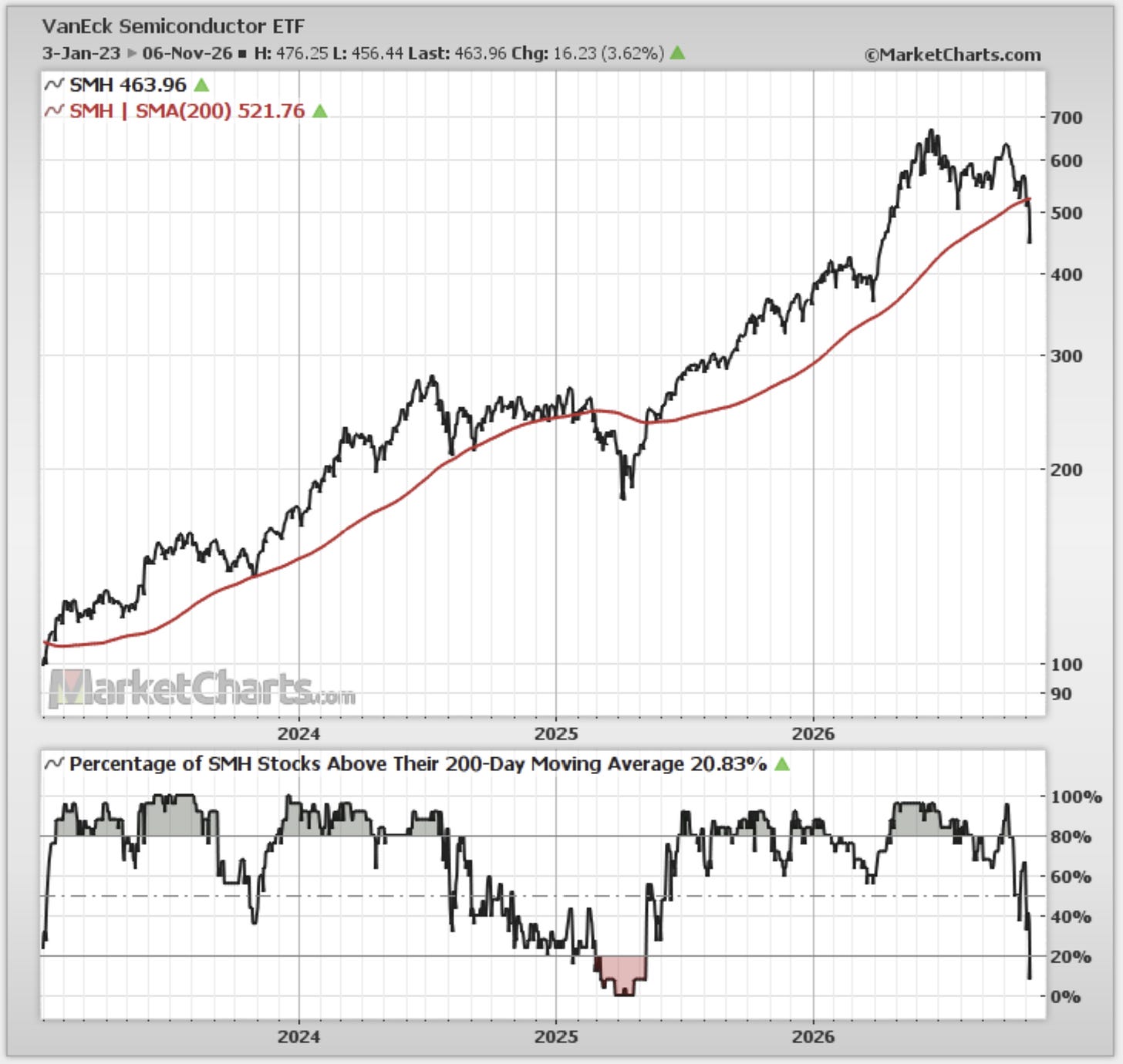
3. Semis Slip'n Slide: speaking of which, semis are now in a downtrend (lower highs and lower lows) + they have breached the 200-day moving average (with widespread weakness). This one looks like it gets worse before it gets better with the logical next line of support around 400 for SMH.
Source: MarketCharts.com
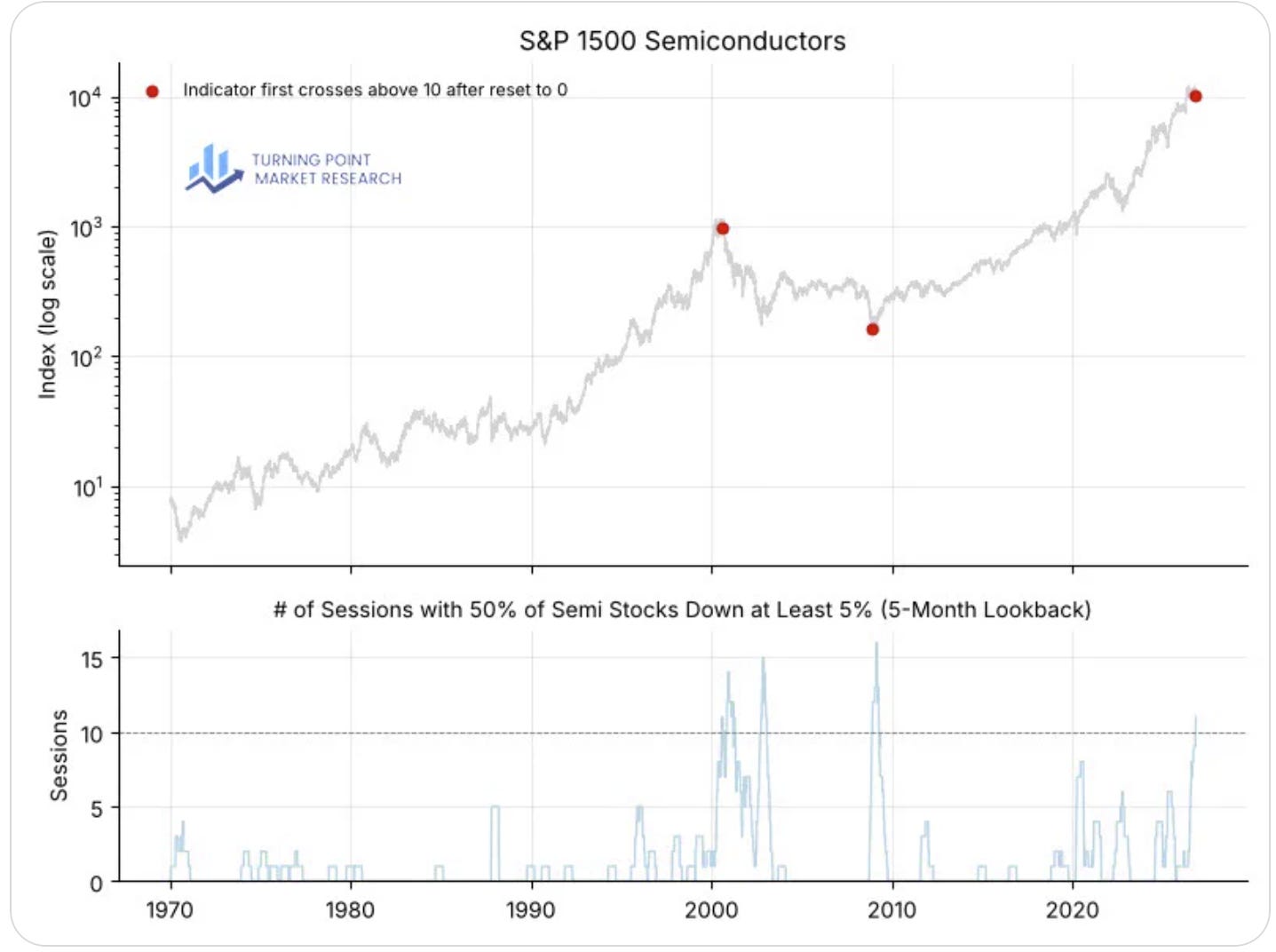
4. Oddly Specific But Ominous: so this oddly specific set of conditions [i.e. when the rolling 5-month count of days when semis fell -5% or more goes above 10] has only shown up twice before.
i.e. July 2000 and December 2008 — the former marked the peak of the dot com bubble, the latter came on the heels of a global financial crisis and stockmarket rout. Today looks much like the former, not the latter. Hence this is an ominous signal.
Source: @DeanChristians
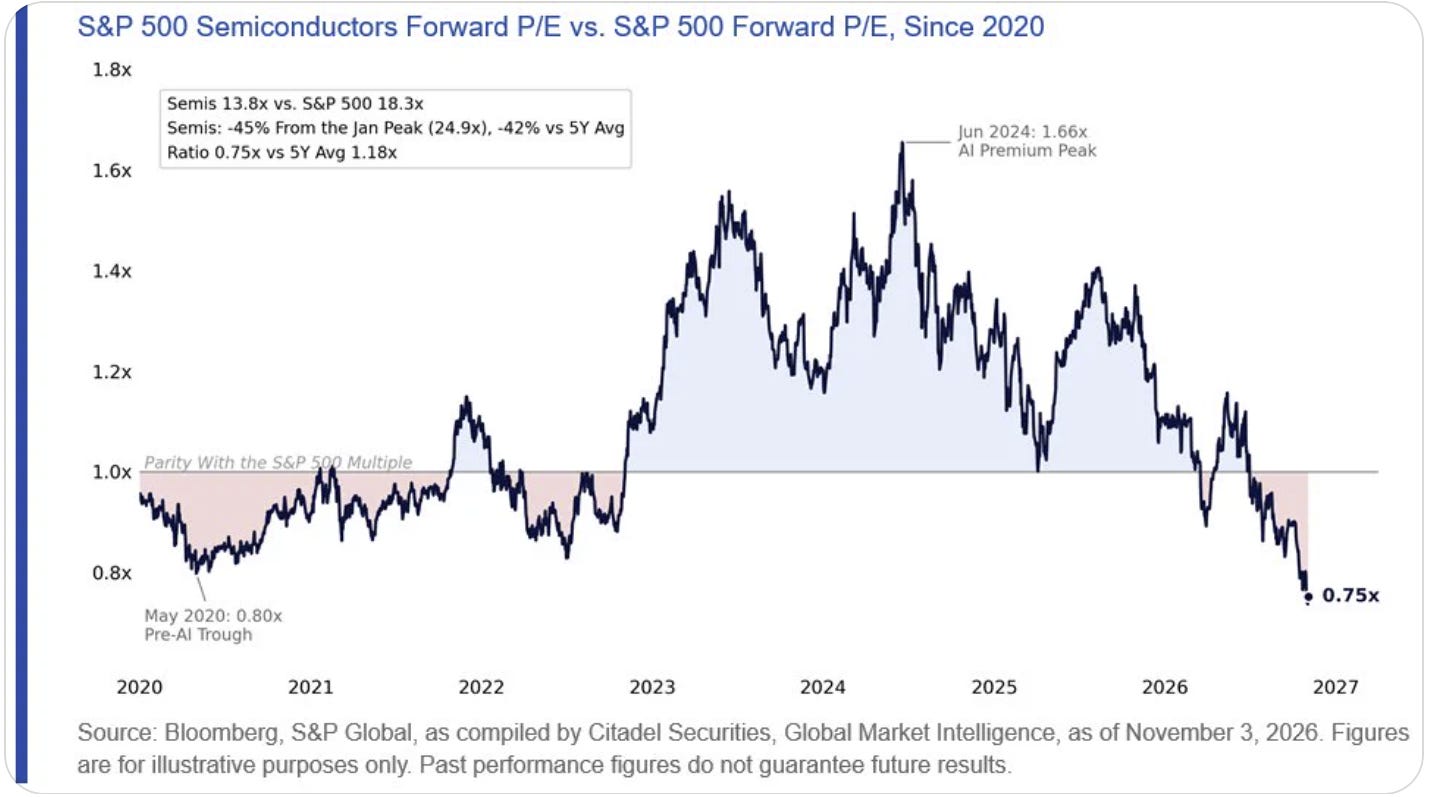
5. Semi Relative Value? You could argue this chart is a bullish thing because semis are cheap vs the S&P500 and this represents a buying opportunity (and maybe it does). But you could equally argue that because we are looking at forward PE ratios that it represents a total loss of confidence in future earnings and a sunset on the initial phase of the AI boom/bubble.
Source: @negligible_cap
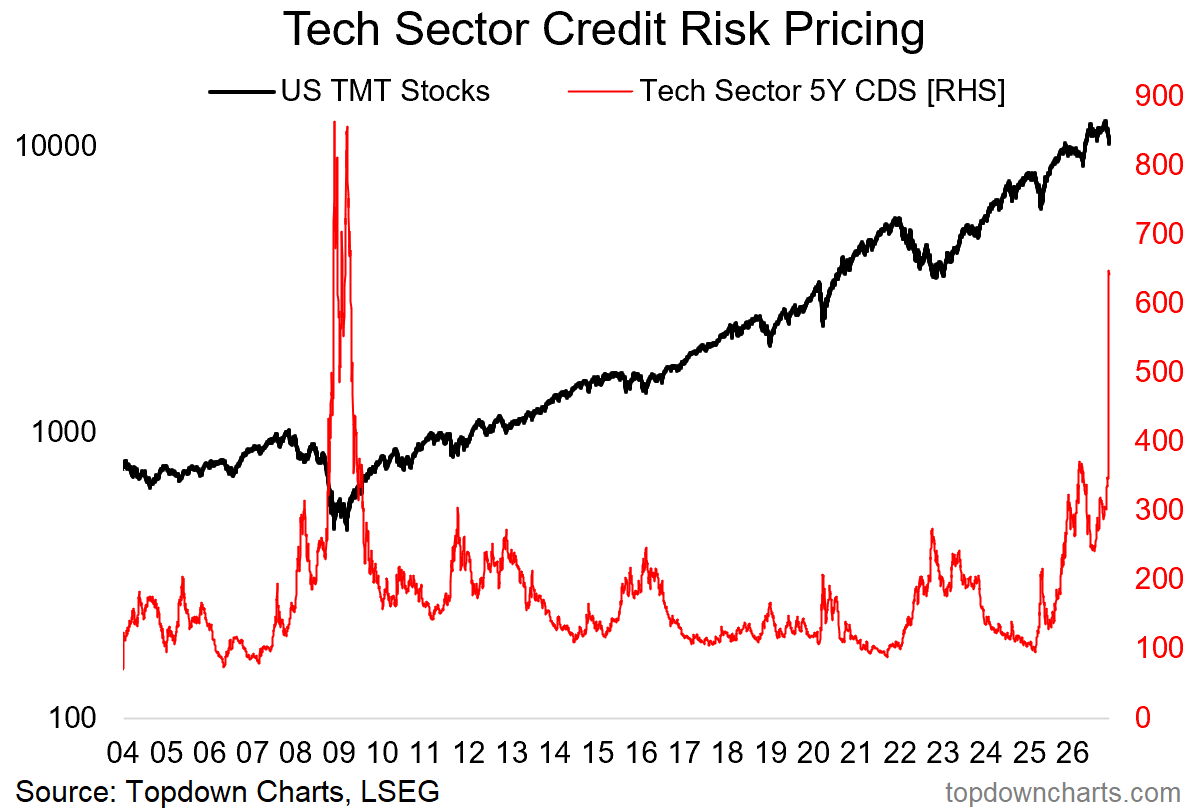
6. Giving Credit: tech sector CDS pricing has gone from rising to spiking post-midterms. There is a mini panic underway in tech stocks as AI stock bubbles bursting in China and Korea have begun to ripple across to the USA, along with concerns that the Dem sweep may present a less friendlier regulatory backdrop for the AI theme.
But one curious thing to note is that this indicator has now reached the highest point since the global financial crisis. Sign of things to come? (…or Sign that markets are overreacting?)
Source: Topdown Charts Professional
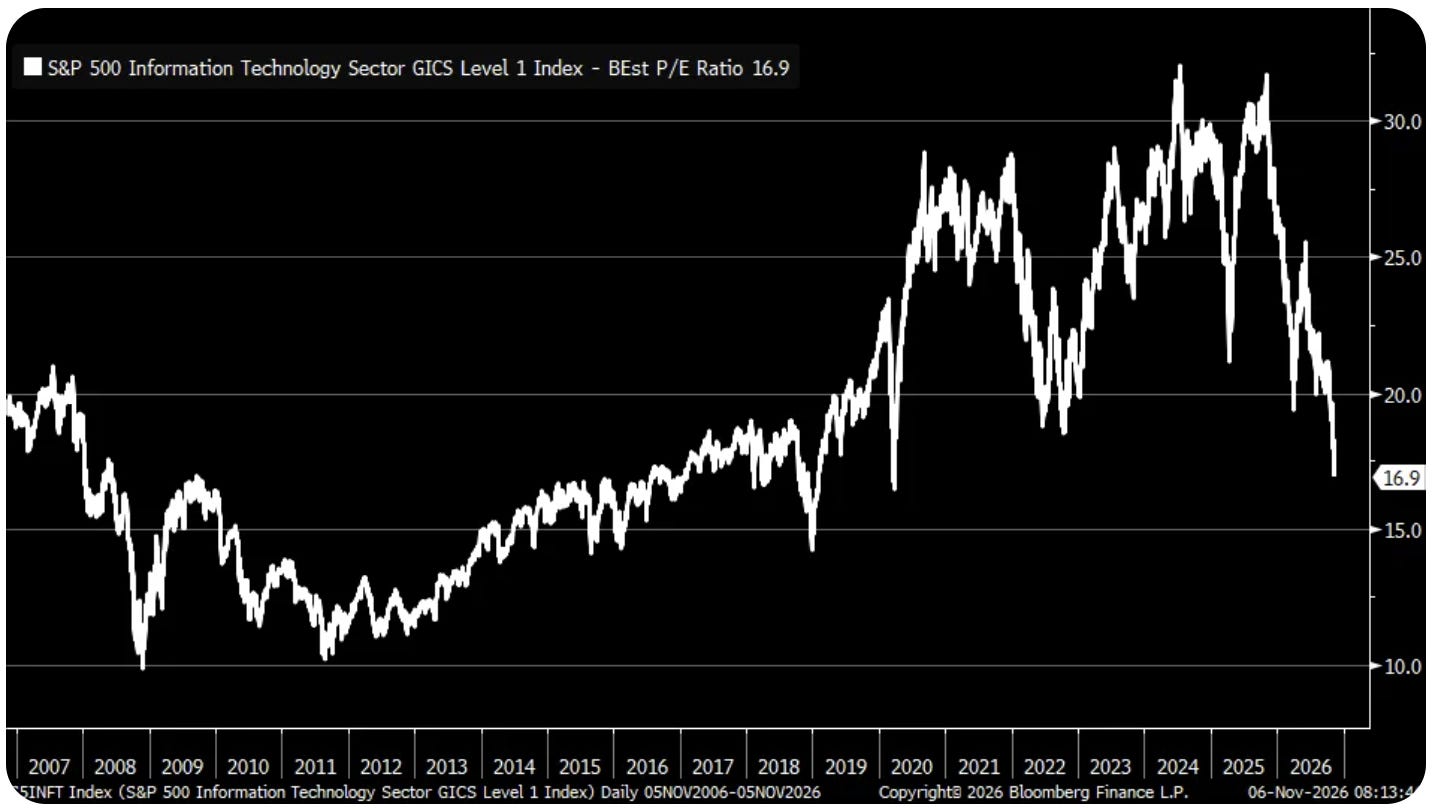
7. Tech Cheap? back on forward PE ratios, Tech looks cheap on a forward PE basis — as cheap as March 2020. Three thoughts on this: a. it could get cheaper (if stocks do repeat history and correct further into Dec); b. it could be a false signal (if earnings disappoint against euphoric AI-hype driven expectations); c. it could be simpler than that and maybe it is just a buying opportunity and we ought not to overthink it (but also not throw caution to the wind; maybe take a risk-controlled punt).
Source: @KevRGordon
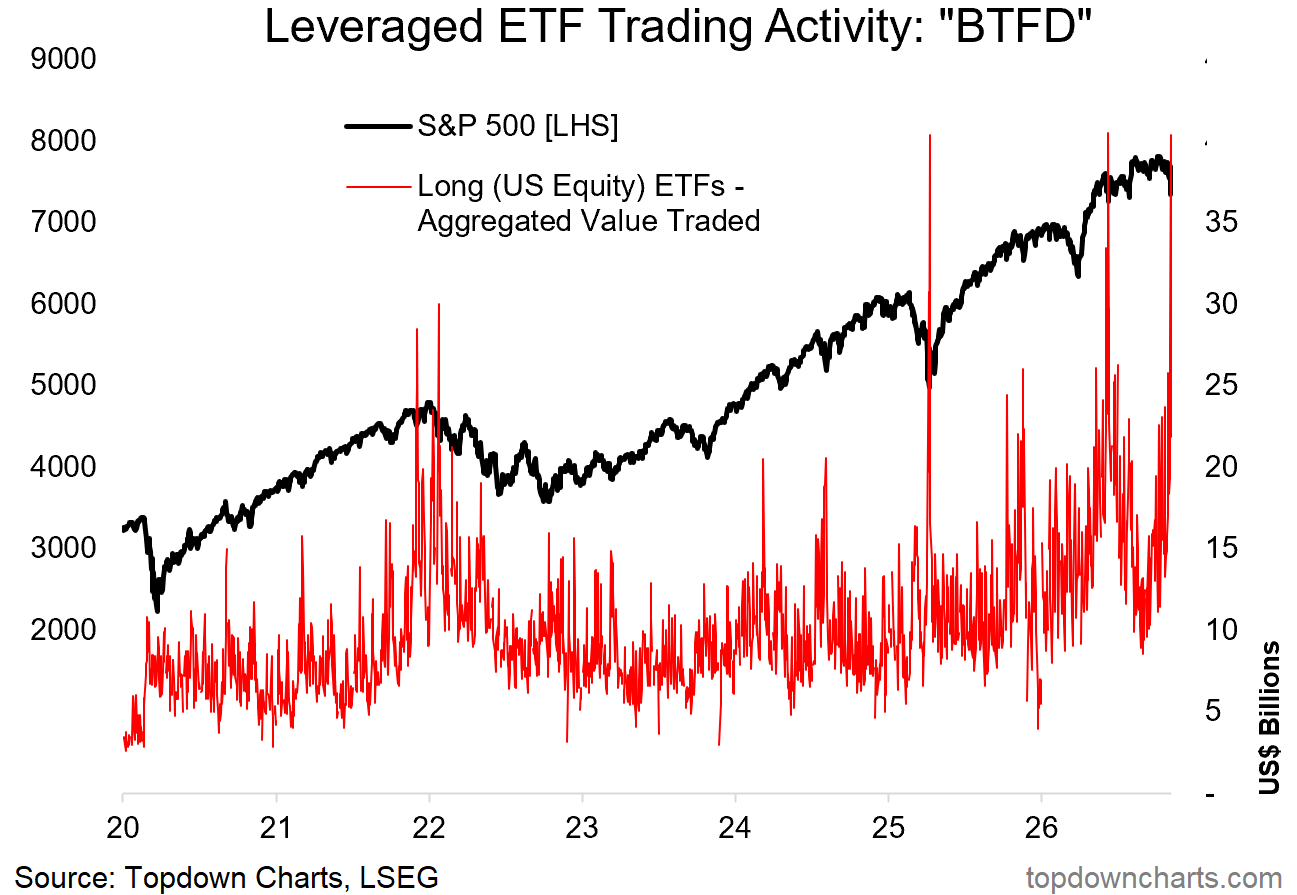
8. Dip-Buyers Deploy: looking at leveraged US equity ETF activity the dip buyers are already out in force. This group best nailed it in early-2025, and did OK this year too, but informatively; they got it quite wrong in the big picture headed into 2022.
Source: Topdown Charts Research Services
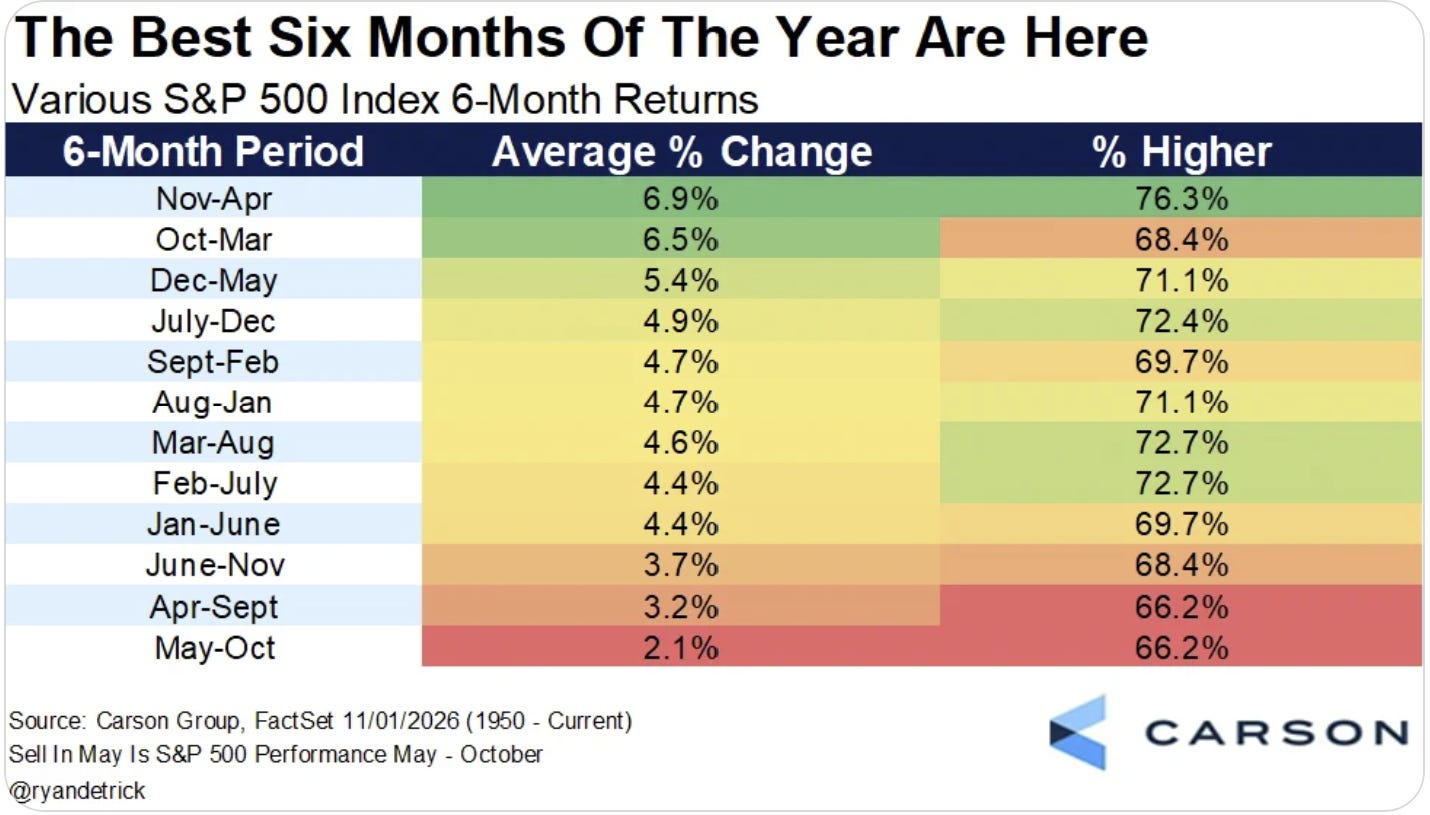
9. Seasonal Sixes: at the risk of overdoing it on seasonality charts lately, we’re heading into what is typically the best 6-month period for the stockmarket (and by the way, maybe lengthening-up the timeframe is a good idea at this point vs the day-to-day minute-to-minute ticks).
One thing I would note or caution on this one: positive 6-month forward returns overall could still involve a major excursion to the downside (during).
Source: @RyanDetrick
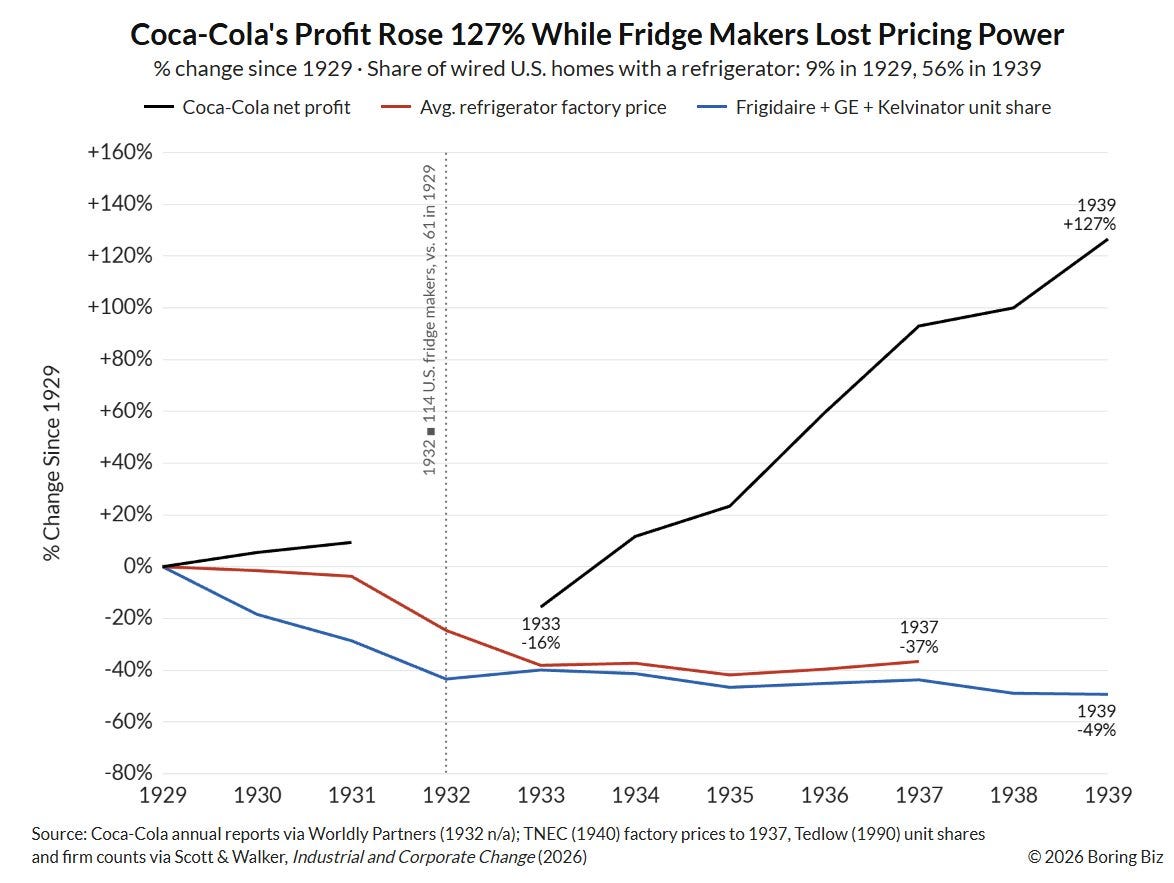
10. Fridges & Coke: here’s an interesting potential parallel to the AI age. It turns out that one of the biggest beneficiaries of the mass adoption of fridges was not fridge-makers, but Coca-Cola: “After fridges became a common household appliance, the biggest benefactor was not the manufacturer companies. It was actually Coca-Cola, who took advantage of the new technology to shift from local soda fountains to bottled and canned products.”
And you see this phenomenon play out over and over. Industrial and manufacturing firms benefited more from electrification than electrical companies, software and services benefited more from the internet than telecom companies, Sears vs Transcontinental Railroad (mail order catalogs), Uber vs GPS & Smartphones, to name a few.
The same will likely be true for AI — and we probably don’t (can’t?) even know just yet who or what will be the biggest beneficiary from an economic value/profit or other metric standpoint yet. But it’s definitely worth thinking about.
Source: @BoringBiz_ via Off The Charts
Comments
Log in or sign up to join the conversation.