

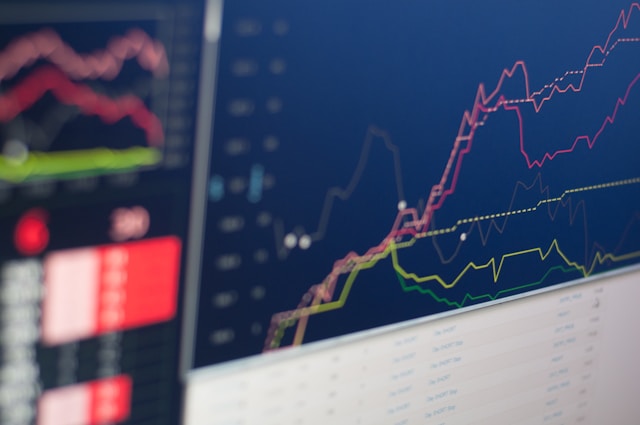
The Semiconductor Index (SOX) returned 88% during Q2, true to 2026’s “Expect the Unbelievable” theme. Micron (MU) surged 242%, Intel (INTC) 216%, and Advanced Micro Devices (AMD) 186%. Other SOX super winners included Astera Labs (ALAB) (341%), Marvell Technology (MRVL) (201%), Credo Technology Group (CRDO) (190%), ARM Holdings (ARM) (134%), Applied Materials (AMAT) (112%), KLA (KLAC) (105%), and Lam Research (LRCX) (103%).
June 30 – Bloomberg (Ryan Vlastelica): “Chip stocks posted their best quarter ever, extending an extraordinary start to the year driven by insatiable demand for artificial intelligence equipment... ‘The story of the past six months is the market going all-in on AI infrastructure, but now people are asking if this is sustainable and if we should be worried,’ said CJ Muse, senior managing director… at Cantor Fitzgerald. The Philadelphia Stock Exchange Semiconductor Index jumped 3.9% on Tuesday to bring its second-quarter gain to 88%, its best quarter ever. It soared 101% in the first half, putting it on track for its best year in its history.”
Historic loose conditions and a mania wouldn’t let a pesky war, Strait of Hormuz closing, inflation scare, and backup in bond yields interrupt the party. The S&P500 returned 15.2% during the quarter, the Nasdaq100 27.7%, and the MAG7 Index 11.7%. The small cap Russell 2000 returned 21.6%. The KBW Bank Index returned 18.2%, with the Broker/Dealers returning 10.1%. Indicative of late-cycle “blow off” market dislocation dynamics, the Goldman Sachs (GS) Most Short Index surged 35.4%.
After a moderate war-related tightening of financial conditions late in Q1, major loosening unfolded throughout Q2. High yield spreads (to Treasuries) closed June at 2.70 percentage points, down from the March 30th high of 3.35 – and the five-year average of 3.44 (and only 17 bps above January’s multiyear low). High yield CDS ended Q2 at 306 bps, down from March 30’s 406 bps (5yr avg. 378bps).
Loosening was a global phenomenon, as indicated by the drop in European bank CDS back to decade lows. After trading to 206 bps on March 30th, EM CDS was back down to 141 bps by the end of Q2 (5yr avg. 198bps). EM spreads to Treasuries narrowed to lows back to 2007.
After a six-week (ended April 29th) $230 billion pullback, money market fund assets surged $321 billion over the past nine weeks to a record $7.947 TN. Liquidity overabundance was readily apparent in record debt issuance.
July 1 – Bloomberg (Michael Gambale): “The pace of new bond sales has been torrid year-to-date, bolstered by the jumbo bond sales from Alphabet Inc. (GOOGL), Amazon.com Inc., Meta Platforms Inc. (META), Nvidia Corp. (NVDA) and SpaceX that are tied to AI and data center build outs. Dealer forecasts for this month is teetering around $100 billion, which would handily exceed July 2025 when there was $81 billion in new debt sold… The $1.176 billion in offerings during the first half of 2026 has handily beat previous 6-month start periods and is the same as the 2020 Covid year… This year has been different with a steady stream of new bond sales that has seen two months issuance volume swell more than $200 billion, with June finishing at $199 billion…”
Issuance is booming almost across the board.
July 1 – Bloomberg: “Goldman Sachs gained ground in underwriting US municipal bonds as the value of deals rose 6.8% year-to-date compared with the same period last year. State and local governments sold $294.3 billion of munis through June vs. $275.6 billion a year ago…”
July 1 – Bloomberg (Ameya Karve): “Total private-label CMBS issuance in June exceeded $16.5 billion, the month’s highest since at least 2016…, part of a roughly one-third surge for 1H to $96.6 billion. US ABS issuance has jumped over 20% so far this year to nearly $213 billion… Sales of new CLOs dropped 18% in 1H, with June’s $10.3 billion some 10% below the month’s average since 2016.”
June 28 – Bloomberg (Bailey Lipschultz and Anthony Hughes): “Wall Street bankers are on a high after record-setting offerings from SpaceX and Google parent Alphabet Inc., lifting expectations for deal activity in the rest of 2026. US IPOs and share sales totaled a record $251 billion through June 26 this year, excluding blank-check companies and other investment vehicles… That tops the high watermark for a half set during 2021’s issuance mania… More deals are on the way, including a steady stream of initial public offerings in the coming weeks, and a potential mega-deal for Anthropic PBC as soon as October.”
June 28 – Wall Street Journal (Paul Hannon): “Fierce competition will dominate artificial intelligence risks driving investment spending to excessive levels, threatening the profitability of leading firms and a sharp reversal that could tip some economies into recession, the Bank for International Settlements said… ‘The race to capture market share may have led to overinvestment,’ said Pablo Hernández de Cos, general manager of the BIS. ‘This could leave the sector more vulnerable if AI under delivers, possibly bringing the current investment boom to an abrupt end.’”
The precariousness of the AI arms race has the attention of global policymakers, with the Bank of International Settlements (BIS) directly addressing the issue in their 2026 Annual Report released this week.
“In the near term, the ongoing AI investment boom raises questions about the sustainability of the current economic expansion. The five largest hyperscalers are set to spend over a trillion US dollars on AI-related capital expenditure from 2025 through 2026. These commitments are outpacing earnings and the free cash flow of these firms, leading some to issue debt to raise additional financing. This investment race may be partly driven by the perception that only a small number of players with superior technology will ultimately dominate the market shares. The intense competition raises the risk of firms over-committing resources to investment projects with still uncertain returns, leaving all firms vulnerable to disappointments in AI payoffs. Model analysis based on such contest motives highlights the downside risk of current AI exuberance. As competitive pressure drives capex higher, the net economic surplus – the total payoff less investment costs – declines for the sector as a whole and could turn negative in adverse scenarios. Disappointment in returns could trigger a sudden pullback in financing and turn the capex boom into a protracted investment bust, with potential knock-on effects on financial conditions.”
“Another risk is that the AI boom runs into a supply side roadblock. The AI build-out has recently been facing growing bottlenecks in electricity, advanced semiconductors and grid equipment. Fast-growing demand for computing power is already pressuring electricity prices and input costs, with potential spillovers to inflation. Looking ahead, these temporary shortages may also amplify over-investment, as firms attempt to lock in future capacity through long-dated contracts that further expose them to any disappointments in demand. Historical episodes of investment booms offer instructive parallels. The canal mania of the 1830s, the British railway mania in the 1840s, the electrification exuberance of the late 1920s (roaring 20s) and the dotcom boom of the late 90s all shared one common trait: a genuine technological breakthrough that attracted capital in excess of what commercial returns could ultimately justify. These episodes ended with an eventual reversal in investment, inducing economy-wide recessions. The scale and pace of the current AI investment boom accompanied by expectations of large productivity payoffs bear resemblance to these precedents, highlighting potential downside risks in the near term.”
June 30 – Reuters (David Carnevali, Crystal Tse, Vinicy Chan, Michelle F. Davis and Ryan Gould): “The year was tipped to be a potential blockbuster in deals and the first half delivered, setting a pace that is likely to continue in the closing months of 2026… ‘People have just accepted the volatility and are investing through it as opposed to waiting until it’s over,’ said Tom Miles, global co-head of mergers and acquisitions at Morgan Stanley (MS). Global transaction values were up around 30% year over year to $2.6 trillion in the first half… That puts dealmakers on course to potentially pass the record haul they achieved in 2021.”
July 1 – Wall Street Journal (Joe Stonor): “Global equity fundraising topped $729.4 billion in the first half of 2026, boosted by SpaceX’s record initial public offering, and marking the second-best start to a year on record, according to Mergermarket data… Counting SpaceX as a technology company, tech deals accounted for around $302 billion of global issuance—an all-time record for the sector in the first six months of a year. Tech companies have raised more than $100 billion in the first six months of a year only twice before—in 2000 and in 2021. Neither period augured well for the near-term performance of equity markets, however.”
July 2 – Bloomberg (Manuel Baigorri, Dong Cao, Pei Li, and Elffie Chew): “The world has faced plenty of disruption this year, but that hasn’t derailed business in and out of the Asia Pacific, where the volume of deals such as mergers and acquisitions has already topped $750 billion in 2026. The first-half figure is 30% higher than a year ago… Dealmaking has been strong worldwide as well, despite geopolitical ructions and market volatility — global transaction values, at $2.6 trillion, are on course to pass a record haul from 2021…”
July 3 – Reuters (Anousha Sakoui): “Goldman Sachs increased its share of mergers and acquisitions advisory work involving Europe, the Middle East and Africa in the first half of 2026, capturing the biggest slice of the market in the period for nearly a decade, LSEG data showed. Dealmaking in the region totalled $676 billion during the first half of 2026, more than double 2025 levels and a 19-year high…”
June 30 – Bloomberg (Selcuk Gokoluk): “Total sales of international bonds by emerging-market issuers hit a record in the first half of 2026 as sovereigns and corporations take advantage of the tightest spreads in almost two decades. EM entities sold $450 billion in dollar- or euro-denominated bonds in international markets during the January-June period, up 15% from a year earlier… Borrowers from six nations — Mexico, Saudi Arabia, South Korea, Poland, Turkey and Brazil — each raised more than $10 billion. The boom comes as the extra yield on EM debt over US Treasuries fell to a post-2007 low of 154 bps in June.”
The BIS insightfully noted historical parallels to the 1830’s canal mania, the 1840’s British railway mania, “roaring twenties” electrification exuberance, and the dotcom boom. Never, however, has the world experienced such synchronized Credit excess, highly leveraged speculative Bubbles, and investment booms.
A couple Friday Bloomberg headlines: “US at 250 – Political Stress, Market Reality” and “250 Years Later, Democracy Needs Our Courage.” The Washington Post: “A Toast to America at 250, Glowing and Decaying All at Once.” NPR: “House Democrats Accuse Trump of ‘Hijacking’ America’s 250th Birthday for his Own Gain.” From the Guardian: “‘The Wheels are Coming Off’: Readers Reflect on the 250th Anniversary of the American Experiment.” CNN: “America has the Big Birthday Blahs.”
Hopefully, we can put politics and the blahs aside for a day to celebrate an incredible achievement. I have fond memories of our nation’s Bicentennial Celebration. Pride and excitement were in abundance over a period of months leading up to July 4, 1976. I recall many school-related events, highlighted by the Freedom Train’s highly anticipated arrival to our community. Being part of millions throughout the country to visit this enriching mobile museum of American history, we were inspired by the national wave of Bicentennial pride and enthusiasm.
Outstanding Treasury securities ended 1976 at $1.040 TN, or 55% of GDP. Total Debt Securities reached $1.376 TN, or 73% of GDP, with Equities weighing in at 55% of GDP. Total Securities of $2.41 TN tallied to 129% of GDP. Almost five decades later, Treasuries have inflated to $30.642 TN, or 96% of GDP. Equities have approached $120 TN, or almost 380% of GDP – with Total Securities nearing 560% of GDP. After ending 1976 at $5.437 TN, or 344% of GDP, Household Net Worth finished Q1 at $183 TN, or 575% of GDP (Q2 will be meaningfully higher).
I’m reminded of Peter Warburton’s 2000 classic, “Debt and Delusion.” Decades of inflationism have left our troubled nation with a legacy of unsustainable debt and delusion. How do we celebrate 250 years of freedom and liberty while shackled in chains of debt and inflation dependency?
The harsh reality is that we celebrate our Semiquincentennial while in the throes of a most obscene Gilded Age.
“Thirty-eight percent (38%) of Likely U.S. Voters think the country is heading in the right direction, according to a new Rasmussen Reports national telephone and online survey for the week ending June 25, 2026.”
“YouGov/Economist tracker: as of late June 2026, the weekly tracker showed 29% saying the country is headed in the right direction.”
June 30 – Wall Street Journal (Miriam Gottfried): “America knows how to manufacture millionaires. Over 440,000 people—or more than 1,200 a day—became millionaires in the U.S. in 2025, accounting for nearly half of the world’s new millionaires, according to… UBS (UBS)… The number of millionaires globally rose in 2025, reaching record levels in every market that UBS tracks. More than 23.6 million Americans are now worth seven figures or more. The fastest-growing segment globally, rising at a 7.3% clip over the past five years, were those with $50 million to $100 million in wealth. The U.S. gains have come thanks in large part to surging financial markets.”
June 30 – Bloomberg (Myriam Balezou): “The number of billionaires has jumped almost 13.1% to a record 3,302 in the past year, driven by substantial growth in the US and Asia, according to UBS Group AG. Billionaires increased their total assets by 25% in the year to April 2026, out-pacing the overall rise in the world’s wealth… The bank recorded 18 individuals with wealth situated between $50 and $100 billion and a further 19 with assets above $100 billion, 15 of which are based in the US. The report showed that global personal wealth jumped 10.8% in 2025, its sharpest acceleration since 2017, eclipsing gains of 4.6% in 2024 and 4.3% in 2023. There were nearly a million more millionaires created during the year, with growth across all markets tracked by UBS.”
June 29 – Los Angeles Times (Roger Vincent, Lily Wright, Laurence Darmiento): “With SpaceX's historic initial public offering minting a small army of new millionaires overnight, the Southern California housing market is bracing for a big wave of buyers looking to upgrade their digs or perhaps snag a second home, potentially driving up prices in some in-demand neighborhoods… At least 4,000 current and former SpaceX employees are expected to become millionaires, with about 400 of them earning $100 million or more, said Andrew Benson, chief executive of Hill.com…”
For the truly obscene:
June 30 – New York Times (Ben Protess, Andrea Fuller, Eric Lipton and David Yaffe-Bellany): “President Trump reaped a stunning windfall in his first year back in the White House, including about $1.4 billion from his family’s cryptocurrency businesses, a new filing shows. All told, the president pulled in at least $2.2 billion, a figure that includes other parts of his vast holdings, such as his real estate assets. That compares to a minimum of $622 million his enterprises pulled in for all of 2024, before he returned to the presidency. One of his biggest hauls in 2025 came when an investment firm tied to the United Arab Emirates bought nearly half of the Trump family’s main crypto company, World Liberty Financial, a transaction that blurred the line between foreign policy and private enterprise.”
July 1 – Wall Street Journal (Neil Mehta, John West, Sam Kessler and David Uberti): “Unlike other presidents who generally have divested holdings or established blind trusts, Trump put many of his assets into a revocable trust overseen by Donald Trump Jr., who also co-heads the real estate and hospitality-focused Trump Organization with one of the president’s other sons, Eric Trump… On Wednesday, Trump told reporters he didn’t talk to the people who managed his money and he was doing well because the stock market was hitting record highs. ‘You know why I’m profiting? Because the stock market is going up,’ Trump said. ‘We’re all profiting, I’m profiting because I have a lot of money and a lot of cash.’”
It will be a heck of a challenge to explain this period to future generations. Decades of inflation culminated in unmatched monetary disorder. There is literally “money” sloshing everywhere (for the taking) – at home and abroad. Credit is readily available to even the lowest quality borrowers. Unprecedented speculative leverage fuels myriad Bubbles. Easy money and asset inflation breed corruption. And while there’s finally some discussion in policy circles, there are no meaningful efforts to restore monetary stability.
The quarter experienced history’s largest IPO, with SpaceX market capitalization spiking to a ridiculous $2.6 TN. Morgan Stanley modeling SpaceX’s revenues to reach $3.4 trillion by 2040. The world’s first trillionaire, who happens to be a political operative and (unsuccessful) “DOGE” mastermind.
July 2 – New York Post (Lauren Elkies Schram): “Leave it to the ultra-wealthy to secretly drop $125 million on a building just to demolish it. Hedge fund billionaire Ken Griffin spent three years using a web of anonymous LLCs to quietly buy up all 138 units, plus the ground-floor retail space, of the Solaris condominium in Miami… The 22-story tower in Miami’s Brickell financial district was one of the final roadblocks in Griffin’s quest to build a multi-billion-dollar corporate campus.”
July 2 – Forbest (Mary Whitfill Roeloffs): “Based on interviews with a half-dozen luxury event planning sources estimating everything from securing the iconic venue to elaborate florals and tight security, Forbes estimates the Swift-Kelce festivities will cost at least $20 million—on par with the lavish Venice nuptials of billionaire Jeff Bezos and Lauren Sanchez that captured the world last summer.”
The thermometer reached about 82 degrees in Washington DC for the July 4, 1976, Bicentennial celebration. Hundreds of thousands packed the National Mall to watch a spectacular fireworks display, with some one million visiting our nation’s capital for a special day of activities.
Saturday’s forecast calls for temperatures 20 degrees higher (102f). It’s sadly fitting for the President’s lavish 250 party and monster fireworks display to languish in furnace suffocation. People across our nation, throughout Europe and the world, do not share the view of climate change as a “hoax” or “the greatest con job ever perpetrated on the world.” History will be unforgiving.
“Communism is the Greatest Threat to our Country since World War I, World War II, Pearl Harbor, or 9/11! President DONALD J. TRUMP.” Truth Social, June 28, 2026
“Stop this horrible threat of cancer that’s permeating our country called communism.”
“The greatest threat to our country since its founding”
“These ruthless communists will attack all religions, but in particular Christianity. They always do.”
"You can be a communist, or you can be a patriot, you cannot be both."
“McCarthyism.” “The Road to Serfdom.” Four crazy, likely unbelievable, months until the midterms. Rather than villainize the young far-left “democratic socialists”, it might be more productive to try to understand the impetus behind this movement.
Loose financial conditions and late-cycle blow-off excess continue to mask major social and economic upheaval. Today’s Gilded Age has turned toxic for large sections of our population. It may not yet be obvious, but we’ve neglected safeguarding Capitalism from dangerous malfunction. Contemporary finance has failed us. Fiscal policy is completely out of control, while monetary management negligently fostered inflationism, market dysfunction, and unprecedented monetary disorder.
The younger generation has good reason to feel cheated by my generation. Of course they will eventually revolt against a system of egregious wealth inequality - one they perceive as offering limited opportunity. Of course they will revolt against a system they, understandably, see as corrupt.
It’s sad, especially at our nation’s 250-year anniversary, to see growing numbers of young Americans rebuff Capitalism in favor of the alluring promise of fairness and equality. But labeling these fellow Americans “ruthless communists” and a “horrible threat of cancer” is as absurd as stating that the immigrant population are murders that eat the dogs and cats.
I was unfamiliar with Melat Kiros, the 29-year-old democratic socialist, who took down longtime Colorado Rep. Diana DeGette.
Kiros: “We have to root out the corruption and get money out of our politics. It’s about political will — and that means we have to vote out any of the incumbents that are standing in our way by taking that kind of corporate PAC money. I’m dead serious about this issue. We have to start setting a standard now.”
Listening to Ms. Kiros’ post-election comments, I was struck by her eloquence in conveying an anti-corruption message. I expect “anticorruption” to resonate almost as much as “affordability” – for the midterms and beyond. And just wait until Bubbles starts bursting.
If the President has a sincere interest in protecting our nation from “the communists,” we would all be well-served by a shift in his focus on corruption and reining in conspicuous Bubble excess. Much like Saturday’s DC parade and festivities, things are surely too hot for that. Wishing for a cooler and happier fourth.
For the Week:
The S&P500 rose 18% (up 9.3% y-t-d), and the Dow gained 2.0% (up 10.1%). The Utilities slipped 0.7% (up 7.8%). The Banks added 0.9% (up 12.1%), and the Broker/Dealers rallied 3.7% (up 11.9%). The Transports advanced 0.9% (up 26.8%). The S&P 400 Midcaps dipped 0.4% (up 15.1%), and the small cap Russell 2000 declined 0.5% (up 20.7%). The Nasdaq100 increased 0.7% (up 16.2%). The Semiconductors dropped 4.4% (up 78.3%). The Biotechs rose 3.2% (up 24.2%). With bullion rallying $88, the HUI gold index recovered 2.1% (down 4.9%).
Three-month Treasury bill rates ended the week at 3.667%. Two-year government yields increased four bps to 4.14% (up 66bps y-t-d). Five-year T-note yields rose 10 bps to 4.23% (up 51bps). Ten-year Treasury yields jumped 11 bps to 4.48% (up 32bps). Long bond yields rose 12 bps to 4.99% (up 14bps). Benchmark Fannie Mae MBS yields jumped 12 bps to 5.45% (up 40bps).
Italian 10-year yields jumped 12 bps to 3.71% (up 16bps y-t-d). Greek 10-year yields gained seven bps to 3.61% (up 17bps). Spain's 10-year yields rose eight bps to 3.42% (up 13bps). German bund yields gained nine bps to 2.94% (up 8bps). French yields rose nine bps to 3.73% (up 16bps). The French to German 10-year bond spread was unchanged at 79 bps. U.K. 10-year gilt yields gained five bps to 4.78% (up 30bps). U.K.’s FTSE equities index advanced 1.6% (up 7.4% y-t-d).
Japan’s Nikkei 225 Equities Index added 0.6% (up 38.5% y-t-d). Japan’s 10-year “JGB” yields surged 17 bps to 2.79% (up 72bps y-t-d). France’s CAC40 gained 1.5% (up 4.4%). The German DAX equities index surged 4.5% (up 5.3%). Spain’s IBEX 35 equities index gained 2.2% (up 14.7%). Italy’s FTSE MIB index jumped 3.0% (up 17.5%). EM equities were mixed. Brazil’s Bovespa index added 0.6% (up 8.2%), while Mexico’s Bolsa index slipped 0.4% (up 4.0%). South Korea’s Kospi declined 3.8% (up 91.9%). India’s Sensex equities index increased 0.9% (down 8.7%). China’s Shanghai Exchange Index added 0.4% (up 1.9%). Turkey’s Borsa Istanbul National 100 index gained 1.0% (up 28%).
Federal Reserve Credit declined $12.5 billion last week to $6.677 TN, with a 29-week expansion of $187 billion. Fed Credit was down $2.212 TN from the June 22, 2022, peak. Since the September 11, 2019 restart of QE, Fed Credit has expanded $2.951 TN, or 79%. Fed Credit inflated $3.866 TN, or 138%, since November 7, 2012 (712 weeks). Elsewhere, NY Fed holdings for foreign owners of Treasury, Agency Debt dropped another $12.5 billion last week to $2.912 TN - the low back to September 2010. “Custody holdings” were down $320 billion y-o-y, or 9.9%.
Total money market fund assets (MMFA) surged $47.7 billion to a record $7.948 TN. MMFA were up $870 billion, or 12.3%, y-o-y - having ballooned a historic $3.364 TN, or 73%, since October 26, 2022.
Total Commercial Paper dropped $35.9 billion to $1.361 TN. CP declined $78 billion, or 5.4%, y-o-y.
Freddie Mac 30-year fixed mortgage rates declined six bps to 6.43% (down 24bps y-o-y). Fifteen-year rates fell five bps to 5.79% (down 1bp). Bankrate’s survey of jumbo mortgage borrowing costs had the 30-year fixed rate down two bps to 6.65% (down 22bps).
Currency Watch:
June 29 – Bloomberg (Ruth Carson): “A sharp rise in the dollar may emerge as one of the biggest ‘pain trades’ in the second half of the year, according to HSBC Holdings Plc. The bank expects the dollar to strengthen gradually through the first half of 2027, and warns the rally could become ‘explosive’ if the Federal Reserve signals it’s prepared to tighten policy more than markets have priced in and if geopolitical tensions flare up again… ‘A stronger dollar would be painful, but we see the ‘pain trade’ in the FX market taking the form of a more explosive period of USD strength,’ analysts including Paul Mackel said…”
For the week, the U.S. Dollar Index dipped 0.5% to 100.857 (up 2.6% y-t-d). On the upside, the South African rand increased 1.5%, the New Zealand dollar 1.2%, the British pound 1.1%, the Norwegian krone 0.9%, the Swedish krona 0.9%, the Swiss franc 0.8%, the Australian dollar 0.6%, the euro 0.5%, the South Korean won 0.3%, the Japanese yen 0.3%, the Mexican peso 0.2%, the Singapore dollar 0.2%, and the Brazilian real 0.1%. China's (onshore) renminbi gained 0.32% versus the dollar (up 3.09% y-t-d).
Commodities Watch:
The Bloomberg Commodities Index was little changed (up 12.2% y-t-d). Spot Gold recovered 2.2% to $4,177 (down 3.3%). Silver rallied 5.5% to $62.4158 (down 12.9%). WTI Crude slipped 45 cents, or 0.7%, to $68.78 (up 20%). Gasoline was about unchanged (up 72%), while Natural Gas declined 1.0% to $3.245 (down 12%). Copper increased 0.3% (up 10%). Wheat recovered 2.1% (up 17%), and Corn jumped 3.0% (down 4%). Bitcoin (BTC.X) recovered $2,900, or 4.8%, to $62,700 (down 29%).
Market Instability Watch:
July 2 – Financial Times (Richard Waters): “This week, as the second quarter came to a close, the semiconductor takeover of the stock market felt just about complete. Memory chipmaker Micron joined the trillion-dollar club, after a 730% surge in its stock price in the space of a year. And with the Philadelphia Semiconductor Index rising 90% over the past three months, the momentum in the AI boom swung back to chips. Is this peak semiconductors? Memory, in particular, is a notoriously cyclical industry.”
July 3 – Bloomberg (Levin Stamm): “Investors are turning away from US stocks at the fastest pace since March, according to Bank of America Corp. The country’s stock funds had $17.2 billion outflows in the week through July 1…”
July 1 – Reuters (Makiko Yamazaki, Tamiyuki Kihara and Leika Kihara): “Japanese officials are abandoning their habit of telegraphing intervention risks, instead signalling a more targeted campaign to squeeze speculators and raise the cost of betting against the battered yen… Departing from the calibrated jawboning that preceded previous bouts of intervention, the Ministry of Finance (MOF) could step in abruptly to wipe out speculative yen positions, the sources said.”
July 2 – Bloomberg (Masaki Kondo and Ruth Carson): “Overseas investors offloaded the most Japanese bonds in three years in June… The outflow totaled ¥3.12 trillion ($19.2bn)… That was the biggest withdrawal since January 2023, separate monthly and balance-of-payments figures showed.”
U.S. Credit Trouble Watch:
July 2 – Wall Street Journal (Matt Wirz): “The giant sucking sound in private-credit funds got louder in the second quarter as investors tried to pull more money out and got less back. Investors asked to withdraw $15.6 billion from widely held private-credit funds in the second quarter, up from the roughly $13.9 billion they tried to pull from those funds in the prior quarter. Despite the rising requests, fund managers returned $5.9 billion in the second quarter, down from the $7.4 billion they agreed to pay out in the prior period, according to… investment bank Robert A. Stanger.”
July 2 – Financial Times (Eric Platt): “Investors attempted to pull $4.7bn from two of Blue Owl Capital’s flagship private credit funds in the second quarter, underscoring the group’s challenges as it attempts to stem an exodus by wealthy clients… Redemption requests at the 20 funds across the sector tracked by the FT hit $22bn in the quarter. It was the second consecutive quarter that investors sought to withdraw more than $20bn, with the median request increasing to 8.7% of the funds’ assets. That compares with 7.1% in the previous quarter. Private credit funds have honoured less than 40% of the redemption requests they have received…, leaving more than $14bn of capital locked up in the vehicles.”
July 2 – New York Times (Rob Copeland): “For months, the private credit industry has tried to quell widespread concerns about the soundness of their loans. And in an indication that its top executives thought their persuasions were working, Marc Lipschultz, a co-chief executive of the industry giant Blue Owl, said in late May that the ‘freak out’ moment had passed. Well, the latest results from Blue Owl… showed that investors were not done worrying about private credit, once the prize pig of Wall Street. Blue Owl said it received requests to withdraw as much as 38% from one private credit fund focused on software and technology companies. Another, larger fund saw 19% of investor money try to leave.”
July 3 – Wall Street Journal (Heather Gillers): “Software companies were struggling to pay off private loans even before the SaaS-pocalypse. The slice of private software debt worth less than 80% of its original value hit a five-year high last year, according to an analysis provided by MSCI. That share peaked at 6.1% at the end of September, or roughly five months before software-company stocks tumbled in value on concerns their businesses might be outmoded by artificial-intelligence tools.”
June 30 – Reuters (Nell Mackenzie and Iain Withers): “The majority of publicly traded business development companies (BDCs)… have turned unprofitable due to falling asset values and rising costs, a Reuters analysis shows, in the latest sign of pressure building in this highly leveraged corner of finance. The $3.5 trillion private credit industry… has lately come under stress due in part to its sizeable exposure to software companies disrupted by AI advances. BDCs are investment loan vehicles that make money by collecting interest payments on credit extended to borrowers. A Reuters analysis of balance sheet data from S&P Global Market Intelligence examined 53 publicly traded BDCs, finding that their loan losses and debt costs have jumped. A number of those BDCs are also utilizing more off-balance-sheet borrowing.”
June 28 – Bloomberg (J.J. McCorvey and Rene Ismail): “The private credit industry was dubbed ‘shadow banking’ as it took business away from traditional lenders. Buy Now, Pay Later companies have been referred to as hawking ‘phantom debt’ that falls outside Wall Street’s typical tracking methods. Now, these two more opaque corners of finance are overlapping in a big way… Officially known as ‘forward-flow agreements,’ investing heavyweights like Blue Owl Capital Inc. (OWL), KKR & Co. (KKR) and Elliott Investment Management are increasingly agreeing to pre-purchase billions of dollars worth of loans before they’re made… That’s been a boon to the likes of Klarna Group Plc, Affirm Holdings Inc. (AFRM) and PayPal Holdings Inc. (PYPL), offering fuel for the origination machines at the heart of a business more Americans are embracing.”
July 2 – Bloomberg (Jonathan Randles and Randi Love): “Signs of the market stress squeezing American distilleries are piling up in warehouses across Kentucky and Tennessee, where owners are waiting for millions of gallons of barreled whiskey to age into something more valuable. Now that the bourbon boom has faded, lenders are confronting an uncomfortable reality: financially speaking, young whiskey is anything but liquid. US whiskey supply has hit historic highs and is outpacing demand, while tariffs have shrunk exports… Missed loan payments have forced some lenders to take control of struggling distilleries before whiskey is ready for bottling. That has put banks and restructuring advisers in the dubious position of trying to sell barrels into an over-saturated market marked by hundreds of distillery closures, production cuts at larger makers and fewer buyers.”
Global Credit Bubble and Boom Watch:
June 28 – Bloomberg (Bastian Benrath-Wright and Esteban Duarte): “An artificial-intelligence bust, inflation and fiscal stress are among the most alarming threats to global prosperity at present, the Bank for International Settlements warned. In its annual report…, the… institution cited those on a list of ‘pressure points’ that currently ‘demand attention,’ with underlying financial vulnerabilities lurking that could amplify any shock. ‘The global economy remains caught in the crosscurrents of progress and peril,’ Basel officials said… ‘Resilience is being increasingly tested and strained.’”
June 30 – Bloomberg (Craig Stirling and Fabrice Obrist): “Artificial intelligence debt issuance may point to more of a financial stability concern than stock valuations, according to a senior International Monetary Fund official. Tobias Adrian, director of the fund’s Monetary and Capital Markets Department, told the European Central Bank’s annual symposium… that recent market behaviour doesn’t necessarily signal a bubble, but he does wonder about how companies are borrowing. ‘What is quite worrisome from a financial stability perspective is that the major tech firms are starting to leverage up themselves,’ Adrian said… ‘There’s a potential maturity mismatch in between the duration of the physical assets and the duration of the debt.’”
June 30 – Bloomberg (Tom Rees): “Autonomous artificial intelligence agents risk causing ‘market meltdown’ and may need tighter regulation, Bank of England Deputy Governor Sarah Breeden warned… Breeden said that agents ‘could amplify volatility in stress’ in financial markets if they all respond in the same way to similar prompts… ‘What these two examples – agentic commerce and agentic trading – both highlight is that, as AI capabilities increase, we must keep asking whether existing, technology-agnostic regulatory frameworks remain sufficient,’ she said…”
July 2 – Bloomberg (Charlotte Plaskwa): “On paper, the US corporate bond market is getting safer as more high-rated tech companies sell debt. Many investors fear that safety will prove illusory. Some of the biggest corporate bond sellers this year, including Amazon.com Inc., Meta Platforms Inc., and Alphabet Inc. are rated in the AA tier. As they’ve sold more notes, they’ve effectively lifted the average rating of Bloomberg’s US investment-grade bond index: AA and A rated bonds account for 52% of the index — up from about 46% in 2021… Companies have sold around $220 billion of bonds tied to AI this year across currencies — up 62% from all of 2025… About $107 billion of that supply came in US dollars from just four hyperscalers… In June, chipmaking giant Nvidia Corp. and Elon Musk’s SpaceX sold $25 billion of bonds each, powering monthly high-grade sales to a fresh record.”
July 2 – Bloomberg (Nir Kaissar): “Bond rating firms and debt markets generally agree about the credit quality of companies. When they don’t, investors must choose who to believe… But it won’t be easy to ignore the developing rift over Elon Musk’s Space Exploration Technologies… Only a few weeks old as a public company, it has already floated $25 billion in public debt on top of a $2 trillion wager on its stock… Ratings companies and the bond market have very different views about how things are going. SpaceX’s bonds have an average rating of BBB across the three majors… The bond market has other ideas. There, quality is judged by a bond’s credit spread… above Treasuries… The wider the spread, the lower the quality. Corporate bonds with a BBB rating are trading at an average credit spread of 0.92 percentage point. SpaceX’s bonds, by contrast, trade at a significantly greater average spread of 1.62 percentage points across maturities, higher than BB rated junk bonds’ average spread of 1.55 percentage points.”
July 1 – Bloomberg (Tim Leemaster and Dani Burger): “The variety, range and scope of deals in the market suggests transaction volumes will continue to remain strong in the second half, according to Melissa Sawyer, head of global mergers and acquisitions at Sullivan & Cromwell. ‘We are seeing deals of all sizes and all sectors,’ Sawyer said... ‘It’s not just one or two blockbuster transactions but a lot is happening and it is across borders, and so for me that means the pipeline will continue to refill as deals run off.’”
June 28 – Financial Times (Jamie Smyth, Martha Muir and Oliver Barnes): “The AI boom is fuelling a record surge in dealmaking in the US power and utility industry, as companies compete for capital to build energy infrastructure for data centres. Merger and acquisition transactions in the sector hit a record $203.6bn in the first five months of the year, more than 40% higher than the $141.7bn figure for the whole of last year, according to… Deloitte. Investment in data centres was $151.5bn, more than double the $68.7bn announced over the same period a year earlier. Investment in data centres in all of 2025 was $321bn.”
July 1 – Bloomberg (Emily Graffeo): “A private bond market dating back more than a century is opening a new front in the trillion-dollar AI funding boom, allowing tech borrowers to sell debt directly to deep-pocketed insurance firms. Borrowers are hunting for capital wherever they can to finance the vast sums needed for the build out of AI. Meanwhile, life insurers facing record demand for annuities are seeking longer-term, high-grade corporate bonds to finance those multi-decade liabilities. Private bonds, where companies sell securities directly to groups of select institutional investors, are bridging the gap. Issuance hit roughly $81 billion this year through May, the most for the period in data going back to 2016… Industry participants say AI is fueling the surge.”
June 29 – Bloomberg (Aashna Shah): “The business of overseeing individually tailored municipal-bond portfolios has continued to grow rapidly, turning those money managers into the biggest holders of state and local government debt, according to JPMorgan… The assets in so-called separately managed accounts, known as SMAs, swelled by about 7% last year to a total of $1.6 trillion…, capping a 44% jump since 2017. The bank said in a research note that such portfolios held roughly 32% of all outstanding municipal bonds by the end of 2025, far eclipsing other traditional buyers like insurance companies, banks and mutual funds.”
June 30 – Wall Street Journal (Kwanwoo Jun): “South Korea’s exports posted the strongest growth in nearly 50 years as the global artificial-intelligence buildout keeps fueling demand for chips… Exports surged 70.9% on the year in June, setting a monthly record of $102.25 billion and notching the fastest pace of expansion since October 1978. That built on a revised 53.4% increase in May…”
June 28 – Reuters (Joyce Lee, Hyunjoo Jin and Heekyong Yang): “South Korea… laid out a sweeping industrial strategy centred on semiconductors and artificial intelligence, as President Lee Jae Myung unveiled over $576 billion in chip investment to secure global dominance and rebalance growth. The plan, anchored by Samsung Electronics (SSNLF) and SK Hynix (HXSCL), marks Lee's boldest push yet to align South Korea's AI and chip ambitions with his pledge to narrow domestic regional disparities and revive economies beyond the Seoul metropolitan area.”
June 28 – Bloomberg (Yoolim Lee and Soo-hyang Choi): “South Korea is orchestrating investments of at least 1,350 trillion won ($880bn) from companies including Samsung Electronics Co. and SK Hynix Inc. into chips and data centers, a giant outlay in digital infrastructure it called essential to surviving the AI era. Samsung Group and SK Group said they plan to build two chipmaking plants apiece in the southwest for a total of 800 trillion won, to rapidly expand production capacity to meet increasing demand.”
June 29 – Bloomberg (Heesu Lee): “South Korea imposed tougher property curbs in neighborhoods outside Seoul with proximity to semiconductor hubs after a boom in the industry fueled sharp home-price gains, raising concerns about speculative buying. The government designated Hwaseong’s Dongtan district, Yongin’s Giheung district and the city of Guri as speculative zones and areas subject to tighter lending restrictions from July 1…”
June 30 – Reuters (Leika Kihara): “The global AI boom powered Asia’s manufacturing sector in June… Price pressures, however, remained elevated as supply shortages and shipping delays lengthened lead times, suggesting the energy shock tied to the Middle East conflict could intensify across the region in coming months… China, Japan and South Korea saw factory activity expand in June on solid demand for chips, computers and other AI-related products, as well as stockpiling by firms seeking to guard against shortages and price rises from the Middle East conflict.”
June 30 – Reuters (Promit Mukherjee): “Canada’s economy rebounded more than expected in April…, following a slight contraction in the previous month, allaying concerns that a tariff-led slowdown was getting more entrenched. The Gross Domestic Product in April grew by 0.5% on a month on month basis, Statistics Canada said, adding the growth was the largest monthly expansion in nine months.”
Leveraged Speculation Watch:
July 2 – Bloomberg (Simon White): “Record leverage is sweeping through the financial system, exposing hedge funds, banks, retail traders and money market funds to potential mounting losses. This is a market hungry for maximal returns. Since the memory melt-up, there has been a surge in demand for levered products offering geared returns on the handful of stocks best positioned to benefit. Retail demand for leveraged exchange-traded funds has soared to record highs, rising exponentially in April when Micron et al’s earnings expectations exploded… ETFs are only the tip of the leverage iceberg, but let’s start there. Banks supply much of what is required by ETFs, typically through total return swaps. The bank pays the ETF its required return, say 2x or 3x of a stock or index, and buys a combination of cash equities and derivatives to hedge, with the cash equities often repo-ed out.”
June 29 – Bloomberg (Alex Harris): “US equity financing needs have been building up and risk crowding out capacity in bank dealers’ balance sheets, which in turn could boost short-term interest rates even amid limited quarter-end pressures. As the end of the first half is approaching, equity financing costs have soared near levels resembling pressures typically seen around the end of the year. A series of blockbuster share offerings…, rising stock market valuations and massive growth in leveraged exchange-traded funds have contributed to the surge in costs. The July contract for futures tied to the S&P 500 total-return index touched 200 bps on June 26, reflecting the widening gap between demand for levered long equity exposure and dealer capacity. That compares with an average of 62 bps in May.”
June 29 – Reuters (Karen Brettell): “The borrowed money helping to fuel the U.S. stock rally is getting more expensive, and some on Wall Street are starting to wonder how much longer the math will work. Inflows into leveraged exchange-traded products, rising stock options trading volumes and record hedge-fund exposure are collectively straining the global balance-sheet capacity of the large banks that offer equity financing, driving up the costs of the loans that underlie much stock trading. Primary dealers… are carrying record equity repo exposure, surpassing $220 billion… Some market measures that track the spread between implied financing rates for S&P 500 total-return futures and benchmark rates such as SOFR — the rate banks use to lend to one another on collateral overnight — show costs at a record in data going back to late 2020…”
June 28 – Wall Street Journal (Jack Pitcher): “Investors have never been more eager to ratchet up their stock returns through margin loans and funds that amplify gains and losses. It may be a sign of trouble. U.S. margin debt, or what investors borrow from their brokerages to buy securities, rose 54% to a record $1.4 trillion in May from a year earlier… Meanwhile, high-risk leveraged exchange-traded funds that produce double or triple the daily move of underlying stocks are growing rapidly, as is trading in options tied to them… ‘I’m fearful that we’re building unintended leverage that isn’t fully understood,’ said Mark Hackett, chief market strategist for Nationwide’s investment management group. ‘You’ve got people with a lottery mentality using margin to buy options on levered ETFs. That’s three or four layers.’”
July 1 – Wall Street Journal (Chelsey Dulaney): “One question has dominated the annual gathering of the world’s top central bankers and economists: Is artificial intelligence a boon or a threat to the global economy? Economists at the European Central Bank’s symposium have laid out a number of reasons to be worried: rising debt issuance from AI hyperscalers, increasing leverage used by investors to bet on AI and rising unemployment if the technology replaces jobs. ‘What worries me the most is there’s leverage by the borrowers and there’s leverage by the investors,’ said Tobias Adrian, director of the monetary and capital markets department at the International Monetary Fund. ‘The leverage on both sides is very worrisome for financial stability.’”
July 2 – Financial Times (Robin Wigglesworth): “Last year was characterised by an unusual number of minor ‘quant quakes’ that shook different systematic investment strategies in different ways and at different times — which we dubbed ‘quant tremors’… Well, it looks like we now have a rerun of last summer’s quant-rattling ‘garbage rally’ in more volatile, often heavily shorted stocks. On Monday evening, Goldman Sachs’ prime brokerage emailed clients to say that they estimate that quants had just suffered their worst five-day performance since December 2023… Interestingly, it also seems to be a broad-based quant tremor, with strategies in the US, Asia and Europe all getting whacked at the same time.”
July 1 – Financial Times (Costas Mourselas): “Izzy Englander’s Millennium and Steve Cohen’s Point72 were among big hedge funds to have posted double-digit gains in the first half of the year, as the industry recovers from losses sustained after the outbreak of the Iran war. Millennium, which manages about $89bn in assets, gained 4.1% last month, taking its gains in the six months to June to 10.5%... Point72 made 3.4% last month to June 25, taking gains this year to 14.5%... The flagship fund of rival Schonfeld, which manages $22bn in overall assets, was up 8.4% for the six months.”
June 28 – Wall Street Journal (Jonathan Weil): “At some private-equity funds, the old saying about not counting your chickens before they hatch doesn’t apply. It is one thing for fund managers to record large unrealized gains on hard-to-value, illiquid assets and report stellar investment performance. It is quite another to also charge investors large performance-based fees before the profits are actually locked in. This happens all the time at private-equity funds that cater to wealthy individuals. And the numbers in some instances are eye-popping. StepStone Private Venture and Growth Fund… posted a 43% return for the fiscal year ended March 31. Almost all the gains at the $6.5 billion fund came from marking up illiquid assets, including stakes in private investment funds. Some came from buying stakes in other funds at a discount to the stated net asset value and writing them up immediately.”
Iran War Watch:
July 1 – Reuters (Andrew Mills, Parisa Hafezi and Jacob Bogage): “Iran and the United States concluded a round of indirect talks on Wednesday with no sign they had made headway toward a lasting peace, focusing instead on issues that they said had been resolved when an interim agreement was announced two weeks ago. Sources familiar with the discussions said negotiators for the two countries spent two days in Doha discussing maritime traffic in the Strait of Hormuz and unfreezing Iran's funds, two critical issues under the initial agreement.”
July 2 – Associated Press (Jon Gambrell and David McHugh): “Iran’s joint military command warned Thursday that all oil tankers moving through the Strait of Hormuz must use its approved routes or face a ‘forceful response,’ ratcheting up tensions again over a waterway crucial for international energy supplies. The strait, the narrow mouth of the Persian Gulf, has emerged as one of the top issues in negotiations seeking a permanent end to the Iran war. The statement from the Khatam al-Anbiya military command… comes after both U.S. and Iranian diplomats met with mediators Wednesday in Qatar.”
June 27 – New York Times (Yeganeh Torbati): “The ambiguities in the language that U.S. negotiators agreed to in their interim cease-fire agreement with Iran appear to be coming back to haunt them… That much is clear from the surge in violence over the last 72 hours, which began on Thursday when Iranian forces struck a container ship passing through the Strait of Hormuz… The memorandum that the two sides agreed to calls for Iran to ‘make arrangements using its best efforts for the safe passage of commercial vessels’ through the Strait of Hormuz for 60 days. Crucially, it leaves ‘arrangements’ and ‘best efforts’ undefined. Iran appears to have interpreted that language to mean that it can determine which route ships must take.”
July 1 – Wall Street Journal (Laurence Norman, David S. Cloud and Benoit Faucon): “President Trump came to office promising an end to forever wars. He now finds himself bogged down in talks with Iran with no end in sight. It is a stalemate that favors Tehran’s well-worn playbook of drawing out negotiations and putting off any concessions that cross its redlines… Washington and Tehran signed a memorandum of understanding to halt the war, open the Strait of Hormuz and lift the American military blockade on Iran. From there, the two sides agreed to discuss much more intractable issues, such as Iran’s nuclear program, with a resolution in 60 days. Two weeks after the memorandum took effect, the nuclear talks haven’t started in earnest. Instead, the U.S. and Iran are relitigating who controls the strait, whether Israel must cease its war in Lebanon, and the release of assets frozen by U.S. sanctions—all issues that were meant to be resolved already. This one step forward, two steps back pattern of negotiations is familiar to veterans of nuclear talks with Iran.”
June 28 – Associated Press (Jon Gambrell and Melanie Lidman): “Iran again launched drone and missile attacks targeting Bahrain and Kuwait on Sunday following new U.S. airstrikes against the Islamic Republic, and threatened a ‘complete halt’ in negotiations to end the war if Washington continues its attacks. Efforts to reopen the Strait of Hormuz without Iran’s oversight has sparked days of crossfire… Iranian Foreign Minister Abbas Araghchi on Sunday reiterated the claim that Tehran must govern the strait to the Persian Gulf that once carried a fifth of the world’s oil and natural gas. ‘Any attempt to establish new or separate arrangements from those currently being carried out by the Islamic Republic of Iran will only lead to further complications, delay the reopening of the Strait of Hormuz and increase the level of tension,’ Araghchi said.”
June 30 – Wall Street Journal (Benoit Faucon and Summer Said): “A power struggle inside Tehran is threatening U.S.-Iran peace talks, with civilian leaders seeking billions in frozen assets and hardline military officials pressing for control of the Strait of Hormuz, said officials familiar with the negotiations. Civilian leaders headed by President Masoud Pezeshkian are aiming to free up billions of dollars in frozen funds to bring some relief to the millions of Iranians struggling with the economic aftershocks of the war and the critical damage to its oil industry. Others have their own ideas, notably the Islamic Revolutionary Guard Corps. The IRGC aims to keep full control of the critical strait no matter what the cost, with an eye toward installing a lucrative toll regime to enrich the country’s armed forces and dominate the security map for the entire region.”
June 30 – Wall Street Journal (Shelby Holliday, Summer Said and Robbie Gramer): “More than 100 U.S. military aircraft were taking off from bases and warships across the Middle East as part of an effort to crack open the Strait of Hormuz this past spring when they hit a glitch: Saudi Arabia, whose bases and airspace were critical to the mission, was saying no. The pushback forced the U.S. to abort Project Freedom…, ending the military operation to guarantee safe passage for ships that President Trump had launched hours earlier. Incensed, the White House threatened to hold back delivery of interceptors that Saudi Arabia needs to shoot down Iranian missiles and drones… Saudi Arabia ultimately backed down, but U.S. officials said at the time that the damage wouldn’t easily be undone. Now, the U.S. is considering reducing its military footprint in the kingdom…”
Iran War Ramifications Watch:
June 27 – Financial Times (Harry Dempsey, Hancock and Andrew England): “The presence of mines means shipping through the Strait of Hormuz will operate at less than half of prewar levels for months even if a US-Iran peace deal holds, a top shipping executive has warned. Takaya Soga, chief executive of Japan’s NYK Line, which operates a fleet of more than 900 vessels, said shipping would only resume at much lower volumes because of the capacity constraints of safer routes through the strait that run close to Iran and Oman. ‘The routes available for navigation are extremely limited — they’re very narrow corridors… We’re still nowhere near returning to conditions before the closure of the Strait of Hormuz.’”
June 30 – Wall Street Journal (Eliot Brown): “Saudi Arabia’s sovereign-wealth fund has swelled over the past half decade to hold $1.2 trillion in assets. But the Public Investment Fund’s vast portfolio is showing little in terms of returns on its investments, with most of the growth coming from government injections and borrowing… Weighed down by megaprojects with unrealistic designs and costs, dalliances in sports such as LIV Golf and lackluster tech investments in recent years, the fund’s sluggish growth on its own is a major challenge to the kingdom’s stated plans to reach $2 trillion in assets by 2030. Of PIF’s $532 billion in asset growth since 2021, more than 60%—$340 billion—came in the form of contributions from the government…”
Trump Administration Watch:
July 1 – Bloomberg (Ryan Weeks): “Donald Trump, who reversed his early skepticism of crypto to become one of the industry’s biggest boosters, reported more crypto-related income last year than any publicly traded US digital-asset company earned. The 927-page financial disclosure released… by the US Office of Government Ethics showed Trump generated at least $1.4 billion from crypto ventures, including about $594 million from World Liberty Financial, which he and his sons co-founded, roughly $636 million tied to his memecoin business and nearly $197 million from an equity sale related to Stablecoin Holdco.”
July 2 – Bloomberg (Gregory Korte and Bill Allison): “President Donald Trump made more than 21,000 securities trades in his first year back in office, often in intense bursts tied to market events he created. The total dollar value of the trades was somewhere between $600 million and $1.86 billion, according to his financial disclosure for 2025… Many of the transactions involve large companies that have business with the federal government. Trump averaged 85 trades per market day… Just 10 days accounted for about a quarter of all trades executed in 2025. Many of those came during heightened volatility on Wall Street after Trump had already announced policy changes.”
June 30 – Bloomberg (Bill Allison): “President Donald Trump reported earning at least $1.2 billion in 2025 from crypto and memecoin-related businesses, according to his latest annual financial disclosure. Trump reported making more than $588 million from sales by World Liberty Financial, the crypto firm whose co-founders include Trump, his sons, and Steven Witkoff, a top diplomat in his administration. Zach Witkoff, the special envoy’s son, serves as chief executive officer. CIC Digital LLC, Trump's memecoin business, generated $636 million in income.”
June 29 – Associated Press (Mark Sherman): “The Supreme Court… dramatically expanded presidential power, upholding President Donald Trump’s firings of the heads of independent federal agencies with one important exception: the Federal Reserve. The justices allowed Fed governor Lisa Cook to stay in her job while she fights the Republican president’s effort to fire her over allegations of mortgage fraud... But other than at the nation’s central bank, with its role of setting interest rates, the court held that presidents have free rein to fire agency heads at will, despite federal laws that require a cause for such dismissals and a 91-year-old decision that had limited executive authority.”
June 29 – New York Times (Colby Smith and Tony Romm): “Shortly after the Supreme Court blocked President Trump from immediately ousting a sitting governor from the Federal Reserve, the president struck a defiant note, signaling he would not surrender his long-running fight to gain more sway over one of the most important stewards of the U.S. economy… But the Supreme Court left much unresolved. The justices did not clearly articulate the full legal criteria that would allow Mr. Trump to fire Ms. Cook… The president did not hesitate to seize on that legal ambiguity… He described the decision as merely a ‘procedural’ matter and vowed to ‘take appropriate action immediately to make sure that someone who has committed wrongdoing will not be making vital decisions concerning the Welfare of the United States of America!’”
July 1 – Financial Times (Ana Rodríguez Brazón and Joe Daniels): “Bodies are piling up at morgues and Venezuelans are digging through rubble with their hands, as state services collapse and the country’s US-backed leaders face growing anger over their response to last week’s twin earthquakes. The 7.2 and 7.5 magnitude earthquakes that hit Venezuela on June 24 have left 2,295 people dead… More than 42,000 reports of missing people have been sent to a website set up by the Venezuelan opposition…”
July 3 – Bloomberg (Andreina Itriago): “Acting President Delcy Rodríguez is facing mounting political fallout from last week’s twin earthquakes, with nearly half of Venezuelans saying holding new elections is more urgent than rebuilding after the disaster. Rodríguez’s disapproval rating climbed to 63.3% in June, up almost five percentage points from May, according to an AtlasIntel survey… Nearly two-thirds of respondents disapproved of the government’s handling of the earthquakes, while 52.4% described the response as ‘very poor.’”
July 3 – Wall Street Journal (Michael R. Gordon): “CQ Brown, the retired general forced out of his post as the nation’s top military officer last year, has provided his most direct critique of the Trump administration’s handling of the U.S. military, questioning the deployment of troops in U.S. cities and warning against tainting the armed forces’ service with politics. In an essay… with two co-authors, Brown cautioned that sending the military into American cities for ‘politically contentious missions’ like fighting crime risked compromising its traditionally apolitical role and diverting it from its combat mission. His essay in Foreign Affairs magazine followed an appearance… when he voiced concerns about the Pentagon’s moves to strike officers from military promotion lists and push high-ranking personnel into retirement. ‘What is starting to happen now, it is not about merit,’ Brown said… ‘All of these people who are being removed are very well experienced.’”
Trade War Watch:
July 1 – Wall Street Journal (Santiago Pérez, Gavin Bade and Paul Vieira): “The U.S. declined to extend its signature trade pact with Mexico and Canada…, setting up a decadelong review process that casts uncertainty over businesses that move goods across the world’s busiest export borders… President Trump has effectively ripped up parts of the U.S.-Mexico-Canada trade agreement that he signed in his first administration, imposing tariffs on a range of goods. He has mused about terminating the agreement altogether. ‘The United States did not agree to renew the USMCA in its current form,’ U.S. Trade Representative Jamieson Greer said…, the deadline for the three countries to extend the USMCA for 16 years, something Canada and Mexico were eager to do.”
June 28 – Bloomberg (Nectar Gan): “China expanded its export-control offensive against Japan, doubling the number of Japanese entities subject to curbs and deepening a feud with Prime Minister Sanae Takaichi's government. The Ministry of Commerce… added 20 Japanese organizations to its control list, imposing a general ban on Chinese exports that can be used for both commercial and military purposes… The moves mark the latest escalation in a dispute over comments on Taiwan by Takaichi last year, when she suggested Tokyo could deploy its military if China attempts to seize Taiwan, a self-ruled democracy claimed by Beijing. Takaichi has refused to withdraw her comments and insisted Tokyo's policy hasn't changed.”
Budget Watch:
June 28 – Wall Street Journal (Patrick Thomas): “Uncle Sam is slated to fork over more money than ever to help ease American farmers’ economic woes. The Agriculture Department earlier this year estimated that direct payments to farmers would hit $44 billion in 2026. That meant government payments could account for more than a quarter of projected net farm income… That was before President Trump… asked Congress to approve $11 billion in funding…”
Ukraine War Watch:
June 28 – Financial Times (Max Seddon and Fabrice Deprez): “Vladimir Putin has conceded that Russia is facing fuel shortages as Ukraine intensifies long-range drone strikes that have set oil refineries ablaze and forced several regions to introduce petrol rationing. The Russian president’s comments… were his first detailed admission that Ukraine’s advances in drone technology have dented fuel production after a series of recent attacks. ‘These strikes on our infrastructure sites are creating problems, that’s obvious,’ Putin said.”
July 2 – Politico (Geoffrey Smith): “For four years, Russian President Vladimir Putin has largely managed to shield the population from the economic consequences of his war in Ukraine. No more. The Ukrainian missile and drone strikes on key energy infrastructure in recent weeks has turned the war from a relatively minor irritant that most Russians could ignore into an immediate and increasingly acute fuel crisis. Two-thirds of Russia’s 83 regions are now reporting problems with fuel supply, an immediate inconvenience to millions and an equally immediate threat to the viability of many businesses.”
July 3 – Axios (Colin Demarest): “The Ukrainian military is proving it can blow up pretty much whatever it wants. Fewer and fewer places feel safe inside Russia, as oil facilities, weapons factories, convoys and bombers burn. Russia is facing fuel shortages due to repeated refinery strikes, at least one of which sent Muscovites scrambling for cover amid explosions and ‘black rain.’ Ukrainian President Volodymyr Zelensky has claimed Russia relocated the bulk of its air defenses to cover key areas, like central Moscow and a presidential residence, leaving other targets exposed.”
July 1 – Bloomberg: “Ukraine has expanded the range and intensity of its missile strikes inside Russia, triggering alerts across nearly half of the regions in the world’s largest country so far this year. Missile threats were declared in at least five regions of the Volga Federal District southeast of Moscow in the past week alone, as well as in the southern Astrakhan region and at least four regions in the North Caucasus. Similar warnings were also issued in the Moscow, Vladimir, Tambov, Orel and Lipetsk regions of central Russia… Omsk region in western Siberia, nearly 1,864 miles east of the Ukrainian border recorded its first missile alert in June, as did the entire Ural region.”
July 2 – Wall Street Journal (Stephen Kalin): “Russia pounded Kyiv in one of the largest aerial attacks against the capital since the war began, killing at least 21 people and wounding 85… The strikes damaged a hotel, a medical facility and some 20 residential buildings, including a nine-story structure where six stories were destroyed.”
China Taiwan and Japan Watch:
July 3 – Financial Times (Joe Leahy): “China has stepped up efforts to assert claims over the waters east of Taiwan, arguing that talks between Japan and the Philippines to delimit their maritime boundaries in the area without involving Beijing are illegal. A legal opinion issued this week by the China Institute for Marine Affairs said that a bilateral agreement between Japan and the Philippines in May to begin negotiations was ‘undertaken without consultation with China’ and ‘violates international law’.”
June 28 – Bloomberg (Alastair Gale): “Japan has protested activity by Chinese coast guard vessels asserting Beijing’s claims to maritime borders close to a southern Japanese island, Tokyo’s top government spokesman said, days after Tokyo scrambled fighter jets in response to flights by Chinese and Russian bombers around Japan’s south. ‘We have confirmed that China Coast Guard vessels have intermittently navigated within Japan’s exclusive economic zone south of Yonaguni Island and have made unilateral claims regarding those waters,’ Chief Cabinet Secretary Minoru Kihara said…”
AI Bubble/Arms Race Watch:
June 30 – CNBC (Kif Leswing): “Chipmakers not named Nvidia soared in the second quarter as investors widened their artificial intelligence portfolios, with Micron and Intel more than tripling in value and Advanced Micro Devices not far behind. Those three companies gained about $2 trillion in combined market cap in the period and are now the 10th, 11th and 12th most valuable U.S. tech companies.”
June 28 – Financial Times (Sam Fleming and Ian Smith): “Big Tech’s AI spending spree risks ending in a prolonged ‘investment bust’ that could rattle financial markets and damage the global economy, the Bank for International Settlements has warned. The… organisation, which advises the world’s central banks, said the prospect of worse than expected returns in the tech sector could prompt investors to rapidly curb financing for AI companies, at a time when the five biggest ‘hyperscalers’ are expected to invest more than $1tn from 2025 to the end of 2026. ‘Disappointment in returns could trigger a sudden pullback in financing and turn the capex [capital expenditure] boom into a protracted investment bust, with potential knock-on effects on financial conditions,’ the BIS said…, as it laid out the risks of the ‘current AI exuberance’.”
June 27 – Wall Street Journal (James Mackintosh): “The explosive growth in Micron Technology’s profit in the latest quarter is extraordinarily good news for its shareholders, but it comes at the expense of the artificial-intelligence companies to which it sells fast-memory chips. Micron, along with Korea’s Samsung Electronics and SK Hynix, are to AI what oil producers are to the airlines: makers of an essential input that this year suddenly became much more expensive… Micron’s soaring profits are, for its customers, soaring costs. We are witnessing an enormous transfer of cash from the providers of AI—and, perhaps one day, AI users—to the memory-chip makers. Profit shifts of this scale are rare events, and investors should be paying attention to where the money’s coming from, where it’s being spent and how long it will keep flowing.”
July 2 – New York Times (Ivan Penn and Hilary Howard): “As extreme heat threatens the stability of electrical grids across the Eastern United States, big users of power have been ordered to help prevent air-conditioners from shutting down and homes from going dark. The energy secretary, Chris Wright, this week instructed grid operators to require data centers to use their backup power supplies if they need to ease strain on electrical system.”
July 2 – Bloomberg (Dawn Lim): “Blackstone Inc. (BX)’s QTS is walking away from plans to build its portion of a 2,100-acre data center campus in Virginia, handing a win to residents who fought for years to topple the project. The data center developer had planned to transform more than 800 acres in Northern Virginia’s Prince William County into a centerpiece of one of the world’s largest technology corridors.”
July 2 – Financial Times (Cristina Criddle and George Hammond): “OpenAI has discussed giving a 5% stake to the US government as the $852bn AI start-up seeks to clear political obstacles by securing financial buy-in from the Trump administration. Sam Altman… has argued that giving the public a financial stake in the company is the best way to share the upside of AI and has suggested a stake of this size in early conversations with the administration, according to two people... The proposed arrangement would involve other US AI companies handing over a similar stake, although it is not clear if the other labs would be willing to do so. Giving the government an ownership stake could help secure good relations with the administration…”
July 1 – Financial Times (Ryohtaroh Satoh): “Battery start-ups are moving into AI data centres where their specialist technology helps to smooth split-second power surges, driving what executives describe as ‘crazy’ demand. The rapid growth of AI data centres is creating a profitable niche for the battery makers, as operators seek technologies capable of responding to energy surges that can be equivalent to the electricity demand of a small town, occurring multiple times per second.”
Bubble Watch:
June 30 – New York Times (Joe Rennison): “The S&P 500 closed out its best quarter in six years… The S&P 500 rose 14.9% for the three months through June, its best quarterly performance since the same period in 2020 when the world was beginning to recover from the worst of the coronavirus pandemic… The Philadelphia Semiconductor index, a benchmark for chipmakers and other computing companies, rose over 10% in June and has doubled in value since the end of March.”
July 2 – Bloomberg (Bernard Goyder): “Normally, a three-month, 30% rally in the Nasdaq 100 Index would tempt investors to take the money and run. But right now, they’re betting the advance is just getting started. The demand for upside calls on the largest exchange-traded fund tracking the technology gauge is rising faster than on the broader market, signaling a rotation into artificial intelligence and growth stocks. By one measure, the cost of call options on technology stocks is sitting at the highest level since 2007 relative to the S&P 500 Index…”
July 2 – Financial Times (Ian Smith, Emily Herbert, Ramsay Hodgson and Kate Duguid): “Wall Street’s expectations for company profit growth are rising at the fastest pace since the post-pandemic rebound, fuelling concern that an ‘earnings bubble’ could be forming in the estimates that have underpinned the US stock market’s rally. Analysts are now forecasting a 25% increase in S&P 500 company earnings for the coming year…, boosted by a resilient US economy and the AI boom.”
June 29 – Financial Times (Emily Herbert and Tim Bradshaw): “The Magnificent Seven group of megacap tech stocks has shed more than $2.2tn of value this month, in a violent rotation away from companies spending hundreds of billions of dollars on AI infrastructure and towards the chipmakers benefiting from their largesse. The group — Nvidia, Meta, Apple (AAPL), Microsoft (MSFT), Alphabet, Amazon and Tesla (TSLA) — has dropped nearly 10% in June, leaving it on course for its worst month in more than a year, and is down 2% for the first half of this year.”
June 29 – Bloomberg (Ryan Vlastelica): “Microsoft Corp. shares are heading for their worst month since the dot-com era as investors continue to fret about how the software giant will fare in a world marked by artificial intelligence. The stock is down 17% in June, putting it on course for its worst monthly showing since December 2000. The selloff has erased more than $570 billion in market value and pushed the stock to its lowest closing price since 2023 on Thursday…”
Crypto Bubble Watch:
June 30 – Bloomberg (Chloe Cresswell): “Bitcoin tumbled as much as 3.5% toward $58,000 on Tuesday as investors reversed an initial vote of confidence in Michael Saylor’s financing overhaul at Strategy Inc. (MSTR), raising fresh concerns that one of the cryptocurrency’s biggest buyers may no longer be a consistent source of demand.”
June 29 – Wall Street Journal (Vicky Ge Huang): “Michael Saylor’s Strategy plans to buy back stock and sell bitcoin among many moves aimed at stemming the loss of confidence in the crypto-hoarding company. Strategy said… it would repurchase as much as $1 billion of its preferred shares and up to $1 billion of its Class A common stock. It also said it might sell bitcoin to raise up to $1.25 billion in cash to help cover the dividend payments on its preferred stock and the interest on outstanding debt, as well as to fund its share-repurchase program and cash reserve. Strategy said it had boosted this cash reserve to $2.55 billion as of June 28. Shares of Strategy gained 13% on Monday.”
June 29 – Wall Street Journal (Vicky Ge Huang): “It’s gut-check time for Michael Saylor’s Strategy. The slow-motion crash of cryptocurrencies has weighed heavily on the company, which snapped up tens of billions of dollars in bitcoin as digital assets spiraled to new highs. Bitcoin’s retreat has hammered the company’s stock price, leaving Strategy with a dwindling number of options to raise more cash. Such is the level of stress that Strategy’s turnaround plan… includes abandoning Saylor’s mantra: ‘Never sell your Bitcoin.’”
June 29 – Bloomberg (Sidhartha Shukla): “US-listed Bitcoin exchange-traded funds are on pace for their worst month of withdrawals since launching two years ago. Investors have pulled more than $4.1 billion from the 13 funds in June, the highest net outflow since the products started trading in January 2024… IBIT, the BlackRock Inc. (BLK) fund with the most assets under management, alone accounted for $3 billion of those withdrawals.”
Inflation Watch:
June 30 – Wall Street Journal (Kirk Maltais): “Record-high beef prices will continue to wallop U.S. consumers this summer as drought conditions and the resurgence of an invasive pest are the latest obstacles to increasing cattle herds. ‘Beef remains the centerpiece of the grill heading into Independence Day, but consumers are facing noticeably higher prices than a year ago,’ said Brian Earnest, lead economist for animal proteins with agricultural lender CoBank. The average cost for a pound of ground hamburger rose to $6.725 a pound through May, according to the latest data from the Federal Reserve Bank of St. Louis—a 13% increase.”
June 28 – Financial Times (Alice Hancock and Peter Foster): “The cost of freight shipping has risen to its highest since the Red Sea crisis two years ago as businesses rush to stockpile inventory ahead of a fresh round of US tariffs… The price of a 40ft container (FEU) — an industry-standard measure — between China and the US east coast rose to $7,880 last week, up 62% from a month earlier, according to… Freightos. Rates between China and the Mediterranean jumped 47% to $6,431. The Platts Container Index, which measures rates for shipping ocean containers across key global trade routes, climbed 80% in the 30 days…, reaching its highest level since April 2022.”
July 1 – Bloomberg (Keith Naughton): “The automotive affordability crisis is deepening as average monthly car payments reached a record $777 in the second quarter, with nearly a quarter of US car buyers taking out loans of seven years or more. The average amount financed on a new car also reached an all-time high of $44,156 in the period… At the same time, stretched buyers have less money to put down on a new car, as the average down payment fell 10% from a year ago to $5,815, Edmunds said. It’s the latest sign that there’s no letup in accelerating automotive inflation as the average price of a new car in America has stubbornly remained around $50,000.”
June 29 – New York Times (Bob Tita): “The American steel industry is reaping the benefits of the AI data-center construction boom. But now, steelmakers are warning of a high-stakes competition with their data-center customers for a commodity they both require: electricity. Data centers’ insatiable demand for electricity is driving up power costs for steel companies by tens of millions of dollars a year and threatening the companies’ operations, according to… the Steel Manufacturers Association. ‘We as an industry are very reliant on electricity to make steel,’ said Rob Simon, chief executive of JSW Steel USA… ‘We’ve had stable electricity prices for decades, and now we think that’s at stake.’”
Federal Reserve Watch:
June 27 – Wall Street Journal (Nick Timiraos): “When Kevin Warsh was sworn in as Federal Reserve chairman at the White House last month, he reached back to the man last sworn in at the same spot 39 years ago. Alan Greenspan was the first to ‘show me what this role demands,’ Warsh said. One month in, Warsh is showing what he thinks the role demands, altering the machinery his predecessors built. He announced five task forces on such matters as communications and the data the Fed relies on… Though Warsh’s approach is often described as a return to Greenspan, it was Greenspan who built a good deal of that machinery. For nearly 19 years, under four presidents, Greenspan was the most powerful economic figure in America, a chairman so dominant he made the Fed an extension of his own judgment.”
July 1 – Bloomberg (Alex Harris): “Federal Reserve Chairman Kevin Warsh reiterated his preference for the US central bank to scale back its bond portfolio, while highlighting that any such step will only be made after extensive public preparation. ‘It took us about 18 years to find our way into this big balance sheet — which again, in my biased view, borders on fiscal policy,’ Warsh said... ‘It’ll take us more than 18 weeks to bring it down to size.’ Warsh last month established plans for a task force to look at the balance-sheet question, which he indicated Wednesday will include ‘outside people.’”
June 30 – Reuters (Christopher Rugaber): “Federal Reserve Bank of Cleveland President Beth Hammack said… it remains possible that she’ll advocate for higher interest rates if inflation pressures don’t moderate. ‘We’ve got inflation that’s too high and it’s been too high for the past five years. When I look at policy, if that continues, it may mean that we need higher interest rates to bring inflation back down to target,’ she said… Hammack also said that while she won’t give firm guidance on the path of rates, it is important to tell the public where her ‘reaction function’ is as a way to understand how to think about the monetary policy outlook.”
U.S. Economic Bubble Watch:
July 2 – Wall Street Journal (Matt Grossman): “Halfway through the year, the labor market is flashing a virtue that proved elusive for much of 2025: stability. American hiring in 2026 hasn’t quite boomed, but it has broadly improved… June’s 57,000 new jobs fell well short of Wall Street forecasts… Yet look beyond the monthly number, and the job market has steadily, if not spectacularly, added an average of around 92,000 jobs a month so far this year. That is a giant leap from average net losses of 8,000 a month over the second half of 2025.”
June 30 – Associated Press (Paul Wiseman): “U.S. job openings stayed at a surprisingly strong 7.6 million in May as the American labor market remains resilient in the face of the economic shock from the Iran war. Forecasters had expected employers to post just 7 million openings in May… Employers are advertising openings, but they aren’t actually doing much hiring. Gross hiring — before counting people who lost or quit their jobs — dipped to 5.17 million in May from 5.26 million in April.”
July 2 – Associated Press (Christopher Rubaber): “U.S. employers slowed hiring last month and added only 57,000 jobs… The… unemployment rate declined to a low 4.2% from 4.3% in May… Hiring has improved from last year, when employers added fewer than 10,000 jobs a month, on average. In this year’s first half the pace improved to 92,000. Yet healthy job gains that were initially reported in April and May were revised lower, from 172,000 down to 129,000 in May and from 179,000 to 148,000 in April… Last month, in fact, the workforce declined sharply, with the percentage of Americans working or looking for jobs falling to 61.5%, down from 61.8% in May. It’s the lowest level in five years. Much of the decline reflected the aging of the population, as more than 10,000 Americans turn 65 every day and many retire.”
July 1 – Yahoo Finance (Emma Ockerman): “US private employers brought on 98,000 jobs in June, payroll processor ADP said…, missing expectations. Economists… predicted a gain of 120,000 positions, roughly on par with May’s increase. About half of June's growth was concentrated in education and health services…, while the financial activities sector gained 14,000 positions.”
July 2 – Associated Press (Matt Ott): “U.S. applications for jobless aid inched down last week as layoffs remain at historically healthy levels. The number of Americans filing for unemployment benefits in the week ending June 27 fell by 1,000 to 215,000… That’s fewer than the 225,000… forecast… The total number of Americans filing for unemployment benefits for the previous week ending June 20 ticked up by 2,000 by to 1.81 million, also a historically low figure.”
July 1 – Reuters (Lucia Mutikani): “The ISM said its manufacturing PMI slipped to 53.3 last month from 54.0 in May, which was the highest reading since May 2022… Still, manufacturing has grown for six consecutive months as the AI spending spree blunted some of the hit on factories from the conflict. Fourteen industries reported growth last month, including electrical equipment, appliances and components, machinery, textile mills, primary metals as well as computer and electronic products.”
June 30 – Associated Press (Christopher Rugaber): “Americans’ attitudes toward the economy improved slightly this month as gas prices declined, but their outlook is still mostly negative by historical standards. The Conference Board said… its consumer confidence index rose 0.6 point to 91.2 in June, a figure that is still below its year-ago reading of 95.2. Consumer attitudes worsened after the Iran war caused oil and gas prices to spike, accelerating inflation and causing Americans’ inflation-adjusted incomes to decline. Before the pandemic, the index regularly topped 120…”
June 30 – Wall Street Journal (Jessica Coacci): “U.S. home price growth ticked upwards in April… The S&P Cotality Case-Shiller National Home Price Index, which measures home prices across the country, rose 0.8% in the 12 months through April, compared with a 0.7% increase in March. For the eleventh consecutive month, U.S. home values fell in real terms, as April’s 3.8% inflation ran roughly 3 percentage points above the 0.8% home price gain…”
July 2 – Wall Street Journal (Lily Belle Poling): “Apartment construction in the U.S. has been declining sharply for years and fell to a 15-year low earlier this year. But in New York City, it is booming. The city added 38,682 units to its housing stock last year—the most new apartments completed in a single year for the city since 1965… The city’s residential push shows no sign of slowing down.”
China Watch:
June 28 – Reuters: “China's central bank launched overnight reverse repo operations on Monday, a move markets interpreted as deepening its control over liquidity conditions and aligning its policy framework more closely with global peers. The People’s Bank of China (PBOC) said it conducted overnight reverse repos in open market operations for the first time, offering 300 billion yuan ($44.10bn) to financial institutions…”
July 2 – Bloomberg (Andreo Calonzo): “China’s services activity eased less than expected in June…, adding to signs that the country’s economic momentum is picking up. The RatingDog China services purchasing managers’ index came in at 54.1, moderating from 54.4 in May, when it was buoyed by holiday spending… ‘The services sector maintained a solid expansion in June,’ Yao Yu, founder of RatingDog, said…”
June 29 – CNBC (Anniek Bao): “China’s manufacturing activity expanded faster than expected in June, with high-tech production climbing on demand tied to the global artificial-intelligence investment boom while real estate development and consumer goods production remained under pressure. The official purchasing managers’ index edged up to 50.3 in June from 50.0 in May… China’s manufacturing engine has remained resilient this year, with surging demand for AI technology offsetting the drag from Middle East turmoil, even as domestic demand remains weak.”
June 30 – Reuters (Liangping Gao and Ryan Woo): “China’s resale home prices fell at a faster pace in June…, as the country’s prolonged property downturn continued to weigh on market confidence. Average resale home prices across 100 cities dropped 0.42% month-on-month in June, quickening from a 0.32% decline in May, according to China Index Academy…”
Central Banker Watch:
July 1 – Axios (Neil Irwin): “It’s not just an American thing. Central bankers from other top Western democracies also believe that they should communicate less about where policy is going. There was striking alignment of views among the heads of the European Central Bank, Bank of England, Bank of Canada and the U.S. Federal Reserve on display in Portugal. It suggests that Kevin Warsh’s ascent to Fed chairmanship is helping trigger a global turning of the page on some of the monetary policy assumptions of the last couple of decades… ‘If I have one regret,’ said ECB president Christine Lagarde, ‘it’s to have felt bound and compelled by forward guidance.’ ‘Where forward guidance has been very difficult,’ said Bank of England governor Andrew Bailey, ‘and therefore I’m in a very similar place to my colleagues, is you can get locked into it very easily.’ ‘It’s much easier to put it in place than it is to take it away,’ Bailey said. ‘Therefore, before you… put it in place, think about what we’re going to have to deal with as time goes by. It becomes quite problematic after a while.’ ‘So we have found common cause,’ Warsh said.”
Europe/UK Watch:
July 2 – Wall Street Journal (Don Nico Forbes): “The eurozone’s unemployment rate reached a record low in April and May, underscoring continued resilience in the labor market… The jobless rate across the 21-member currency bloc was unchanged in May, following a downward revision to 6.2% for April…”
July 2 – Bloomberg (Tom Rees): “A gauge measuring Britons defaulting on credit cards and other unsecured loans has hit its highest level since the financial crisis, a sign of growing pressure on household finances. The proportion of lenders saying default rates rose over the previous three months outnumbered those reporting declines by 34 percentage points, a survey by the Bank of England showed... It was a sharp increase from 18 points in the first quarter and the highest reading since 2009…”
June 28 – Financial Times (Verity Ratcliffe and Ian Johnston): “Europe is set to enter the heating season with the lowest gas storage levels in at least 15 years, threatening higher prices for businesses and households this winter. Storage facilities in the EU are forecast to end the critical gas restocking season… only 76% full, according to… Wood Mackenzie. That would be the lowest peak for stored gas since at least 2011…”
Japan Watch:
June 29 – Bloomberg (Sakura Murakami and Yoshiaki Nohara): “Prime Minister Sanae Takaichi is staking her legacy as Japan’s first female premier on an unprecedented plan to reshape the country’s industrial base for decades to come… Beijing announced… new export-controls that will limit Japan’s access to rare earths, a fresh reminder of the supply-chain risks Takaichi seeks to mitigate. At the heart of Takaichi’s initiative is a ¥370 trillion ($2.3 trillion) investment blueprint that joins hands with the private sector with a scope and scale unlike anything envisioned by her predecessors.”
June 30 – Reuters (Leika Kihara): “Japanese business mood climbed to an eight-year high and corporate inflation expectations rose to record levels… The headline index measuring big manufacturers' business sentiment improved to +22 in June from +17 in March, the BOJ’s ‘tankan’ survey showed…, beating market forecasts of +16 and marking the highest level since March 2018. While rising costs and supply disruptions caused by the Iran war weighed on sentiment, the negative impact was offset by brisk demand for AI-related goods and chips…”
Social, Political, Environmental, Cybersecurity Instability Watch:
June 30 – Financial Times (Attracta Mooney): “A record global average sea temperature in June had pushed the world into ‘uncharted territory,’ scientists said, as global warming and the El Niño cycle combine to increase the chances of more extreme weather ahead. The daily sea surface temperature had surpassed the previous highs in the same month in 2023 and 2024, two European earth observation agencies confirmed.”
July 2 – Bloomberg (Nayla Razzouk and Sabrina Nelson Garcinuño): “A heat wave that swept across western Europe last week may have damaged almost a third of French corn, further worsening crop prospects in the region’s top grower. The extreme weather cut as much as 30% of French corn output, according to… the country’s Agriculture Ministry. It also scorched about half of carrot production, 60% of hops and a large swath of orchards, and killed hundreds of thousands of poultry.”
July 2 – Wall Street Journal (Ed Ballard): “Heat waves are underscoring how global warming has become a here-and-now issue for economists. Temperatures are rising ahead of the July 4 weekend, with 100-degree highs—feeling hotter due to the humidity—forecast for various parts of the central and Eastern U.S. Areas home to more than 150 million people were covered by… heat alerts as of midweek. In Europe, the recent heat wave contributed to 1,300 excess deaths in a week… For George Buckley, chief European economist at Japanese bank Nomura (NMR), climate change is becoming harder to ignore… ‘It’s no longer something that’s going to happen after our generation,’ he said. He likened it to another slow-burn yet increasingly pressing issue—the economic fallout of an aging population. Extreme heat depresses economic activity by restricting work and disrupting transport.”
June 28 – Reuters (Makini Brice, Francesca Landini and Dave Graham): “Temperatures hit 104 degrees Fahrenheit in parts of Europe on Sunday as storms moved into other areas, with France reporting 1,000 excess deaths during the record-breaking heatwave… Scientists have said the heatwave… was the worst recorded in Europe, and the blistering conditions have disrupted power generation, damaged infrastructure and overwhelmed healthcare systems. ‘Right now 150 million people are living under extreme heat, hundreds have died, schools are shut, grids are buckling,’ World Health Organization Director-General Tedros Adhanom Ghebreyesus said on the X platform.”
June 30 – Financial Times (Attracta Mooney): “The World Bank has dropped a crucial target for climate finance following intense pressure from the US, as the lender’s biggest shareholder upends decades of global co-operation on tackling rising temperatures. The World Bank said… it would extend its climate change action plan, but would ‘retire’ the target that 45% of its financing would go to projects that offered climate ‘co-benefits’.”
June 30 – Financial Times (Stephanie Findlay and Rachel Millard): “Fossil fuel power investment in the US is set to outpace China for the first time in decades thanks to a surge in gas-fired turbine orders, as companies rush to build out data centres. The International Energy Agency has forecast US-based spending on power plants fuelled by coal and gas will reach $50bn this year, or some $3bn more than China…”


Comments
Log in or sign up to join the conversation.