


The US dollar is heading into another crucial week as inflation returns to the spotlight.
Tuesday's US Consumer Price Index (CPI) report could trigger fresh volatility across FX markets, with investors searching for clues on the Federal Reserve's next policy moves.
And the numbers tell a complicated story.
Headline inflation is forecast to remain at 3.7% year-on-year in October, while monthly price growth may slow sharply from 0.6% to 0.2%. Core CPI is expected to ease from 2.6% to 2.5% annually.
Cooling inflation could revive expectations of a more accommodative Fed policy stance, putting pressure on the dollar. However, stubborn price pressures may reinforce the case for keeping interest rates elevated.
Our focus this week will be on Alpari's USDInd, which could face a decisive test as markets digest the inflation figures and reassess the outlook for US interest rates.
Inflation and growth take centre stage
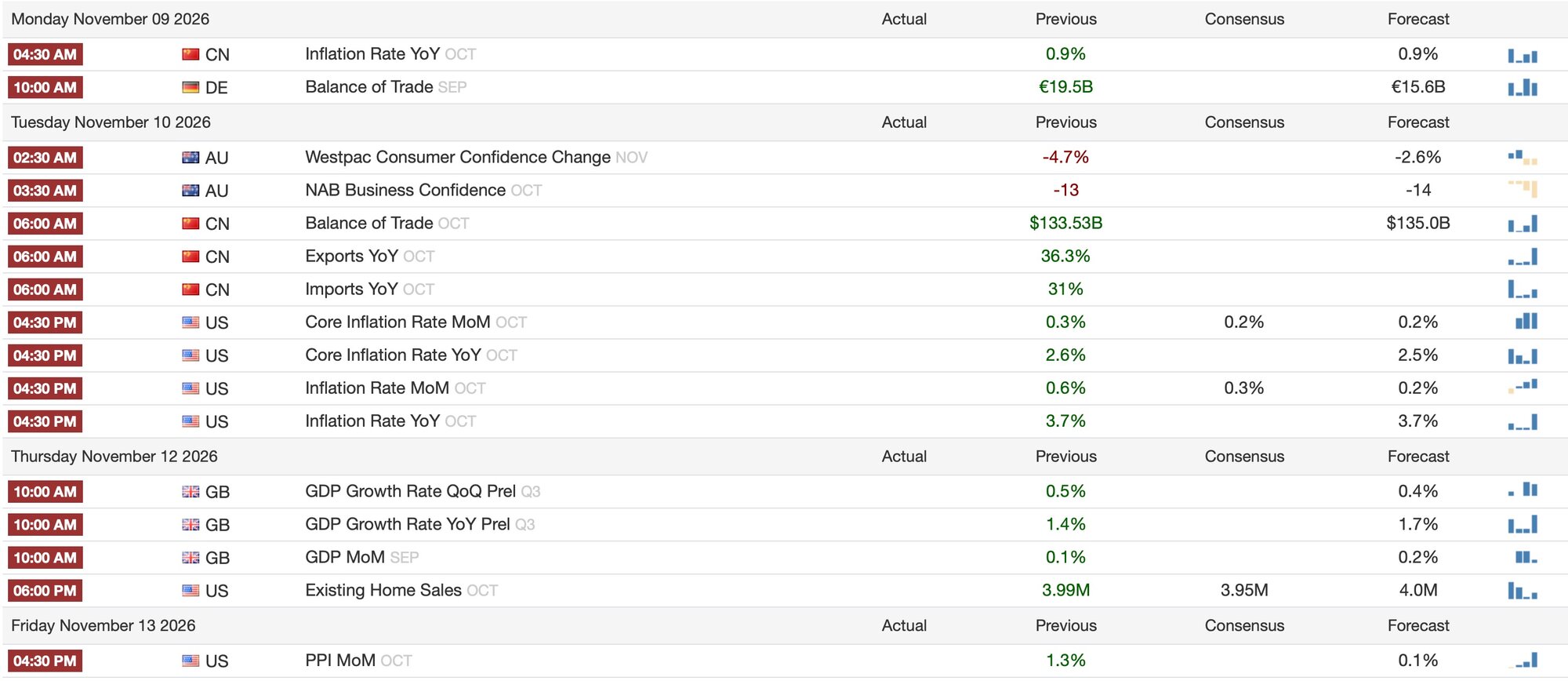
Global markets will focus on inflation figures from the US and China, alongside fresh UK growth data and American producer prices. These releases could reshape expectations around central bank policies and drive volatility across major currencies.
Monday, November 9th: China CPI
China's annual inflation rate is forecast to remain unchanged at 0.9% in October. The report could offer fresh insight into domestic demand and the outlook for the world's second-largest economy.
Tuesday, November 10th: US CPI
Headline inflation is forecast to hold at 3.7% year-on-year, while monthly CPI may slow from 0.6% to 0.2%. Core annual inflation is expected to ease from 2.6% to 2.5%. Any surprise could trigger sharp moves in the dollar and Treasury yields.
Thursday, November 12th: UK GDP
The UK economy is forecast to expand by 0.4% quarter-on-quarter in Q3, down from 0.5% previously. Annual growth may accelerate from 1.4% to 1.7%. The figures could influence expectations around the Bank of England's next policy steps.
Friday, November 13th: US PPI
US producer prices are forecast to rise by just 0.1% month-on-month in October, following a 1.3% increase previously. A sharp slowdown could ease concerns about inflation pressures and influence expectations for future Fed decisions.


Comments
Log in or sign up to join the conversation.