

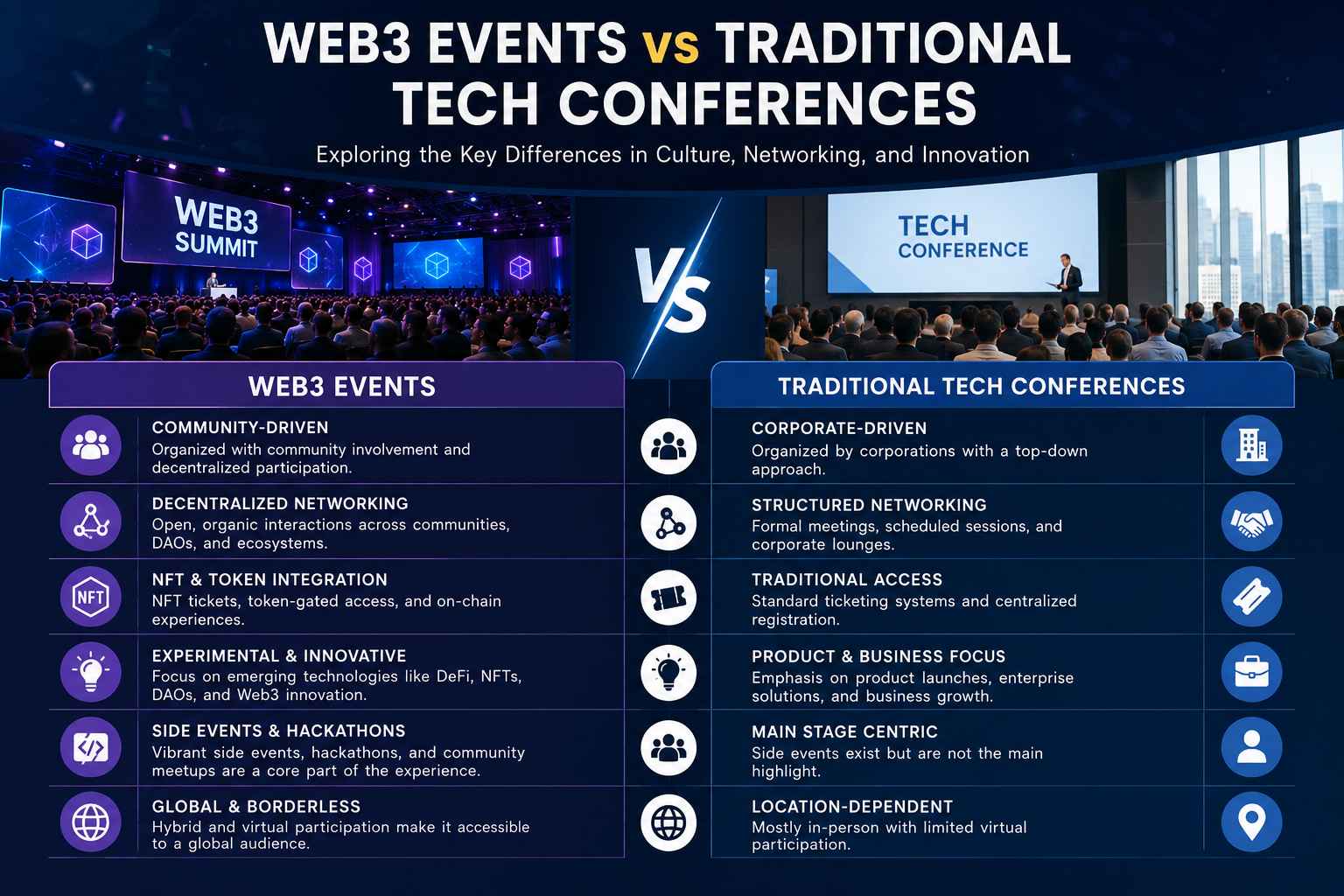
The global technology ecosystem is evolving rapidly, and so are the events that shape innovation. While traditional tech conferences have dominated the industry for decades, Web3-focused gatherings are redefining how professionals network, collaborate, and build communities. From decentralized governance discussions to NFT-based tickets and DAO-powered networking, Web3 events bring a completely different culture to the conference industry.
As blockchain adoption grows worldwide, interest in crypto conferences, Web3 summits, and blockchain expos continues to rise. Thousands of investors, developers, founders, traders, and enthusiasts now rely on a reliable crypto event calendar to track major industry gatherings, token launches, hackathons, DeFi summits, and AI-blockchain collaborations.
Whether you're a startup founder, investor, trader, or blockchain developer, understanding the difference between Web3 events and traditional tech conferences can help you maximize opportunities in 2026 and beyond.
The Rise of Web3 Events in 2026
The demand for crypto events has exploded over the last few years. Major conferences like Consensus, TOKEN2049, ETHGlobal, and Blockchain Life attract tens of thousands of attendees from around the world. These events are no longer niche meetups — they are becoming major global innovation hubs.
This growing demand reflects how important events have become within the blockchain ecosystem.
Unlike traditional conferences that focus mainly on presentations and product launches, Web3 events prioritize community participation, decentralized collaboration, and ecosystem building.
What Are Traditional Tech Conferences?
Traditional tech conferences are centralized industry events organized by corporations, media companies, or enterprise organizations. These conferences usually focus on:
Product launches
Enterprise software
Cloud computing
Artificial intelligence
SaaS platforms
Cybersecurity
Venture capital networking
Popular traditional conferences include:
CES
Web Summit
Google I/O
Microsoft Ignite
AWS re:Invent
TechCrunch Disrupt
These conferences are often highly structured, corporate-driven, and focused on business growth, investor relations, and enterprise partnerships.
While they remain valuable, the attendee experience is usually more formal and less community-oriented compared to Web3 gatherings.
What Are Web3 Events?
Web3 events are blockchain-focused conferences centered around decentralization, cryptocurrencies, NFTs, DAOs, DeFi, metaverse technologies, and digital ownership.
These events include:
Crypto conferences
Blockchain expos
NFT summits
DAO meetups
DeFi hackathons
Web3 developer events
Token launch gatherings
Community AMAs
Crypto networking sessions
Unlike traditional conferences, Web3 events are often built around open ecosystems rather than centralized corporations.
Participants include:
Crypto traders
Blockchain developers
NFT creators
DAO contributors
Investors
Web3 startups
Crypto exchanges
DeFi founders
AI-blockchain innovators
Most users now rely on a cryptocurrency calendar or crypto calendar to stay updated with the latest blockchain events happening globally.
Key Differences Between Web3 Events and Traditional Tech Conferences
1. Community-Driven vs Corporate-Driven
Traditional tech conferences are typically controlled by large organizations. The agenda, networking opportunities, and discussions are heavily influenced by sponsors and enterprise partnerships.
Web3 events operate differently.
Community involvement plays a massive role in shaping the event experience. DAO communities, blockchain ecosystems, NFT creators, and crypto influencers often drive conversations organically.
At many crypto conferences, attendees themselves become contributors rather than passive listeners.
For example:
Developers host open workshops
Communities organize side events
NFT holders gain exclusive access
DAO members vote on event activities
This decentralized participation creates a more collaborative environment.
2. Networking Style Is Completely Different
Networking at traditional conferences usually happens through:
Scheduled business meetings
Corporate booths
VIP networking sessions
Investor lounges
Web3 networking is far more organic.
At blockchain events, discussions happen everywhere:
Telegram groups
Discord channels
Side parties
Twitter Spaces
NFT lounges
Community meetups
Hackathons
In fact, many of the most valuable partnerships in crypto happen outside the main conference halls.
This is one reason why crypto upcoming events attract builders and startups looking for authentic ecosystem connections.
3. NFT Tickets and Tokenized Access
Traditional tech conferences use standard ticketing systems.
Web3 events increasingly use:
NFT tickets
Token-gated access
Wallet verification
On-chain identity systems
NFT tickets offer multiple benefits:
Fraud prevention
Digital collectibles
Exclusive community access
Future event rewards
Secondary marketplace trading
Some blockchain conferences even allow attendees to unlock future perks based on their NFT participation history.
This innovation highlights how Web3 events experiment with decentralized technology in real-world scenarios.
4. Web3 Events Embrace Decentralization
Traditional conferences follow centralized structures where event organizers control every aspect of participation.
Web3 events often embrace decentralized governance models.
Some crypto events involve DAO voting for:
Speaker selections
Event themes
Community rewards
Hackathon topics
Side-event funding
This collaborative structure aligns closely with blockchain ideology.
The rise of decentralized event organization is expected to become even more common across upcoming crypto conferences in 2026.
5. Education Focus: Web3 Events Are More Experimental
Traditional conferences usually focus on polished enterprise presentations and product showcases.
Web3 events are more experimental and educational.
Topics often include:
Smart contract development
Layer-2 scaling
Tokenomics
AI + blockchain integration
DeFi strategies
Zero-knowledge proofs
NFT utility models
Crypto regulation
Hands-on workshops and hackathons are core parts of many crypto conference calendar listings.
Developers and builders often attend blockchain events specifically to learn emerging technologies before mainstream adoption.
6. Side Events Are a Huge Part of Web3 Culture
One unique aspect of crypto events is the importance of unofficial side events.
During major blockchain conferences, cities become packed with:
Startup pitch nights
Whale networking dinners
DAO meetups
NFT gallery experiences
Crypto influencer gatherings
DeFi workshops
Trading competitions
Sometimes the side events become more valuable than the main conference itself.
This culture has transformed how people use a crypto event calendar today — attendees now track both official conferences and community-driven side activities.
7. Web3 Events Move Markets
Traditional conferences may impact stock sentiment or brand visibility, but Web3 events can directly influence token prices.
Major announcements during crypto conferences often trigger:
Price rallies
Trading volume spikes
NFT demand surges
Ecosystem growth
Exchange listing speculation
This is why traders carefully monitor:
upcoming crypto events
token unlock schedules
blockchain launch dates
crypto conference calendar updates
Many investors use a cryptocurrency calendar to identify potential volatility opportunities.
8. Global Accessibility and Digital Participation
Traditional tech conferences are often expensive and location-dependent.
Web3 events tend to embrace hybrid participation:
Livestreams
Virtual metaverse events
Twitter/X Spaces
Online hackathons
DAO-hosted discussions
This makes blockchain communities more globally accessible.
A developer in India can contribute to a hackathon hosted in Dubai or Singapore without leaving home.
As crypto adoption expands globally, virtual-first participation will become increasingly important in crypto event calendar 2026 trends.
9. Sponsorship Models Are Different
Corporate sponsors dominate traditional conferences.
Web3 sponsorship models are more ecosystem-oriented.
Sponsors may include:
Crypto exchanges
Blockchain protocols
NFT marketplaces
Layer-1 ecosystems
DeFi platforms
Wallet providers
Instead of only promoting products, many sponsors focus on:
Developer grants
ecosystem expansion
community incentives
hackathon rewards
This creates stronger engagement between attendees and projects.
10. Culture and Atmosphere
Traditional conferences are generally formal and business-oriented.
Web3 events are often energetic, experimental, and community-focused.
You’ll commonly see:
Crypto memes everywhere
NFT art displays
Gamified networking
AI-generated experiences
Community merchandise
Token reward systems
Interactive blockchain demos
The atmosphere reflects the open and fast-moving nature of the crypto industry itself.
Why Crypto Event Calendars Are Becoming Essential
As the number of blockchain conferences grows rapidly, users increasingly depend on trusted crypto calendar platform to stay updated.
A good crypto event calendar helps users track:
Major crypto conferences
Token launches
NFT events
Exchange listings
DAO governance events
Web3 hackathons
Blockchain summits
DeFi expos
In 2026, event tracking will become even more important as blockchain ecosystems continue expanding worldwide.
Professionals searching for upcoming crypto conferences often use event calendars to:
Plan travel
Find networking opportunities
Discover investment trends
Track ecosystem growth
Analyze market-moving announcements
The Future of Web3 Events
Web3 conferences are still evolving, but several major trends are already shaping the future:
AI + Blockchain Conferences
AI and blockchain integration is becoming a major topic across crypto upcoming events.
Future conferences will likely focus heavily on:
decentralized AI
AI-powered smart contracts
autonomous agents
blockchain data infrastructure
Metaverse-Based Conferences
Virtual conferences hosted inside metaverse environments may become mainstream.
Attendees could participate through:
VR experiences
digital avatars
virtual NFT galleries
tokenized networking spaces
DAO-Owned Conferences
Some future events may be fully community-governed through DAOs.
This could include decentralized voting for:
venues
speakers
funding
sponsorships
content agendas
On-Chain Reputation Systems
Blockchain identity systems may eventually replace traditional conference badges.
Participants could build verifiable on-chain reputations based on:
hackathon participation
community contributions
governance activity
educational achievements
Why Businesses Should Pay Attention to Web3 Events
For startups and brands, Web3 events offer unique marketing and networking opportunities.
Benefits include:
Global crypto audience exposure
Direct community engagement
Partnership opportunities
Investor visibility
Token ecosystem promotion
Influencer collaborations
Many blockchain startups now prioritize crypto conferences over traditional tech expos because of the targeted and highly engaged audience.
Final Thoughts
The difference between Web3 events and traditional tech conferences goes far beyond technology. It represents a cultural shift toward decentralization, community ownership, digital identity, and collaborative innovation.
Traditional conferences remain important for enterprise networking and corporate innovation, but Web3 events are creating entirely new ways for people to connect, build, invest, and participate.
As blockchain adoption accelerates, the demand for reliable crypto event calendar platforms will continue to rise. Whether you're tracking upcoming crypto events, searching for the next major blockchain summit, or exploring networking opportunities within the Web3 ecosystem, staying updated through a trusted cryptocurrency calendar is becoming essential in 2026.
The future of conferences is no longer just about presentations and booths — it’s about ecosystems, communities, and decentralized participation. And Web3 events are leading that transformation.
Comments
Log in or sign up to join the conversation.