
Warren Buffett’s latest remarks on Squawk Pod, following his transition from CEO of Berkshire Hathaway (BRK-A), offer a familiar but timely reminder: discipline matters more than market noise.
Even as volatility picks up and investors look for signals, Buffett remains anchored to first principles. “I have no idea what the stock market’s going to do, and I don’t think anybody else does either.”
That humility around forecasting contrasts sharply with the confidence often seen in markets. Buffett is clear that his edge does not come from predicting short-term moves, but from understanding businesses.
“I do think I’ve got a reasonable idea of what a business is worth.” That distinction—between price and value—continues to define his approach.
Despite a meaningful pullback in equities, Buffett is not rushing to deploy Berkshire’s massive cash pile. Asked whether markets looked more attractive after the decline, he made clear that recent moves have not created compelling value.
In other words, a modest correction does not equate to opportunity. He is willing to wait, even with hundreds of billions in liquidity, for truly compelling prices.
That patience extends to how he views ownership. Buffett reiterates that Berkshire is not trading stocks but acquiring businesses. “we own businesses. Sometimes they’re wholly owned, sometimes they’re partly owned.”
This mindset reframes market volatility—not as a threat, but as a potential entry point when valuations align.
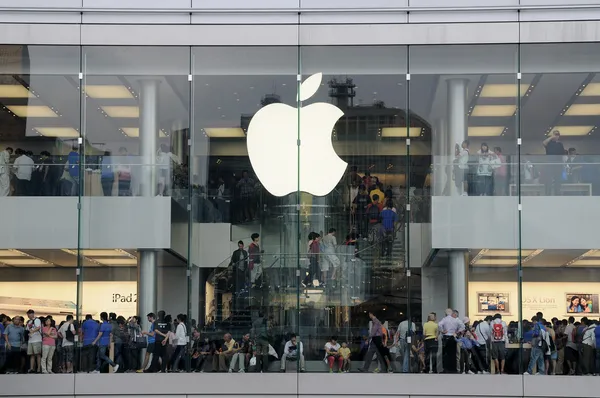
His comments on Apple (AAPL) reinforce that philosophy. While acknowledging he trimmed the position, Buffett remains deeply constructive on the business itself. “Apple is still our largest single investment.”
He evaluates it not as a technology play, but as a consumer franchise with extraordinary loyalty and pricing power.
At the macro level, Buffett’s concerns center less on day-to-day fluctuations and more on systemic stability. “the banking system is in some senses very strong in other senses very fragile.”
That duality underscores how quickly confidence can shift, particularly in an interconnected financial system.
He also highlights how crises tend to unfold. “Once the dominoes start toppling, they just start toppling.” The lesson is clear: risks often appear contained until they are not, reinforcing the importance of balance sheet strength and prudent capital allocation.
Even in retirement from the CEO role, Buffett remains engaged, though he defers to his successor on decision-making. “I won’t make any that Greg thinks are wrong.” That continuity speaks to Berkshire’s decentralized culture and long-term orientation.
Ultimately, Buffett’s message is not dramatic, but it is consistent. Ignore short-term forecasts, focus on business quality, and act decisively when true value emerges. In an environment where narratives shift quickly, that steady framework continues to stand apart.
Full audio interview here:



Comments
Log in or sign up to join the conversation.