

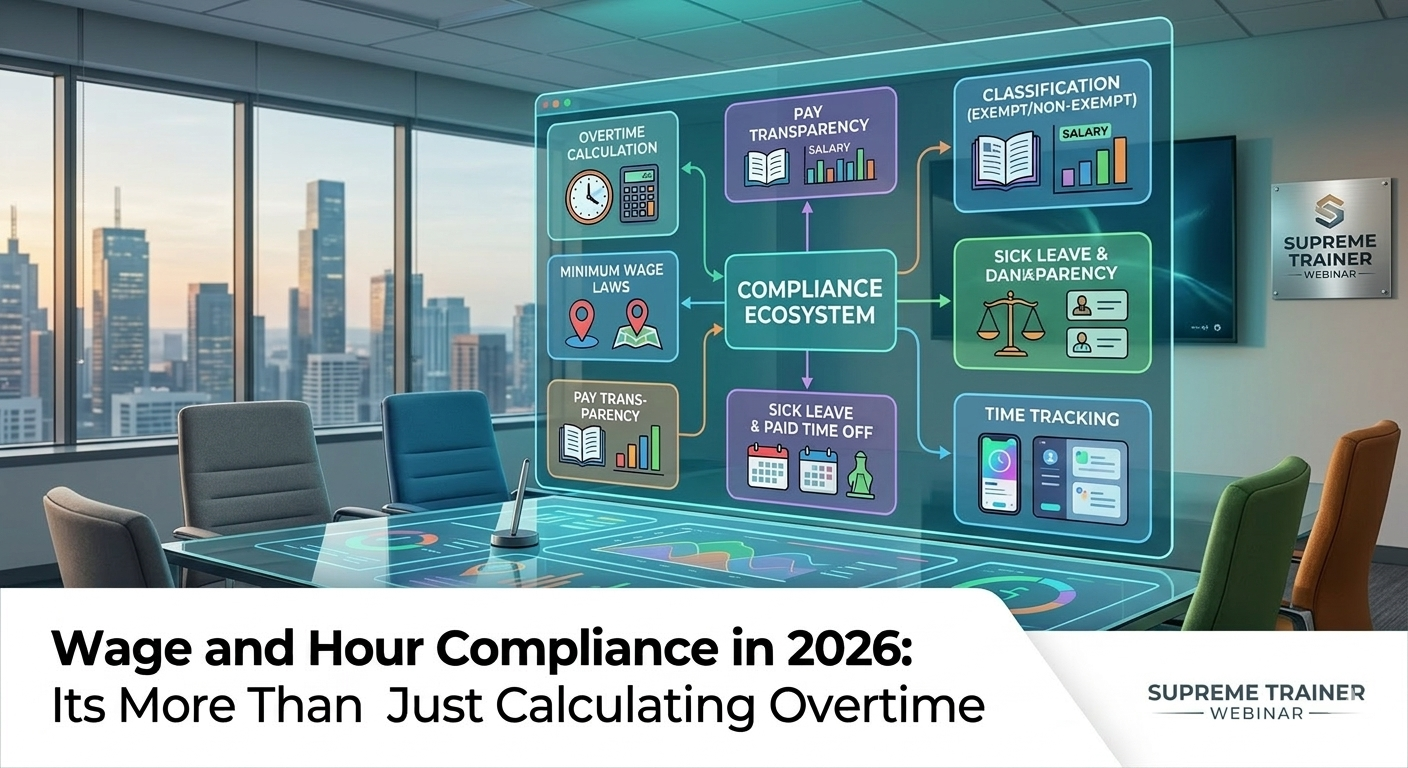
If you think Wage and Hour Compliance is just about getting payroll right every month, you’re not alone—but in 2026, that mindset can get businesses into trouble.
Today, compliance isn’t just a back-office task handled quietly by payroll teams. It’s a critical business function that affects everything from employee trust to legal risk. And with changing laws and stricter enforcement, even small mistakes can have big consequences.
It’s No Longer “Just Payroll”
A few years ago, wage and hour compliance mostly meant making sure employees were paid on time and overtime was calculated correctly. Simple enough, right?
Not anymore.
Now, employers have to think about a wide range of factors—like whether travel time should be paid, how meal breaks are handled, and even how quickly final paychecks are issued when someone leaves the company.
It’s like putting together a puzzle where the rules keep changing. And if one piece is off, the whole picture can fall apart.
Why Businesses Are Paying More Attention
One big reason wage and hour compliance has become such a hot topic is increased enforcement. Regulators are paying closer attention, and penalties are getting steeper.
What used to be a minor payroll mistake can now turn into a costly issue. For example, misclassifying an employee or missing a few hours of overtime might seem small—but over time, those errors can add up to significant back pay, fines, or even lawsuits.
That’s why many companies are shifting from a reactive approach (“fix it if something goes wrong”) to a proactive one (“make sure it doesn’t go wrong in the first place”).
The Details That Often Get Missed
When it comes to Wage and Hour Compliance, it’s often the small details that cause the biggest problems.
Take minimum wage laws. They may sound straightforward, but different states—or even cities—can have different requirements. Employers need to follow whichever law is more favorable to the employee.
Then there’s overtime. It’s not just about hours worked beyond 40 in a week. Certain bonuses, incentives, or additional earnings might need to be included in the “regular rate of pay,” which affects how overtime is calculated.
Meal and rest breaks are another tricky area. If an employee works through lunch or isn’t fully relieved of duties, that time may need to be paid—even if the system automatically deducted it.
And let’s not forget recordkeeping. In a compliance audit, if it’s not documented, it’s as if it didn’t happen.
Managing Different Rules in Different Places
For businesses operating in more than one state, things get even more complicated.
Federal law provides a foundation, but state laws often go further. One state might require daily overtime, while another focuses only on weekly hours. Some have strict rules about pay frequency or wage statements, while others are more flexible.
Keeping track of all this manually is not just difficult—it’s risky.
That’s why many organizations are investing in better systems and training to ensure they stay compliant no matter where their employees are located.
Compliance Is Also About People
It’s easy to think of wage and hour compliance as just rules and regulations—but at its core, it’s about people.
Employees expect to be paid accurately and fairly. When that doesn’t happen, it doesn’t just lead to complaints—it damages trust.
On the other hand, when employees know their employer takes compliance seriously, it builds confidence. They feel valued, respected, and more engaged in their work.
In that sense, compliance isn’t just about avoiding penalties—it’s about creating a better workplace.
What Smart Companies Are Doing Differently
Forward-thinking organizations aren’t waiting for problems to arise. They’re taking steps to stay ahead.
They’re regularly reviewing their payroll practices, updating policies, and training their teams. Many are also conducting internal audits to catch issues early—before they turn into costly mistakes.
Technology is playing a big role too. Modern payroll systems can help track hours more accurately, apply the right rules, and generate detailed records that are essential during audits.
But even the best tools aren’t enough without awareness. Compliance requires ongoing attention and a willingness to adapt as laws change.
The Bottom Line
In 2026, Wage and Hour Compliance is no longer just about calculating overtime—it’s about understanding the bigger picture.
It’s about knowing the rules, staying updated, paying attention to the details, and putting systems in place that support accuracy and fairness.
Most importantly, it’s about recognizing that behind every paycheck is a person who depends on it.
Businesses that take compliance seriously don’t just avoid legal trouble—they build stronger teams, better reputations, and more sustainable success.
And in today’s environment, that’s not just important—it’s essential.
FAQs
1. What is Wage and Hour Compliance?
Wage and Hour Compliance refers to following all laws related to employee pay, including minimum wage, overtime, working hours, and payroll practices.
2. Why is Wage and Hour Compliance important in 2026?
It’s important because regulations are stricter, penalties are higher, and even small payroll mistakes can lead to fines, lawsuits, or back pay issues.
3. What are common mistakes employers make?
Common mistakes include miscalculating overtime, improper meal break deductions, misclassifying employees, and poor recordkeeping.
4. How can businesses stay compliant?
Businesses can stay compliant by updating payroll systems, training staff, conducting regular audits, and staying informed about changing labor laws.
Comments
Log in or sign up to join the conversation.