

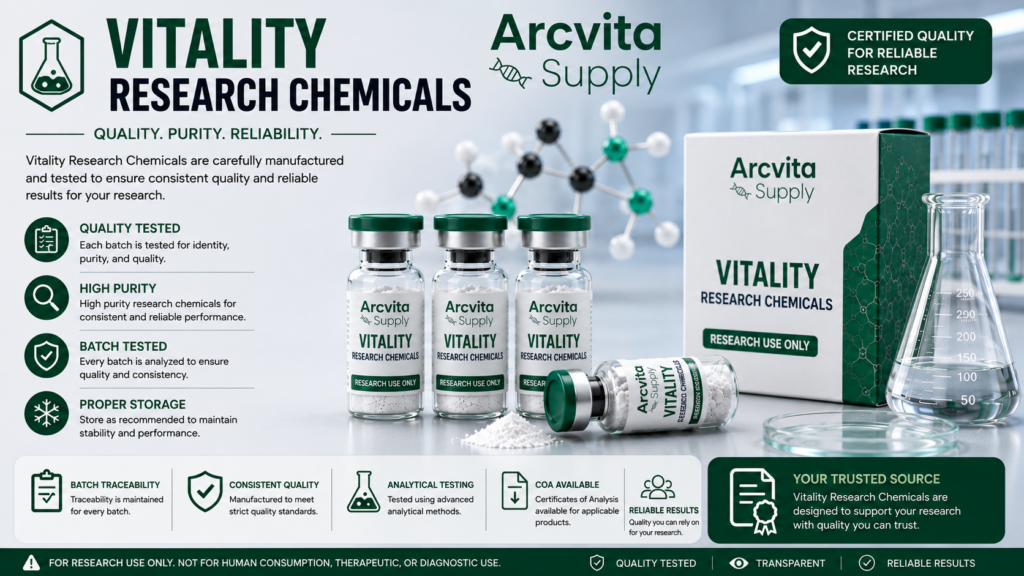
Reliable research depends on reliable starting materials. Whether a laboratory is studying analytical chemistry, molecular interactions, biochemical pathways, or experimental formulations, the quality and documentation of research materials can influence the consistency and interpretation of results. For this reason, researchers should evaluate chemical identity, purity, testing, batch traceability, storage, and supplier transparency before sourcing laboratory materials.
What Are Research Chemicals?
Research chemicals are substances obtained for scientific and laboratory research rather than human or veterinary use. Depending on the research field, they may be used in analytical chemistry, molecular biology, biochemical research, pharmaceutical research, material science, and other controlled laboratory applications.
Before selecting a research chemical, laboratories should determine whether the material meets the requirements of their specific protocol. Important factors may include chemical identity, molecular formula, molecular weight, purity, batch number, analytical results, physical characteristics, stability information, storage requirements, and relevant safety documentation.
Why Quality Matters in Laboratory Research
The quality of starting materials can affect experimental consistency. Unknown impurities, degradation products, contamination, or differences between production batches may introduce variables that make research findings more difficult to interpret.
For example, when researchers compare results across multiple experimental batches, they need confidence that observed differences are related to the experimental variables rather than inconsistent starting materials.
This is why Vitality Research Chemicals should be evaluated using objective information rather than product names or price alone. Batch-specific documentation and appropriate analytical testing can provide useful information for assessing the material received.
What to Look for in High-Purity Research Chemicals
When evaluating high-purity research chemicals, researchers should look beyond marketing claims and review supporting documentation.
1. Clear Chemical Identification
The product should be clearly identified. Depending on the material, useful identifiers can include the chemical name, molecular formula, molecular weight, CAS number, and other relevant identification information.
Clear identification helps laboratories distinguish between chemically related substances and reduces the risk of selecting an unsuitable material.
2. Batch or Lot Identification
Batch identification is an important part of laboratory traceability. A batch or lot number should allow researchers to connect the material received with its corresponding documentation.
Batch-specific records are generally more useful for traceability than generic certificates because they relate to a particular production lot.
3. Appropriate Analytical Testing
Analytical testing can provide information about a material's identity, purity, and composition. Depending on the substance and the characteristic being evaluated, laboratories may use techniques such as HPLC, LC-MS, GC-MS, NMR, or spectroscopy.
The appropriate analytical method depends on the chemical and the specific property being assessed. Researchers should therefore consider not only the reported result but also the testing method used to obtain it.
Understanding Certificates of Analysis
A Certificate of Analysis, commonly called a COA, is an important document for evaluating research materials. It can contain information such as the product name, batch number, testing date, analytical method, purity results, identity findings, and other relevant specifications.
Researchers should check whether the COA corresponds to the exact product and batch they receive. Missing batch numbers, generic certificates, unclear testing methods, inconsistent product names, missing test dates, and unsupported purity claims can all justify additional verification before the material is incorporated into significant research.
How to Evaluate a Research Chemicals Supplier
Choosing a Research Chemicals Supplier should involve more than comparing prices. Laboratories can create a consistent evaluation process by reviewing:
Product identity and specifications
Batch or lot information
Purity documentation
Analytical testing methods
COA availability
Storage requirements
Packaging and labeling
Supplier transparency
Intended research application
Applicable institutional and regulatory requirements
A transparent supplier should make relevant product specifications, testing information, storage conditions, documentation, and research-use limitations accessible to researchers.
What to Check Before Buying Research Chemicals
Researchers searching for Research Chemicals for Sale may find several suppliers offering similar materials. However, the lowest price does not necessarily represent the best sourcing option.
Before purchasing, laboratories should compare documentation, batch traceability, analytical information, packaging, labeling, and supplier policies. Once a shipment arrives, the package should also be compared with the purchase record. Researchers can verify the product name, quantity, batch number, labeling, packaging condition, and supporting documentation.
Maintaining records of suppliers, batch numbers, COAs, purchase dates, and relevant observations can also improve laboratory traceability and help identify potential sources of unexpected experimental variation.
Storage and Responsible Laboratory Handling
Research compounds can have different storage and stability requirements. Some materials may be sensitive to heat, light, moisture, oxygen, or temperature fluctuations.
Laboratories should follow the documented storage conditions supplied for the specific material and their own institutional safety procedures. Appropriate considerations can include temperature control, protection from light and moisture, container integrity, clear labeling, separation of incompatible substances, restricted access, and relevant safety documentation.
Research chemicals should remain within appropriate laboratory and institutional contexts. Researchers should follow applicable laws, workplace safety requirements, chemical handling procedures, waste-management protocols, emergency procedures, and personal protective equipment requirements.
Building a Better Research Chemical Sourcing Process
A structured sourcing process can make laboratory purchasing more consistent. First, define the experimental requirements, including chemical identity, quantity, quality specifications, storage conditions, and documentation needs.
Next, compare potential suppliers using the same criteria. After receiving the material, verify the package against the purchase record and confirm the product identity, batch information, quantity, labeling, and documentation.
Finally, maintain appropriate laboratory records. Good documentation can improve traceability and make it easier to investigate unexpected experimental results.
Conclusion
Selecting research chemicals responsibly involves much more than comparing product names or prices. Chemical identity, purity, analytical testing, batch traceability, COA documentation, storage requirements, packaging, and supplier transparency are important considerations for laboratories.
When evaluating Vitality Research Chemicals, researchers should prioritize verifiable documentation and appropriate analytical information while ensuring that materials are used only within suitable laboratory research settings. A careful sourcing process can support better recordkeeping, improved traceability, and greater confidence in the consistency of experimental inputs.
Research-use only. Not for human or veterinary use.
Comments
Log in or sign up to join the conversation.