

Investing in Phreesia (PHR) without a centralized view of executive actions is like navigating a complex maze blindfolded. While individual SEC filings provide isolated data points, the true narrative of management's conviction only emerges when these scattered transactions are visualized over an extended period. Utilizing a dedicated surveillance dashboard transforms fragmented regulatory documents into a coherent, actionable investment roadmap. For retail investors aiming to front-run institutional algorithms, relying on disorganized information is no longer a viable strategy; continuous, aggregated tracking is required to maintain a competitive edge.
Navigating the Form 4 Ecosystem
Before zooming in on specific assets, understanding the broader macro environment is critical. For context, recent Form 4 filings show a noticeable increase in executive sales across major tech companies as they brace for shifting macroeconomic currents. If an investor attempts to manually sift through this massive volume of industry-wide noise, pinpointing the specific, high-value transactions within a single company becomes virtually impossible. Without a mechanism for aggregation, raw data often leads to analysis paralysis rather than profitable execution.
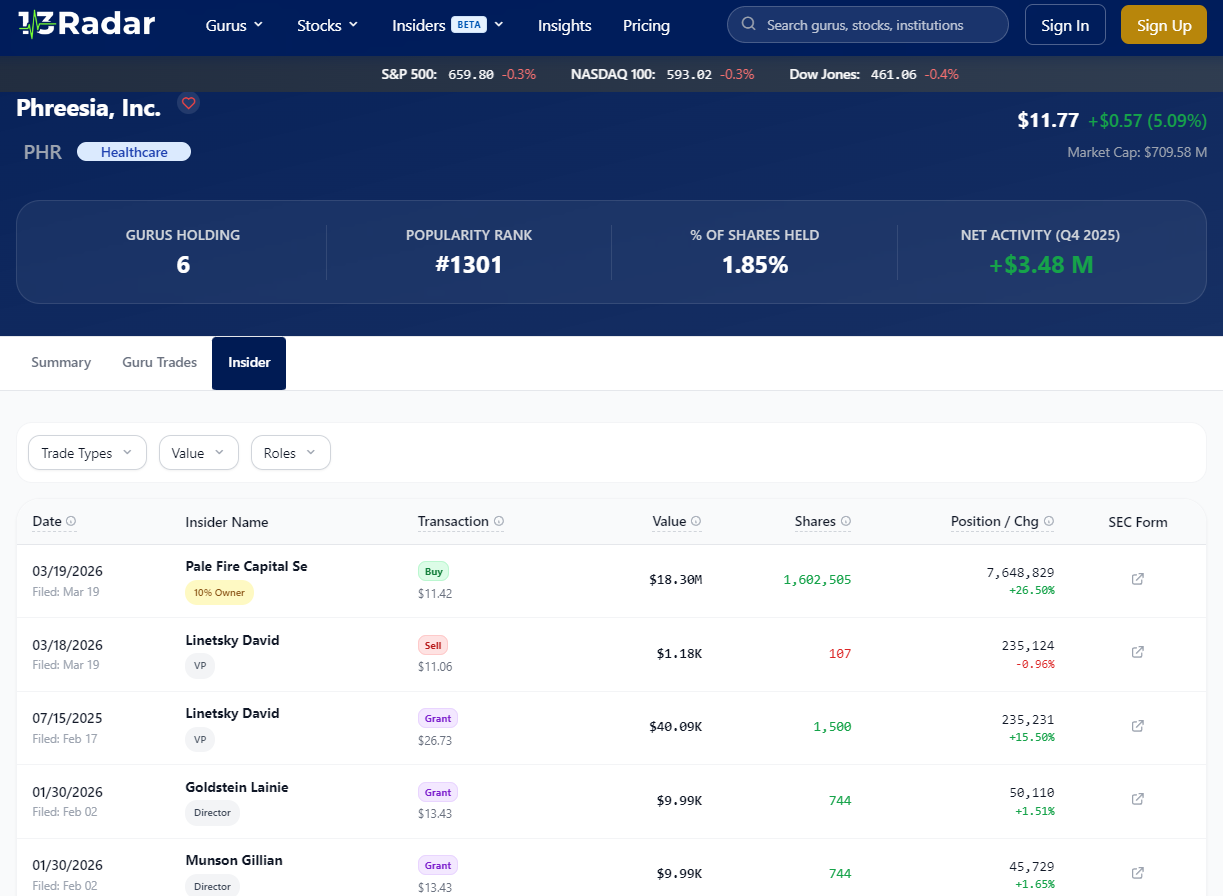
📐 RADAR SURVEILLANCE: Centralizing Phreesia Data
To truly capitalize on the movements of Phreesia's C-suite, you must deploy tools that map out historical and current equity shifts on a single interface. By consistently referencing a comprehensive PHR insider trading tracker, investors can instantly visualize accumulation phases and liquidation clusters. This centralized methodology allows you to immediately recognize whether a recent CEO stock purchase is an isolated anomaly or the beginning of a massive, coordinated institutional buy-in. Tracking this data visually removes the guesswork from medical software valuations.
The Architecture of Informed Decisions
The ultimate goal of consolidating these disclosures is to strip emotional bias from your portfolio management. When you rely on aggregated, historical tracker data, your entry and exit points are dictated by the verified financial commitments of the insiders themselves. Instead of guessing when a healthcare software stock has bottomed out, you wait for the dashboard to confirm that the board of directors is aggressively buying their own dip. This systematic approach ensures that your capital is deployed only when internal corporate confidence is statistically validated, drastically reducing your exposure to unforeseen market downturns.
Comments
Log in or sign up to join the conversation.