

Industry Key Highlights
According to TechSci Research report, “Virtual Retinal Display Market Size - Global Industry Share, Trends, Opportunity, and Forecast. 2021–2031,” The Global Virtual Retinal Display Market will grow from USD 6.24 Billion in 2025 to USD 36.53 Billion by 2031 at a 34.25% CAGR.
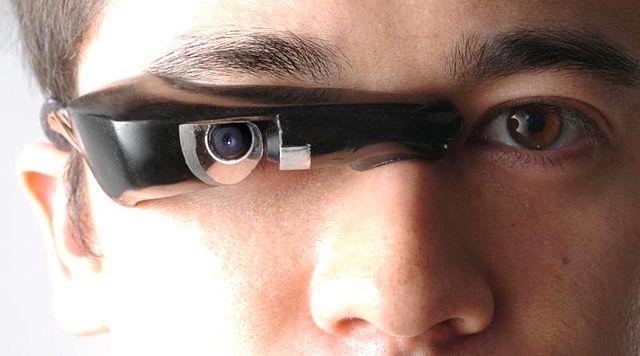
The global Virtual Retinal Display (VRD) market is emerging as one of the most innovative and disruptive segments within the broader display technology industry. As industries worldwide continue transitioning toward immersive digital experiences, advanced visualization technologies, and next-generation human-machine interfaces, virtual retinal display systems are gaining substantial momentum. These technologies are revolutionizing the way users interact with digital content by projecting high-quality images directly onto the retina, eliminating the need for traditional display screens.
Virtual retinal display technology is rapidly becoming a preferred alternative to conventional screen-based systems due to its portability, enhanced image quality, scalability, lightweight architecture, and ability to create immersive three-dimensional visual experiences. Unlike traditional displays such as televisions, monitors, and laptops, VRD systems offer superior resolution and scalable image projection without compromising visual quality.
The increasing integration of augmented reality (AR), virtual reality (VR), mixed reality (MR), and extended reality (XR) technologies into consumer and enterprise ecosystems is accelerating market growth. Businesses are increasingly investing in immersive technologies to enhance operational efficiency, training simulations, customer engagement, and entertainment experiences.
Request For Sample Copy of Report For More Detailed Market insight: https://www.techsciresearch.com/sample-report.aspx?cid=14744#requestform
Market Drivers
Growing Adoption of Augmented Reality and Virtual Reality
One of the most influential growth drivers for the virtual retinal display market is the increasing global adoption of augmented reality and virtual reality technologies.
Consumers and enterprises alike are embracing immersive experiences across gaming, entertainment, training, education, healthcare, and industrial applications. Virtual retinal displays provide the visual foundation required for delivering realistic and engaging AR and VR experiences.
Gaming companies, entertainment studios, and technology developers are continuously investing in next-generation immersive ecosystems that demand lightweight, high-resolution, wearable display technologies. VRD systems perfectly align with these requirements by delivering vivid 3D visuals and enhanced user immersion.
The growing integration of metaverse platforms and spatial computing environments is also expected to accelerate demand for advanced retinal display technologies over the coming years.
Rising Demand for Wearable Smart Devices
The increasing popularity of wearable technologies such as smart glasses and head-mounted displays is significantly boosting market expansion.
Consumers are seeking lightweight, portable, and user-friendly devices capable of providing seamless digital experiences without relying on bulky hardware. Virtual retinal display systems support this trend by enabling compact wearable designs while maintaining superior visual quality.
Wearable technologies are becoming increasingly popular in industries such as:
Healthcare
Logistics
Manufacturing
Retail
Education
Defense
Entertainment
These industries are leveraging smart wearables to improve productivity, communication, operational efficiency, and training capabilities.
Superior Visual Experience Compared to Traditional Displays
Traditional display devices often face limitations related to resolution, scalability, brightness, portability, and viewing angles.
Virtual retinal displays overcome many of these limitations by directly projecting images onto the retina. This allows users to experience:
High-definition visuals
Enhanced contrast
Wide field of view
Better brightness ratios
Scalability without quality degradation
Reduced eye strain
The ability to create highly realistic visual environments is driving increasing adoption among both consumers and enterprises.
Emerging Trends in the Virtual Retinal Display Market
Integration of Artificial Intelligence in Visualization Systems
Artificial Intelligence is rapidly transforming virtual retinal display technologies.
AI-powered VRD systems can now optimize image rendering, eye tracking, gesture recognition, and adaptive display performance in real time. Intelligent systems can personalize visual experiences based on user behavior, environmental conditions, and application requirements.
Rise of Spatial Computing and Metaverse Applications
Spatial computing and metaverse technologies are becoming major trends driving demand for virtual retinal displays.
The metaverse requires immersive interfaces capable of blending digital and physical realities seamlessly. Virtual retinal displays offer the visual immersion necessary for next-generation digital environments.
Technology companies are increasingly developing smart glasses, AR headsets, and wearable computing devices designed for metaverse interactions, virtual collaboration, gaming, and social engagement.
Development of Lightweight Smart Glasses
Consumers increasingly prefer compact and lightweight wearable devices that provide seamless digital experiences without discomfort.
Manufacturers are focusing on miniaturization technologies, advanced optics, and lightweight materials to create comfortable smart glasses powered by virtual retinal display systems.
Challenges in the Virtual Retinal Display Market
High Initial Investment Costs
One of the primary challenges affecting market expansion is the high cost associated with research, development, and production.
Developing advanced retinal projection systems requires significant investments in:
Optical engineering
Semiconductor technologies
Laser systems
Microelectronics
Manufacturing infrastructure
The high capital requirement creates entry barriers for smaller companies and startups.
Limited Awareness in Emerging Economies
Virtual retinal display technology remains relatively unfamiliar in many developing regions.
Limited consumer awareness, insufficient technical knowledge, and lack of exposure to immersive technologies can slow adoption rates in emerging markets.
Infrastructure Limitations
Advanced immersive technologies require strong digital infrastructure, including:
High-speed internet
Cloud computing capabilities
Advanced semiconductor ecosystems
Technical expertise
Regions with underdeveloped IT infrastructure may face challenges in supporting widespread VRD adoption.
Concerns Regarding Eye Safety and User Comfort
Since VRD systems project light directly onto the retina, some consumers remain concerned about long-term eye safety and visual fatigue.
Manufacturers must continue investing in safety certifications, ergonomic designs, and low-power optical technologies to address these concerns.
Competitive Analysis:
Avegant Corporation
Magic Leap Inc.
QD Laser Co. Ltd
Himax Technologies Inc.
Innovega Inc.
Omnivision Technologies Inc.
Optinvent S.A.
Vuzix Corporation
Texas Instruments Inc.
Analogix Semiconductor.
Customers can also request for 10% free customization on this report.
10 Benefits of the Research Report
1. Comprehensive Market Intelligence
The report provides detailed insights into market trends, growth patterns, and industry developments.
2. Accurate Market Forecasts
Businesses gain access to reliable revenue projections and growth estimates for strategic planning.
3. Detailed Segment Analysis
The study evaluates individual market segments to identify high-growth opportunities.
4. Competitive Benchmarking
Readers can assess competitive strategies and positioning of leading market players.
5. Regional Market Insights
The report offers in-depth analysis across major global regions and emerging economies.
6. Identification of Emerging Trends
Businesses can understand evolving technologies and innovation patterns shaping the industry.
7. Investment Opportunity Assessment
The report helps investors identify promising growth areas and expansion opportunities.
8. Risk and Challenge Evaluation
Organizations can better understand market barriers, technological limitations, and operational risks.
9. Strategic Decision-Making Support
The study enables informed business planning and long-term strategy development.
10. Future Industry Outlook
The report highlights future technological advancements and evolving consumer demands.
Contact US:
Techsci Research LLC
420 Lexington Avenue, Suite 300,
New York, United States- 10170
Tel: +13322586602
Email: [email protected]
Comments
Log in or sign up to join the conversation.