

Vietnam is rapidly strengthening its position as a major manufacturing destination in Southeast Asia. Rising foreign investment, expanding industrial infrastructure, increasing export activity, and the country's transition toward Industry 4.0 are transforming traditional production environments into more connected and automated facilities. As manufacturers seek to improve productivity, product quality, operational visibility, and cost efficiency, industrial automation is becoming an increasingly important part of Vietnam's manufacturing strategy.
According to TechSci Research report, “Vietnam Industrial Automation Market Share– By Region, Forecast & Opportunities, 2030F”, The Vietnam Industrial Automation Market was valued at USD 2.52 Billion in 2024 and is expected to reach USD 4.21 Billion by 2030 with a CAGR of 8.78% during the forecast period.
The market encompasses technologies such as programmable logic controllers (PLCs), supervisory control and data acquisition (SCADA), distributed control systems, industrial robots, human-machine interfaces, machine vision, industrial sensors, manufacturing execution systems, and industrial software. Together, these technologies are enabling manufacturers to automate repetitive operations, monitor production in real time, improve workplace safety, and make faster data-driven decisions.
Vietnam's industrial automation ecosystem is also moving beyond conventional hardware installations. Manufacturers are increasingly connecting machines with enterprise systems, cloud platforms, analytics tools, and Industrial Internet of Things (IIoT) networks. This transition is creating opportunities for technology providers, system integrators, engineering companies, and specialized automation service providers.
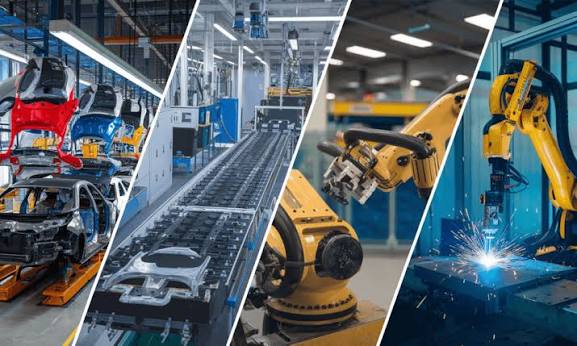
Industry Key Highlights
The Vietnam Industrial Automation Market is undergoing structural transformation as manufacturers modernize their facilities and prepare for increasingly competitive global supply chains.
Key market highlights include:
Market Size in 2024: USD 2.52 Billion
Projected Market Size by 2030: USD 4.21 Billion
CAGR: 8.78%
Fastest-Growing Component: Services
Fastest-Growing Region: Central Vietnam
Key Manufacturing Sectors: Electronics, Automotive, Food Processing, Textiles, Packaging, and Other Industrial Applications
Enterprise Segmentation: Large Enterprises and Small & Medium Enterprises
Industry Segmentation: Process Industries and Discrete Industries
One of the most significant developments is the growing movement toward smart manufacturing. Vietnamese factories are increasingly integrating automation equipment with production management software, analytics platforms, and connected sensors. This enables businesses to obtain greater visibility into production performance while reducing downtime and improving resource utilization.
Robotics is another major area of development. Although traditional industrial robots remain important for applications such as welding, assembly, painting, and material handling, collaborative robots are expanding automation opportunities for smaller manufacturers that require greater flexibility.
Request For Sample Copy of Report For More Detailed Market insight
Main Drivers
Accelerating Industry 4.0 Adoption
Industry 4.0 is becoming a central component of Vietnam's industrial modernization strategy. Manufacturers are adopting connected equipment, intelligent sensors, cloud technologies, artificial intelligence, and analytics to create more responsive production environments.
The integration of these technologies allows businesses to monitor equipment and production processes continuously. Instead of relying exclusively on manual inspections and historical reports, manufacturers can use real-time information to identify inefficiencies and optimize production.
This transition is particularly important as Vietnamese companies compete for international manufacturing contracts and seek to meet increasingly demanding quality and productivity standards.
Increasing Foreign Direct Investment
Foreign investment continues to support Vietnam's industrial development. International manufacturers establishing production facilities in the country often deploy modern automation technologies from the beginning to achieve standardized production, improve quality, and integrate operations with international supply chains.
New factories are increasingly designed around automated production lines, digital monitoring systems, robotics, and advanced control technologies. This creates significant opportunities for automation suppliers and system integrators.
Rising Labor Costs and Workforce Challenges
Vietnam's manufacturing sector has historically benefited from its large labor pool. However, rising wages and workforce availability challenges are encouraging manufacturers to automate repetitive and physically demanding activities.
Automation can help companies reduce their dependence on manual labor for tasks that require consistent precision or operate continuously. Robotics and collaborative robots are particularly attractive where businesses need to address workforce shortages without completely redesigning production processes.
Growing Demand for Productivity and Quality
Manufacturers are under constant pressure to produce higher-quality products while controlling costs and minimizing waste. Automation provides manufacturers with greater process consistency and repeatability.
Automated inspection systems, sensors, robotics, and control platforms can identify production abnormalities more rapidly and reduce the risk of human error. These capabilities are especially valuable in industries such as electronics and automotive manufacturing, where quality requirements are stringent.
Expansion of Smart Manufacturing
Smart factory investments are increasing as manufacturers seek to connect machines, workers, production systems, and enterprise platforms. Technologies such as SCADA, MES, ERP, IIoT, and cloud computing can work together to provide comprehensive operational visibility.
Predictive maintenance is also gaining importance. Instead of waiting for equipment failures, manufacturers can analyze machine data and sensor readings to identify potential problems in advance. This approach can reduce unexpected downtime and improve asset utilization.
Emerging Trends
Smart Factory Transformation
Smart factories are emerging as one of the defining trends in Vietnam's industrial automation market. Manufacturers are increasingly building integrated environments where equipment and software communicate continuously.
Real-time dashboards can provide information on machine utilization, production throughput, energy consumption, downtime, and other operational indicators. This enables plant managers to make faster decisions and identify bottlenecks.
Expansion of Industrial Robotics
Industrial robotics adoption is expanding across electronics, automotive, packaging, food processing, and other manufacturing segments. Robots are being deployed for assembly, welding, material movement, painting, inspection, and packaging.
The increasing availability of compact and easier-to-program robotic systems is helping smaller manufacturers enter the automation market.
Growth of Collaborative Robots
Collaborative robots, commonly known as cobots, are becoming increasingly attractive to Vietnamese SMEs. Unlike conventional industrial robots that generally operate within dedicated safety zones, cobots are designed to work alongside human employees in appropriate applications.
Their flexibility and relatively straightforward programming allow manufacturers to deploy them across multiple tasks. This makes cobots particularly useful for businesses that frequently modify production lines or manufacture different product configurations.
IIoT and Connected Equipment
Industrial Internet of Things technologies are allowing machines, sensors, controllers, and software systems to exchange information more efficiently. Connected equipment enables manufacturers to collect large volumes of operational data and use it for performance optimization.
IIoT is also supporting remote monitoring, predictive maintenance, asset tracking, and energy management. As connectivity infrastructure improves, its role in Vietnam's automation ecosystem is expected to increase.
Automation-as-a-Service
The traditional automation model requires manufacturers to make significant upfront investments in hardware, software, integration, and engineering. Automation-as-a-Service models are providing an alternative by allowing companies to access automation capabilities through service-based arrangements.
This approach can be particularly attractive to SMEs that want to modernize production while limiting capital expenditure. Service providers can manage implementation, maintenance, upgrades, and optimization throughout the technology lifecycle.
Real-World Use Cases
Electronics Manufacturing
Vietnam has developed a strong electronics manufacturing ecosystem, making automation particularly important for assembly, inspection, component handling, and testing.
Robotics and machine vision can deliver high levels of precision and repeatability, while connected production systems enable manufacturers to monitor output and quality continuously.
Automotive Production
Automotive manufacturing requires accurate and consistent processes across welding, painting, assembly, material handling, and inspection.
Industrial robots and automated control systems can improve production consistency while helping manufacturers meet demanding safety and quality requirements.
Food and Beverage Processing
Automation is increasingly being applied to packaging, sorting, filling, labeling, inspection, and material handling in food processing.
Automated systems can help manufacturers maintain consistent production speeds while supporting hygiene and quality requirements.
Textile Manufacturing
Vietnam's textile industry is increasingly exploring automation to improve production efficiency and compensate for workforce challenges. Automation can support material handling, cutting, inspection, packaging, and selected production processes.
Collaborative robotics can be particularly useful in applications where human expertise remains necessary but repetitive physical activities can be automated.
Warehousing and Logistics
As manufacturing volumes increase, businesses are also investing in automated logistics operations. RFID, barcode systems, automated material handling equipment, sensors, and warehouse management platforms can improve inventory visibility and reduce manual processing.
The combination of manufacturing automation and smart logistics can create more efficient end-to-end supply chains.
Competitive Analysis
Siemens
ABB
Schneider Electric
Rockwell Automation
Honeywell
Emerson
Mitsubishi Electric
Yokogawa
Omron
Fanuc
Customers can also request for 10% free customization on this report.
By Component
The Vietnam Industrial Automation Market is segmented into:
Hardware
Software
Services
Among these, services represent the fastest-growing segment during the forecast period.
The growth of services is being supported by the increasing complexity of automation systems and manufacturers' need for specialized expertise. Many Vietnamese companies, particularly SMEs, do not have sufficient internal capabilities to design, install, integrate, maintain, and optimize sophisticated automation infrastructure.
Service providers are therefore increasingly involved in consulting, engineering, system integration, training, maintenance, remote monitoring, cybersecurity, software upgrades, and performance optimization.
The transition toward smart factories is further increasing demand for cloud integration, predictive maintenance, data analytics, digital twins, and other specialized services.
By Enterprise Size
The market is categorized into:
Large Enterprises
Small & Medium Enterprises
Large enterprises generally have greater financial resources and technical capabilities to undertake comprehensive automation programs. However, SMEs represent an increasingly important opportunity as affordable robotics, modular systems, cloud-based platforms, and service-based models reduce the barriers to adoption.
By Industry
The market is divided into:
Process Industries
Discrete Industries
Discrete manufacturing includes sectors such as electronics, automotive, machinery, and other industries where products are assembled individually. Process industries include applications where materials undergo continuous or batch-based processing.
Both segments are adopting automation to improve efficiency, safety, quality control, and resource management.
By Region
Vietnam's industrial automation market is divided into:
Northern Vietnam
Central Vietnam
Southern Vietnam
Central Vietnam is projected to be the fastest-growing region during the forecast period.
The region is benefiting from expanding industrial infrastructure, increasing foreign investment, new industrial parks, and government initiatives aimed at regional economic development.
Areas such as Da Nang, Quang Ngai, and Thua Thien Hue are developing their industrial capabilities, while economic zones including Chu Lai and Dung Quat are attracting investment in manufacturing activities.
Improving ports, airports, highways, digital infrastructure, and industrial facilities is strengthening the region's appeal for manufacturing and logistics operations. Government incentives, lower land and labor costs compared with some established industrial centres, and workforce development programs are also encouraging manufacturers to establish new facilities.
Because greenfield facilities can incorporate automation during initial construction and planning, Central Vietnam has considerable potential for advanced automation deployments.
Future Outlook
The Vietnam Industrial Automation Market is positioned for sustained expansion as the country's manufacturing sector becomes increasingly technology-driven. The market is expected to grow from USD 2.52 billion in 2024 to USD 4.21 billion by 2030, representing a CAGR of 8.78% during the forecast period.
The next stage of development will be shaped by smart factories, robotics, IIoT, AI-powered analytics, cloud platforms, and advanced industrial software. At the same time, the increasing participation of SMEs will broaden the customer base for automation providers.
Central Vietnam is expected to attract increasing attention as new industrial zones, infrastructure projects, and foreign investment stimulate manufacturing growth. Meanwhile, established industrial centres in Northern and Southern Vietnam will continue to generate substantial automation demand.
For manufacturers, automation is becoming more than a method of reducing labor requirements. It is increasingly viewed as a strategic tool for improving productivity, strengthening quality, reducing downtime, enhancing supply-chain responsiveness, and competing effectively in international markets.
With strong industrialization, rising foreign investment, Industry 4.0 adoption, and expanding demand for intelligent production environments, Vietnam is emerging as an important growth market for industrial automation technologies and services across Southeast Asia.
Contact US:
Techsci Research LLC
420 Lexington Avenue, Suite 300,
New York, United States- 10170
Tel: +13322586602
Email: [email protected]
Web: https://www.techsciresearch.com/
Comments
Log in or sign up to join the conversation.