
Every beekeeper eventually asks the same question: how does a jacket let air move freely while still keeping a bee's stinger from ever reaching skin? The answer lies in how the best ventilated beekeeping jacket is actually constructed, not in how thick or heavy it feels in your hands. Brands like BeBees have spent years refining this exact balance, because getting it wrong in either direction creates real problems — too little mesh and the jacket overheats you, too little structure and the mesh collapses against your body at the worst possible moment. This guide walks through exactly how airflow and sting protection coexist in a well-built ventilated jacket, and what separates a design that genuinely works from one that only looks protective.
The Core Idea Behind Ventilated Design
Ventilated jackets are built on a simple but often misunderstood principle: protection comes from distance, not density. A bee's stinger only reaches a few millimeters, so the entire goal of the design is to guarantee that no part of the outer fabric can ever touch your skin, no matter how you move. This is achieved through a three-layer structure — an outer mesh that bees can land on and probe, a semi-rigid spacer layer that holds a consistent air gap, and a soft inner lining that stays comfortable against the body.
The spacer layer is the real engineering behind the design. Without it, the outer and inner layers would simply press together during normal movement, eliminating the gap and defeating the entire purpose of the mesh. With it, the gap holds steady even while reaching, bending, or leaning over a hive body.
How Airflow Moves Through the Jacket
Airflow isn't just a side effect of using mesh fabric — it's built into where the mesh is placed. Most well-designed jackets concentrate ventilation panels at the chest, upper back, and underarms, since these are the areas where heat builds up fastest during physical movement. Air enters through the mesh, passes across the body through the spacer gap, and exits through the same mesh on the opposite side, creating continuous circulation rather than trapped, stagnant heat.
This matters most during long inspections in direct sun, when a sealed traditional suit can trap heat rapidly and leave almost no way for it to escape. A ventilated jacket, by contrast, keeps circulating air across the body the entire time it's worn, which is the main reason beekeepers can work longer sessions without the fatigue that comes from overheating.
Where Bees Actually Try to Get Through
Understanding bee behavior helps explain why certain parts of a jacket need more reinforcement than others. Bees don't attack fabric at random — they investigate seams, zippers, and any point where two pieces of material meet or shift during movement. The most common failure points on lower-quality jackets are the wrist cuffs, the zipper flap connecting the veil to the body, and the waist hem, since these areas experience the most movement and stretching during a normal inspection.
A properly built ventilated jacket reinforces each of these zones specifically:
Elastic or thumb-loop cuffs keep sleeves sealed even while reaching overhead
A double-stitched storm flap covers the main zipper to prevent gap formation
A drawstring waist closes the hem without restricting bending or crouching
Round or fencing-style veils maintain a consistent air gap around the entire head
Reinforced stitching at the shoulders and underarms resists the stress of repeated movement
Each of these details matters more than the overall thickness of the fabric, since a single unreinforced seam can undo the protection of an otherwise well-designed jacket.
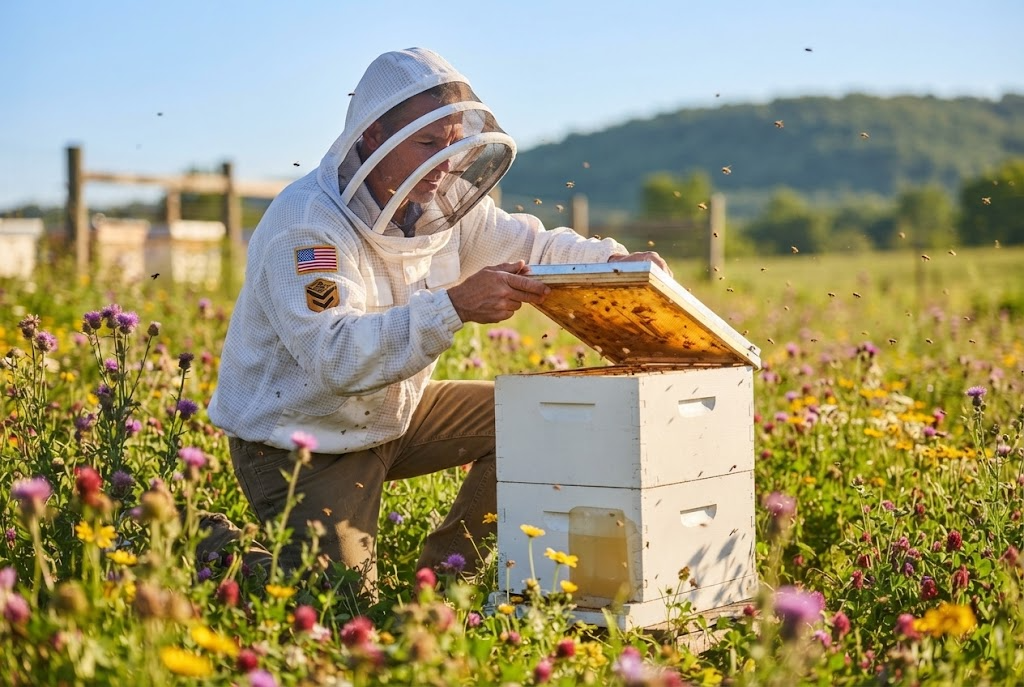
The Veil Is Part of the System, Not an Accessory
Many beekeepers focus entirely on the jacket body and treat the veil as an afterthought, but the veil is just as critical to the airflow-and-protection balance. A flat, hood-style veil made from a single layer of mesh can collapse against the face during bending or reaching, creating the exact fabric-against-skin problem the rest of the jacket is designed to avoid. Round or fencing veils solve this by maintaining a rigid frame that keeps mesh away from the face in every direction, regardless of head movement. This consistency is what allows a beekeeper to lean in close to a frame without worrying about the veil pressing against their skin at the wrong moment.
Seam Quality Decides Long-Term Reliability
Two jackets can look nearly identical in a photo and still perform completely differently after repeated use, and the difference almost always comes down to stitching. Reinforced, double-stitched seams at the shoulders, underarms, and veil attachment point resist the small gaps that develop over time from stretching and repeated washing. A jacket with weaker single-stitched seams may function perfectly well when new, but those seams are often the first thing to fail after a full season of regular use, right at the pressure points where a bee is most likely to test the fabric.
Airflow and Protection Are Not Opposing Goals
It's tempting to assume that more mesh automatically means less protection, but that's not how well-engineered jackets actually work. The mesh itself isn't the vulnerability — an unsupported or collapsed mesh is. As long as the spacer layer holds the gap open consistently, increasing airflow through additional mesh panels doesn't compromise safety at all. This is exactly why modern ventilated designs have moved away from the old assumption that thicker, more sealed suits are inherently safer. Engineering the gap correctly matters far more than how much fabric is used overall.
Final Thought
A well-built ventilated jacket isn't a compromise between comfort and safety — it's proof that the two were never actually in conflict to begin with. Once the spacer layer, seam reinforcement, and veil design are handled correctly, airflow and sting protection work together rather than against each other. That's the exact standard BeBees builds toward, focusing on the mesh spacing and construction details that determine real performance in the field rather than surface-level appearance. For any beekeeper trying to understand what actually matters in a jacket, the answer isn't complicated: the best ventilated beekeeping jacket is simply the one that keeps that protective air gap intact no matter how you move.
Comments
Log in or sign up to join the conversation.