

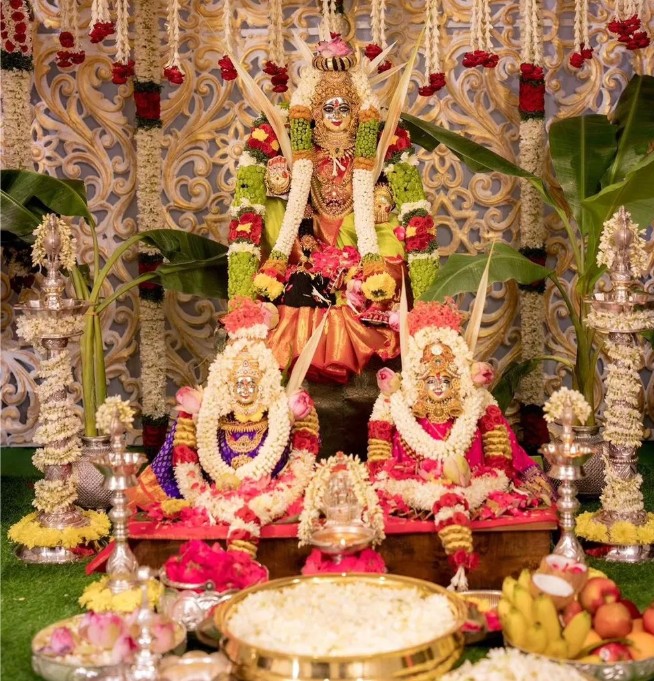
Varalakshmi Vratam is a special Hindu festival celebrated by women in Tamil Nadu. The name "Varalakshmi" means "Lakshmi who grants boons." This festival is celebrated on a Friday before the full moon, in the Tamil months of Aadi or Aavani (which fall in the sacred month of Shravana). Married women observe this vow to pray for the wellbeing of their families and for a long, happy married life.
Why Do Women Celebrate This Festival?
For family wellbeing Married women perform this vratam (vow) to pray for the health, long life, and prosperity of their husbands and family members.
To worship the Goddess of Boons The word "Varam" means blessing or boon. Goddess Varalakshmi is believed to be the form of Lakshmi who quickly grants the wishes of her devotees, which is why this Pooja is considered very special.
To receive the blessings of all eight forms of Lakshmi By worshipping Varalakshmi, devotees believe they receive the blessings of all eight forms of Lakshmi together:
Dhana Lakshmi (wealth)
Dhairya Lakshmi (courage)
Santana Lakshmi (children)
Vijaya Lakshmi (victory)
Vidya Lakshmi (knowledge)
Dhanya Lakshmi (grains/food)
Aishwarya Lakshmi (prosperity)
The mythological story According to legend, Goddess Parvati once asked Lord Shiva about a vow that would bring good to women. Shiva told her about Varalakshmi Vratam, saying that women who observed this vow with devotion would gain prosperity and marital happiness. He also shared the story of a woman named Charumathi, to whom Goddess Lakshmi herself appeared in a dream and asked her to perform this vratam. Which brought wealth and happiness to her and her family.
The sacred timing This vratam falls in the month of Shravana, considered the most sacred month for worship in Hindu tradition, making the vow even more meaningful during this time.
The Story of Varalakshmi Vratam
The conversation between Shiva and Parvati
Once, in Kailash, Goddess Parvati asked Lord Shiva, "Is there a vow that all women can observe to remain happily married and live with wealth and wellbeing?" Shiva replied, "Varalakshmi Vratam is one such vow. Women who perform it faithfully will receive wealth, comfort, a long married life, and the blessing of children."
The story of Charumathi
To explain this, Shiva told the story of Charumathi, a Brahmin woman who lived in a city called Kundina in the kingdom of Magadha. Charumathi was deeply devoted and treated her husband and in-laws with love and respect.
One night, Goddess Lakshmi appeared in Charumathi's dream and said, "I am Varalakshmi. If you worship me with devotion, you and your family will be blessed with wellbeing and wealth." The Goddess told her to observe the vow on the first Friday of the Shravana month.
When Charumathi woke up, she told her family and the women of her town about the dream. Everyone gathered together, set up a kalasham (sacred pot) as instructed by the Goddess, decorated it, performed the Pooja, and observed the vow.
The result of the vow
After completing the vratam, Charumathi and the other women experienced something wonderful. The bangles on their wrists turned into gold bangles, and their homes were suddenly filled with wealth, grain, and prosperity. The whole town was amazed, and from that day, everyone began celebrating this vratam with devotion every year.
This story teaches that Goddess Varalakshmi blesses those who worship her with a pure heart. which is why this vratam continues to be celebrated with such devotion even today.
How to Perform Varalakshmi Vratam
1. Preparation
The vratam is performed on the Friday before the full moon in the Shravana month.
Wake up early, take a bath, and wear clean/traditional clothes (a saree for women).
Clean the Pooja room and decorate it with kolam (rice flour designs).
2. Setting Up the Kalasham (Sacred Pot)
Fill a brass or silver pot with rice or water, place mango leaves around the rim, and put a coconut on top.
Decorate the pot with a new cloth or saree.
Place a silver or gold face of Goddess Lakshmi on the pot and decorate it with jewelry and flowers. This becomes the form of Goddess Varalakshmi that is worshipped.
3. Performing the Pooja
Light a lamp in front of the kalasham, remember the Goddess, and make a sankalpam (state your intention for the vow).
Offer turmeric, kumkum, flowers, incense, and a lamp during the Pooja.
Recite the Varalakshmi Ashtottaram or Sahasranamam (sacred chants).
Read or listen to the story of Varalakshmi Vratam (the story of Charumathi).
Offer fruits, sundal, and other prasadam (food offerings) to the Goddess.
4. Tying the Sacred Thread
Prepare a thread with 9 or 12 knots tied in yellow (turmeric-dyed) cotton thread.
Place it in front of the kalasham during the Pooja, then tie it around your right wrist.
5. Completing the Ritual
Invite married women (suhagans) and honor them with betel leaves, betel nuts, bangles, fruits, and small gifts.
Finish with an aarti (offering of light) and share the prasadam with everyone.
What You Need for the Pooja
For the Kalasham and decoration:
A brass or silver pot
Rice (to fill the pot)
Betel leaves and mango leaves
A coconut
A silver/gold/brass face of Goddess Lakshmi
A new saree or cloth
Jewelry and flower garlands
Basic Pooja items:
Turmeric powder
Kumkum
Sandalwood paste
Sacred ash (vibhuti)
Akshata (turmeric-mixed rice)
Incense sticks
Camphor
Ghee lamp or lamp oil
Lamp wicks
For the sacred thread:
Yellow cotton thread (tied with 9 or 12 knots)
A piece of turmeric-dyed cloth
For offerings (prasadam):
Fruits (banana, apple, etc.)
Sundal (chickpea or lentil dish)
Sweets like halwa, kesari, or payasam
Betel leaves and betel nuts
Rose water/grapes
Gifts for married women:
Betel leaves and nuts
Bangles
Small packets of turmeric-kumkum
Small gifts (cloth pieces, blouse pieces, silk ribbons, etc.)
Other items:
Rice flour for kolam designs at the entrance
Fresh mango leaves or sprouts
New cloth or banana leaf to spread for the Pooja
Why This Festival Matters
Spiritual significance: This is considered one of the holiest vows for married women. It's believed that a single Pooja brings the blessings of all eight forms of Lakshmi together.
Marriage and family wellbeing: The vow is performed for the long life, health, and happiness of the husband, and for unity and prosperity in the family.
Wealth and prosperity: Since Goddess Varalakshmi is worshipped as the giver of boons, the Pooja is believed to bring financial stability and prosperity to the home.
Cultural continuity: This tradition passes down through generations of women mothers teach their daughters the rituals, stories, and meaning behind the vow.
Social bonding: Married women come together to exchange betel leaves, bangles, and blessings, strengthening social and family relationships.
Devotional discipline: Through fasting, prayer, and rituals, this vow helps build devotion, patience, and gratitude.
Faith in divine grace: Based on the story of Charumathi, this festival reinforces the belief that true devotion to Goddess Lakshmi brings grace, prosperity, and protection for the family.
A Simple Version for Home
You don't need an elaborate setup to celebrate Varalakshmi Vratam at home. On the Friday of the Shravana month, wake up early, take a bath, and set up a small platform in your Pooja room with a kolam design. Instead of a large kalasham, a small copper or silver vessel filled with water or rice, along with mango leaves and a coconut, is enough. Place a picture or small idol of Goddess Lakshmi behind the pot and decorate it with a new cloth or saree. Light a lamp, offer turmeric-kumkum and flowers, read the Varalakshmi story, and recite whatever verses you can. Tie knots in a yellow thread to make the sacred bracelet and wear Or Bronze idol statue it. Prepare a simple offering like sundal or payasam. You don't need to invite a large group of guests. A simple family celebration is enough. If you're busy with work, you can do a short Pooja in the morning and share the prasadam in the evening. What matters most is devotion, no need for luxury.
Comments
Log in or sign up to join the conversation.