
Most relationship advice focuses on what you should say—use “I feel” statements, listen actively, avoid blame. Andrew Huberman takes a different approach. He starts not with words but with the nervous system. Every conversation you have is first processed by ancient brain circuits that scan for safety or threat before any meaning is extracted. If your partner’s nervous system detects threat, it does not matter how perfectly you phrase your concern. The message will be filtered through defensiveness and fear. Huberman’s communication tips are grounded in this biology. He offers practical tools for creating a state of physiological safety before difficult conversations, using eye contact and breathing to regulate each other’s nervous systems, and understanding how stress hormones shape the way we hear criticism.
The Face-to-Face State That Prunes Threat Detection
Before you say a single word in a difficult conversation, Huberman recommends a silent protocol that takes about thirty seconds. Face your partner directly, soften your gaze so you are aware of their whole face rather than staring at their eyes, and take three slow physiological sighs together. This combination does something specific to your respective nervous systems. Direct face-to-face orientation without eye-locking signals that you are attending to each other without aggression. The soft gaze reduces activity in your amygdala, the brain’s threat detector. The shared sighs synchronize your heart rates through vagal pathways. People who use this pre-talk protocol report that the same difficult conversation feels less volatile, with fewer emotional escalations and faster resolutions. Huberman notes that couples in conflict often default to side-by-side positions or avoid eye contact entirely, both of which keep the threat detection system online. Facing each other with soft, shared attention is not romantic advice. It is biological priming.

The Ten-Second Pause That Prevents Emotional Flooding
When you feel criticized, your brain releases cortisol and adrenaline within seconds. This emotional flooding state shuts down your prefrontal cortex, the part of your brain responsible for rational thought and impulse control. In this state, you will say things you regret, misinterpret neutral statements as attacks, and escalate conflicts unnecessarily. Huberman recommends a hard rule for couples: when anyone feels flooded, call a ten-second pause. Not a ten-minute walk. Not a silent treatment. Ten seconds of looking away from each other, taking a single physiological sigh, and consciously relaxing your jaw and shoulders. Ten seconds is long enough for the initial adrenaline spike to begin subsiding but short enough that you do not disengage from the conversation entirely. Huberman has seen this simple pause transform couples who previously got stuck in ninety-minute loops of accusation and defensiveness. The pause does not solve the problem. It keeps your prefrontal cortex online so you can actually listen to the solution.
Using Gaze Direction to Shift Emotional Tone
Your eyes do more than see. They signal and regulate emotional states in both you and the person looking at you. Huberman explains that downward gaze—looking toward the floor or your lap—activates parasympathetic circuits associated with shame, submission, or sadness. Upward gaze activates sympathetic circuits linked to alertness or defensiveness. Direct, locked eye contact for more than a few seconds triggers threat responses in most people unless they are already feeling safe and connected. The most regulating gaze pattern for difficult conversations is what Huberman calls the triangle: look at one eye for a few seconds, then the other eye, then the mouth, then repeat. This gentle movement prevents the threat of locked staring while still conveying attention and care. Couples who practice this triangular gaze during check-in conversations report feeling more heard and less judged. The effect is not psychological. It is visual, ancient, and automatic.
The Voice Tone That Lowers Cortisol in Listeners
Your voice carries emotional information through several channels simultaneously, and Huberman has studied how different frequencies affect the listener’s stress hormones. A rising pitch at the end of sentences, similar to a questioning tone, activates the listener’s threat detection system because it resembles the vocal patterns of anxiety or uncertainty. A falling pitch at the end of statements, especially in a slightly lower register, signals calm authority and lowers cortisol in the listener. You can test this yourself. Say the sentence “I need to talk to you about something” with a rising question-like tone, then again with a falling, grounded tone. The difference is immediate. Huberman recommends practicing what he calls the grounded voice before any important relationship conversation. Speak slightly slower than your normal pace, end your sentences on a downward inflection, and keep your volume moderate rather than loud or whisper-soft. Your content does not change. But the nervous system of the person listening receives a very different signal about whether they are safe or in danger.
The Co-Regulation Breath That Syncs Nervous Systems
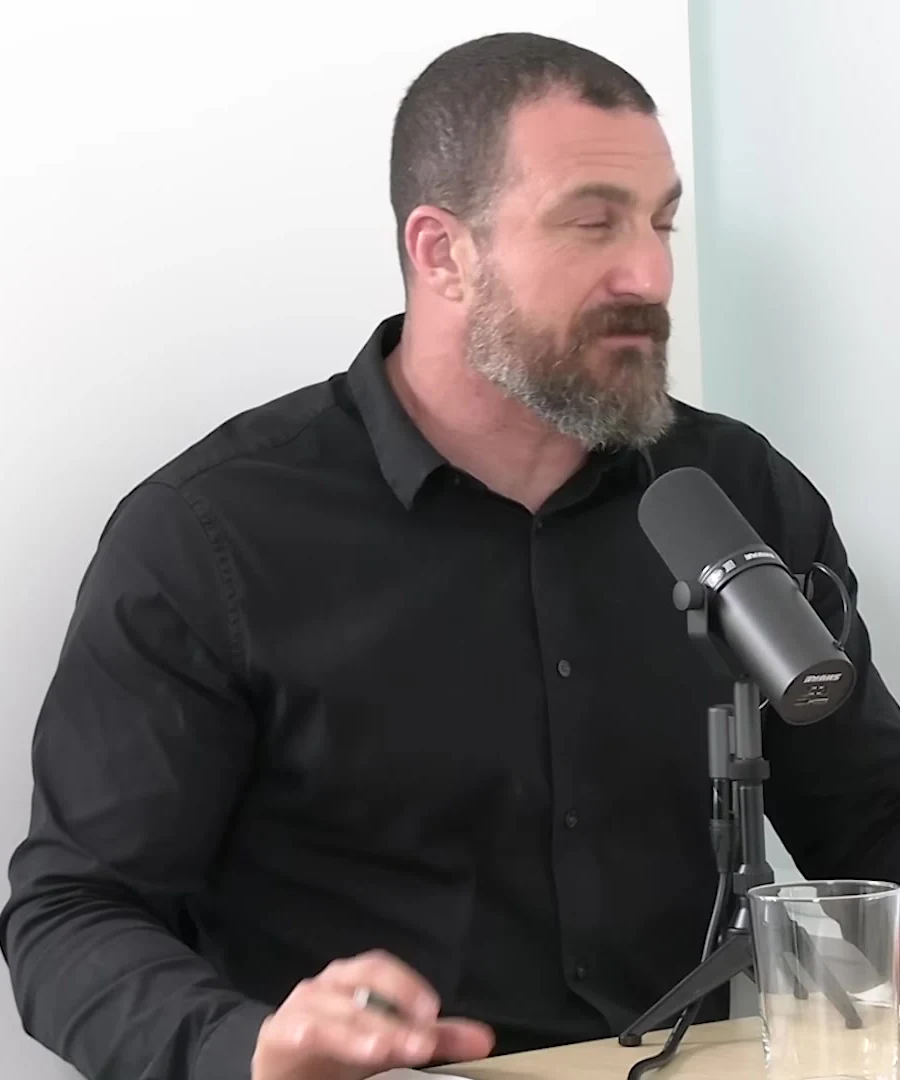
One of Andrew Huberman most practical relationship tools is deliberately synchronizing your breathing with your partner’s during moments of connection or repair. When two people breathe at the same rate, their heart rates tend to synchronize through vagal pathways. This co-regulation state reduces defensiveness and increases the likelihood of finding mutual solutions. Huberman recommends a simple exercise: sit facing each other, place one hand on your own chest and one hand on your partner’s chest, then try to match your inhales and exhales for about one minute. This is not a meditation or a therapy technique. It is a biological hack. The physical feedback of feeling each other’s breath, combined with the matching rhythm, tells both brains that you are in a cooperative rather than competitive state. Couples who use this co-regulation breath before difficult conversations report that arguments that used to take an hour resolve in fifteen minutes. The same words, the same issues, a completely different nervous system context.
The Rupture and Repair Cycle as a Plasticity Opportunity
Finally, Huberman offers a reframe that reduces shame around relationship conflict. He explains that the rupture-repair cycle—arguing, hurting each other’s feelings, then making up—is not a sign of a broken relationship. It is the primary way adult brains learn social safety. Every time you have a conflict and then successfully repair it, your brain strengthens the neural pathways that associate your partner with safety despite disagreement. Problems arise only when ruptures happen without repair. Huberman recommends a specific repair protocol: after a conflict, spend two minutes in physical contact—holding hands, sitting close, or hugging—while breathing slowly and deliberately. Do not talk about the conflict during these two minutes. The physical contact and slow breathing activate your vagus nerves and release oxytocin, which creates a state where verbal repair becomes possible. Couples who practice this protocol report that the same arguments feel less catastrophic over time. Their brains have learned that conflict leads to connection, not to abandonment. That learning is neuroplasticity, and it is available at any age.
Comments
Log in or sign up to join the conversation.