

This week, I went to Bring Your Parent to School Day and found myself trying to explain what I do for a living to a room full of 2nd graders.
I told them I was a stock trader.
Adults usually have questions about the market, the economy, or what I think stocks will do next. Second graders went straight for the information they wanted.
“How much money do you have?”
“Are you rich?”
“Can you buy stock in Roblox?”
And then came my favorite: “If you know what stocks to buy, why aren’t you as rich as a prince?”
It was a fair question. In fact, it gets surprisingly close to one of the biggest misconceptions about trading.
To a seven year old, the logic is simple. If your job is to find good stocks, you should know which ones are going up. If you know which ones are going up, you should make a lot of money. And if you make enough money, the clear end point is becoming a prince.
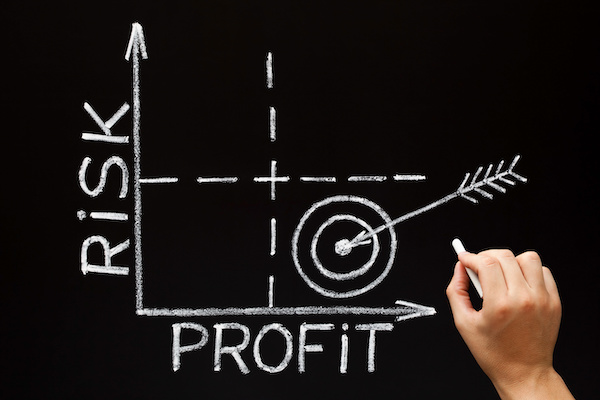
I explained that being a trader does not mean I know what will happen next. My job is to study the information I have, identify situations where the odds appear favorable, decide how much risk I am willing to take, and accept that sometimes I will be wrong.
That answer did not generate nearly as much enthusiasm as discovering that Roblox is a publicly traded company.
But their questions stayed with me, because adults often approach the market with a more sophisticated version of the same expectation that these kids had. We want to know what is going up next. We want certainty before putting money at risk. And when someone has spent years studying markets, we assume experience should eventually make it so we’re never wrong .
It doesn’t.
Over the years, I have become less interested in predicting exactly what a stock will do next and more interested in recognizing conditions that have historically created opportunities. That is an important part of how I use my Income Trader Volatility, or ITV, indicator.
ITV measures fear in the price of a stock and helps me identify when elevated fear begins to subside. That gives me something objective to evaluate at a moment when other investors may still be reacting emotionally.
Markets are driven by more than changes in the underlying value of a business. Investors respond to headlines, losses, and to one another. Selling can accelerate as fear spreads, pushing prices sharply lower before that pressure eventually begins to ease. ITV allows me to measure that behavior rather than decide whether the fear causing it is justified.
The signal does not guarantee that stocks will rise. It tells me that a specific set of conditions I am interested in has developed. From there, I can evaluate the opportunity, establish an entry price and manage the risk.
That is a much more realistic description of trading than knowing which stocks are going up next.
Experience has not made it so that I’m right all the time. It has, however, made me more systematic in deciding when the evidence justifies putting money at risk and when it is better to wait.
I’m not sure I convinced the second graders.
But they now know you can buy Roblox stock, and I now have a considerably higher financial standard to aspire to.


Comments
Log in or sign up to join the conversation.