

Market Analysis
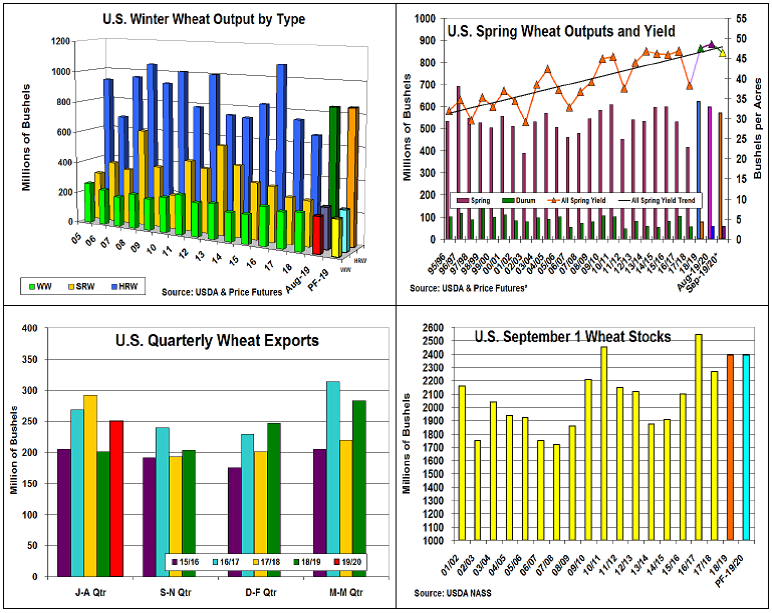
The US Small Grains report at the end of September has been a non-event many years. The USDA changes in US barley, oats and total wheat crops have been mini-mal from its previous August levels in many years. However, modest changes within the various varieties of winter wheat and lower spring and durum yields may have occurred this year. Updates on planted and harvested areas for various varieties will likely occur given FSA’s 46.3 million US planting level being 700,000 acres above NASS’s current 45.6 million total acre level. We expect this might prompt a 1 million increase in harvested area, which will moderate yield levels vs. changing output lev-els for the various US wheat varieties.
Specifically, above-normal rainfall in the PNW may sliced a couple of million bu of white wheat’s winter wheat output while July heat may have reduced central US soft red wheat’s crop by 3 million bu. Conversely, hard red’s output will probably rise by another 3 million bu. to 843 million. Overall, 2019’s US winter wheat could total 1.323 billion bu, vs. August’s 1.326 billion bu. level.
This year’s above-normal rainfall in the N. Plains over the last 6-7 weeks will likely impact spring and durum wheat prospects the most since August. Quality will also be impacted, but lodging may cut harvested area by 20-21,000 acres. Spring’s output could 26.6 million bu less while durum production could be down 3 million bu. Overall, 2019’s spring varieties could total 624.5 million bu. and this year’s US wheat output could total 1.9475 billion bu., up 63 million from last year.
Despite a rebound in the world wheat output lead by the EU in 2019, US wheat exports are up 49 million bu. this past summer quarter vs 2018’s summer period. This demand increase plus 27 million smaller beginning stocks could mean that this year’s Sept 1 what stocks could be unchanged at 2.39 billion bu vs. 2018.
(Click on image to enlarge)
What’s Ahead
Despite this summer’s rebound in US exports, this year’s recovery in world wheat output be-cause of stronger Northern Hemisphere output will likely limit wheat’s seasonal fall price strength. Current dry-ness in Australia & Argentina needs to be monitor closely for its potential to tighten world supplies and rebound prices later this fall. Producers should look at KC December’s $4.40-$4.50 range to advance your sales.



Comments
Log in or sign up to join the conversation.