

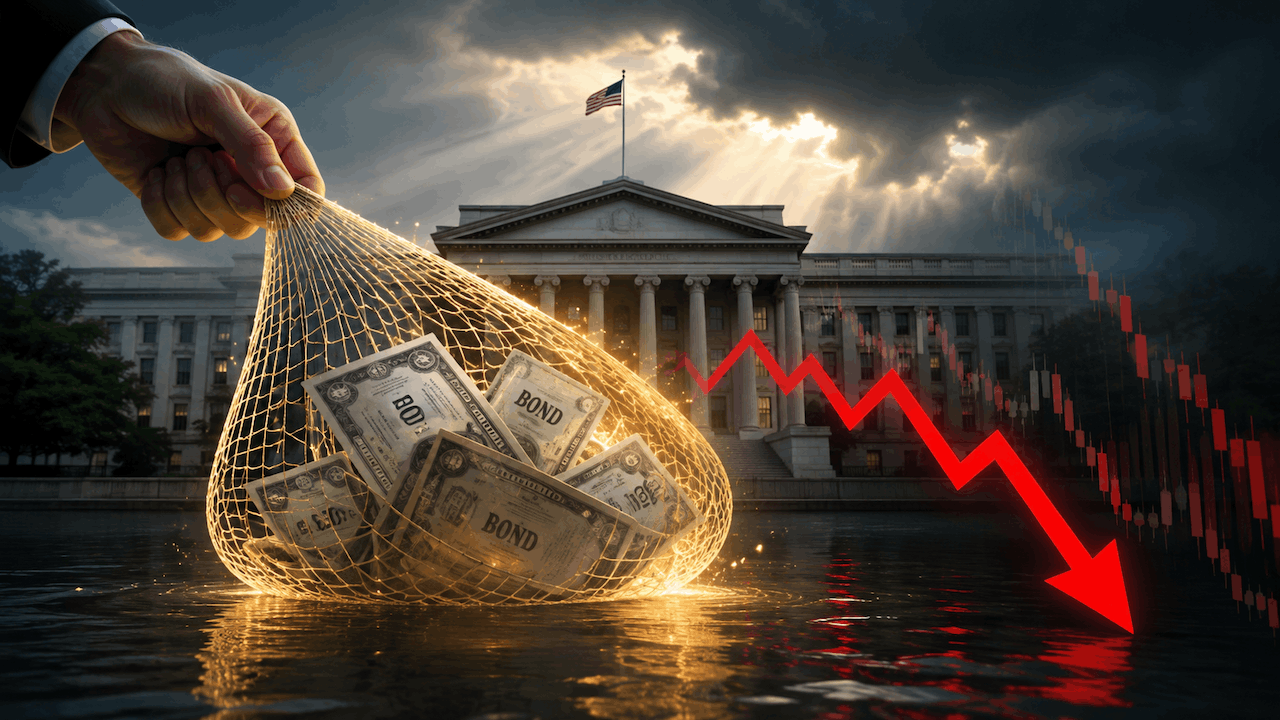
In a transparent effort to manipulate the bond market, the U.S. Treasury announced it would double the size of its “liquidity support” buybacks.
According to the announcement, the Treasury Department will increase buybacks of Treasury securities in the 10-20- and 20-30-year maturity sectors from a maximum of $2 billion to $4 billion per operation.
The expanded buyback operations will begin September 9 and run through November 4.
The Mechanics of the Bond Buyback
In practice, the Treasury will purchase older long-term bonds on the open market and retire them. This increased demand will raise prices and lower yields. This benefits the federal government by lowering interest rates on newly issued debt on the long end of the curve.
The Treasury will fund the buybacks by selling shorter-term notes and bonds. In effect, the Treasury will borrow money to buy debt from people who already lent it money so it can borrow more money from other people at a slightly lower interest rate.
This is imperative given that the federal government is already shelling out over $1 trillion annually in interest expense.
If it sounds a little like a Ponzi scheme, well…
The move worked. The 30-year Treasury yield closed on Tuesday (Aug. 18) and stood at 5.31. Intraday, it hit 5.34 percent, the highest yield since 2007. At close on Wednesday, it dipped to 5.19 percent.
What Are the Ramifications of Yield Curve Intervention?
To put the operation in simple terms, the market is saying, "We require a much higher yield to hold very long-term U.S. government debt." The Treasury responded by becoming a larger buyer in exactly the section of the curve under the most stress.
In the big scheme of things, the $4 billion intervention is relatively small within a $32 trillion bond market. However, it sends a signal that the Treasury is willing to step in and manipulate the long end of the yield curve.
It also reveals that the Treasury Department is worried about the state of the bond market and its ability to continue funding the federal government's borrow-and-spend binge.
Treasury describes the operation as a “liquidity intervention” to maintain “market plumbing.” However, we don’t have a “plumbing” problem, and the Treasury Department intervention doesn’t solve the fundamental issue.
Demand for U.S. debt has tanked.
Investors are demanding higher long-term yields due to ever-increasing federal deficits and inflation expectations.
Standard Chartered global head of research Eric Robertsen said he would not describe the increase in yields “as being a function of or exacerbated by irrational market conditions."
"The only conclusion we can draw is that yields reached a level that they don't like, and I think that suggests a willingness to try and control or intervene against natural supply and demand."
The timing of the announcement was telling. The Treasury held a 20-year auction on Wednesday, as yields were coming down.
In other words, it pumped yields down before the auction and ostensibly sold the new bonds at a slightly lower rate than it otherwise would have.
In fact, the August quarterly refunding statement announcing upcoming bond issuance revealed the Treasury plans to sell $125 billion in 3-, 10-, and 30-year securities, including a $25 billion 30-year bond.
While buying back old long bonds while continuing to issue new debt can improve liquidity and market functioning, it can’t make the government's financing requirement disappear.
In other words, the federal government must keep borrowing, and the world’s lenders seem to be saying, “no thanks!”
This is evidenced by the fact that the impact of the move seems to have been short-lived. On Thursday morning, the yield on the 30-year Treasury was back up to 5.24 percent.
This kind of yield curve intervention also comes with risks. The Treasury will likely issue more short-term debt to cover the buybacks. This exposes Uncle Sam to refinancing risk if rates on the short end of the curve begin to rise.
The move could also undermine confidence in the bond market if investors take this as a signal that the government cannot tolerate market-clearing long-term rates because of the rising interest expense on the $40 trillion debt.
This is even more problematic given that many analysts believe we are in the early stages of a secular bear market in bonds.
Impact on Precious Metals
The fact that the Treasury is willing to step in to suppress yields is bullish for gold and silver.
Since gold is a non-yielding asset, conventional wisdom holds that a higher rate environment is bearish for the yellow metal. Conversely, lower rates tend to create headwinds for gold.
The gold market reacted as one would expect. Gold soared on the news, pushing back above $4,500 an ounce on Wednesday. It was the first time gold rose above that level in two months.
Silver also experienced a strong gain, rising above $68 an ounce.
The optics of this operation matter more right now than the scope. If markets take the Treasury at face value and interpret this as a plumbing fix, it won’t likely have significant impacts. However, if the markets read between the lines and recognize it as transparent rate manipulation to control federal government buying costs, we could see a more significant pivot toward precious metals.



Comments
Log in or sign up to join the conversation.