

A Key Reason US Monetary Policy May Be Less Effective Than In The Past Is Reduced Housing Affordability
Under normal circumstances, the usual transmission mechanism for interest rate reductions in the US operates through boosting the housing sector.
However, a recent article by Ben Casselman of the NYT (October 31) sets out a very simple and powerful argument that this time around lowering interest rates may not work out as planned.
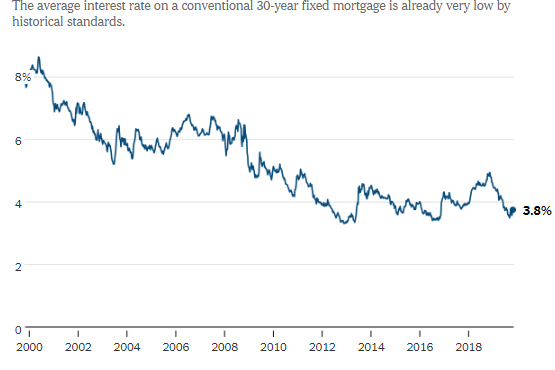
That is, the Fed’s recent reduction in interest rates on its own cannot help increase housing sales if American families simply cannot afford the price of a home.
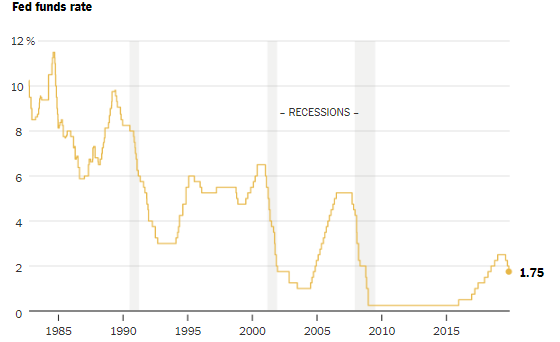
Bear in mind that the Fed has cut interest rates three times this year to a range of 1.5% to 1.75% so as to provide some support for the US economy in the period of great uncertainty. That is, virtually all industrial economies are slowing down due to the US-China trade war, and as well, the US economy has also slowed down.
The accompanying chart illustrates the extent of monetary policy easing using the upper figure of the federal funds target range.
As the chart illustrates, the Fed raised interest rates nine times starting from late 2015, and four rate hikes occurred in 2018. This year’s rate reductions practically wiped out the rate hikes that occurred last year.
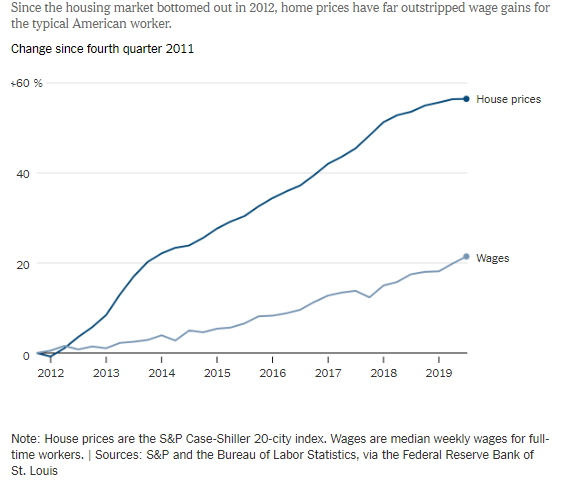
However, as one of the charts below illustrates, since the economy bottomed out after the Great Recession, housing price increases have far outstripped any meager wage gains. In plain words, this reality limits the ability of the housing sector to be stimulated by lower interest rates.


Comments
Log in or sign up to join the conversation.