


Core PCE inflation rose to 3.3% in October, exceeding economists' expectations.
The US economy expanded at an annualised rate of 4.3% in the third quarter.
Experts say December 9 Fed rate hike is nearly certain.
US inflation moved further away from the Federal Reserve's 2% target in October, while stronger-than-expected economic growth added to pressure on the central bank to raise interest rates again in December.
The personal consumption expenditures (PCE) price index, the Fed's preferred inflation measure, rose at an annual rate of 3.8% in October, in line with the Dow Jones consensus estimate, according to data released by the Commerce Department on Wednesday.
Core PCE inflation, which excludes volatile food and energy prices, came in at 3.3%, 0.1 percentage point above expectations.
The figures reinforced concerns that price pressures remain persistent despite the central bank's efforts to bring inflation under control.
Markets were pricing in a 97.8% probability of a 25-basis-point interest rate increase at the Fed's December 8-9 meeting.
However, the latest data also raised questions about how much further borrowing costs may need to rise in 2027.
Strong economic growth complicates Fed's inflation fight
A separate Commerce Department report showed that the US economy expanded at an annualised rate of 4.3% in the third quarter, significantly stronger than initially estimated.
The revised GDP figure was 0.9 percentage points higher than the advance estimate, largely reflecting upward revisions to investment and consumer spending.
The robust expansion suggests that monetary policy has not significantly constrained economic activity, potentially giving policymakers more room to maintain a restrictive stance.
Consumer spending increased 0.3% in October, matching the pace of headline price increases but falling 0.1 percentage point short of forecasts.
Personal income rose 0.7%, comfortably exceeding the 0.4% estimate, while the personal saving rate climbed to 4.1%.
CPI data had already strengthened rate hike expectations
The latest PCE figures follow October's consumer price index report, which also showed inflation accelerating more than economists had anticipated.
The CPI increased 0.4% on a seasonally adjusted basis, compared with expectations of 0.3%, according to the Bureau of Labor Statistics.
Core CPI rose 0.3%, matching the increases recorded in August and September and exceeding the 0.2% forecast.
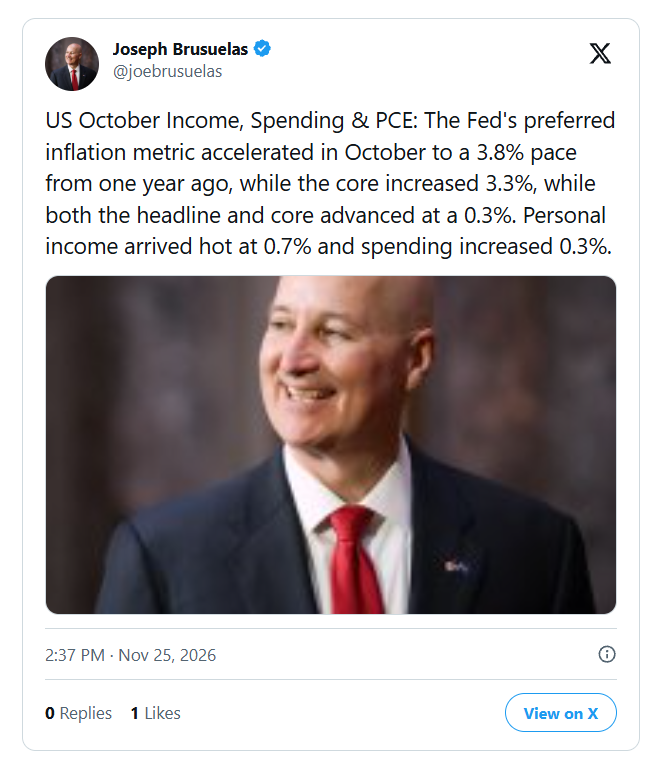
"Parts of the economy are running hot despite the recent decline in oil, gasoline, and diesel prices. And that requires rate hikes. This all points to a Fed that is now locked in on hiking the federal funds policy rate by 25bps at its December meeting. The bigger question is will they hike at the January and March meetings," wrote Joseph Brusuelas, RSM US principal and chief economist.
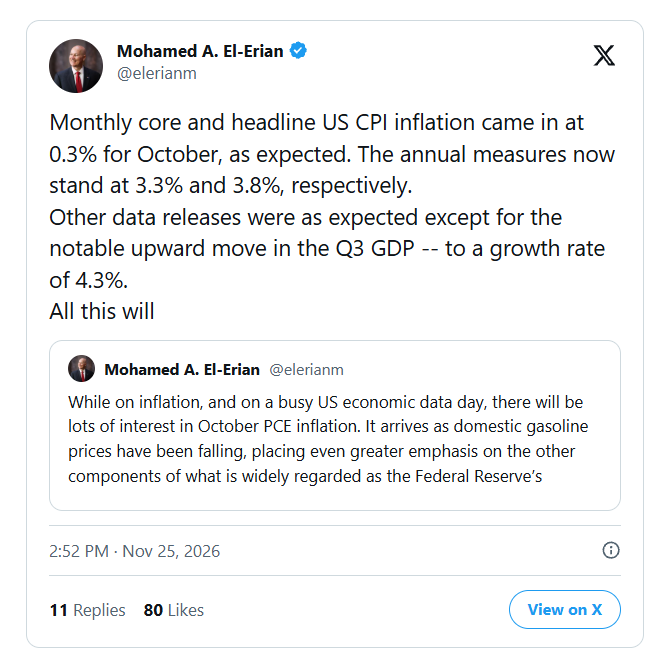
Economist Mohamed A El Erian also said the PCE and GDP data will leave markets feeling that a Fed rate hike on December 9 is "essentially a done deal, disappointing those who were hopping for a quick repeat of 2018."
Tariffs and energy costs add to inflation pressures
The inflation surge that followed the Covid-19 pandemic peaked in June 2022 and had eased sufficiently towards the Fed's 2% target by September 2024, allowing the central bank to begin lowering borrowing costs.
However, President Donald Trump's return to the White House and subsequent tariffs raised concerns about higher import prices.
Although some proposed tariff rates were later scaled back, the measures continued to pose an inflation risk.
The US-Israeli war with Iran, launched in February, added another source of pressure as global oil prices surged 50% to around $120 a barrel.
With inflation now moving further away from its target and economic activity remaining strong, the Fed faces a difficult balancing act.
While a December rate increase appears increasingly likely, the latest data suggest that the path of monetary policy in the months ahead could remain uncertain.
AI disclosure:



Comments
Log in or sign up to join the conversation.