

US businesses added 235k workers to the payrolls in the month of February, which was more than the forecasts of 200k, official data from the U.S. Bureau of Labor Statistics showed on Friday. The U.S. unemployment rate fell from 4.8% to 4.7% in February as widely expected, but the pace of the average hourly earnings grew 0.2%, less than forecast.
The February payrolls report removed all remaining doubts for a rate hike from the Federal Reserve this week, which is all set to bring the U.S. short-term interest rates 0.75% - 1.00%.
The February payrolls report covered one full month under the Trump presidency. Obviously, President Trump took to Twitter to cheer the number, calling it "GREAT AGAINT," despite the fact he had previously called the officials jobs report "phony" while campaigning.
The U.S. economy got a push with the economic momentum picking up pace. The job gains were seen coming following the unusually warm weather in February which saw the construction jobs adding 58k to the total.
There were also gains in the manufacturing and mining sector.
Previous revisions to the jobs number for the past three months combined saw average 209k jobs being added with wages rising 2.8% on the year.
Interestingly, the job participation rate ticked higher to 63%, which was seen as a result of more people looking for work. The jobless claims continued to paint a healthy picture of the U.S. economy, hovering near a 44-year low.
Earlier in the week, the ADP/Moody’s private payrolls data showed another blockbuster month with private sector jobs adding 298k, more than the forecasts of 184k. January’s private payrolls numbers were also revised higher from 246k to 261k.
Gains in the private sector came from the small businesses with the services sector leading the way, adding 193k jobs to the headline total. Mark Zandi, chief economist of Moody’s Analytics said, "February was a very good month for workers. Powering job growth were the construction, mining, and manufacturing industries. Unseasonably mild winter weather undoubtedly played a role. But near record, high job openings and record low layoffs underpin the entire job market."
(Click on image to enlarge)
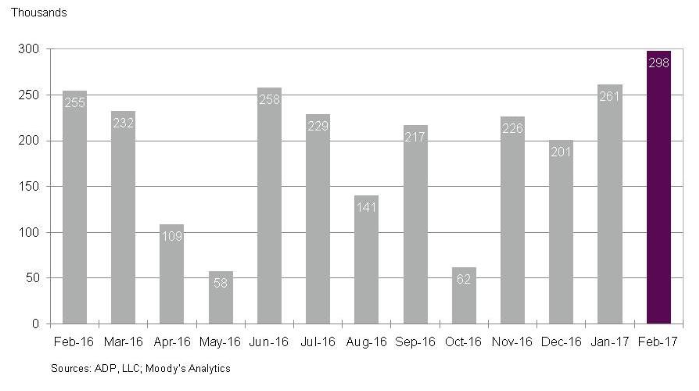
Change in Private Payrolls (February 2017). Source: ADP/Moody’s
The U.S. dollar, however, did not cheer the report much, partly due to the fact that investors were already expecting to see a solid print on the NFP, following Wednesday’s private payrolls report. Furthermore, with the solid jobs figures now cementing the rate hike next week, investors will be focusing on the future course of rate hikes.
The EURUSD broke past the 1.0600 handle on Friday and was poised to test the 1.0700 support level. The euro managed to remain resilient largely thanks to the European Central Bank’s hawkish signals at its meeting last week.
The ECB President, Mario Draghi looks to have finally given into the German, and other hawks demand as he struck a somewhat hawkish tone during the press conference. In the ECB’s statement, the central bank maintained that it would keep its accommodative monetary policy until the end of this year.
However, in the press conference, Draghi said that the central bank did not see any urgency in taking further action to expand monetary stimulus, noting that policy makers did not anticipate that further rate cuts were needed.
Heading into the ECB's meeting, expectations were running high as investors expected to hear the hawkish remarks from the central bank chief.
The EURUSD closed on Thursday at 1.0576, before managing to push through with more gains on Friday, even braving a solid jobs report. The question this week will be whether the single currency will build upon the gains or if the Fed and the Dutch election uncertainty will see the rally fizzle.



Comments
Log in or sign up to join the conversation.