

Market Analysis
The markets were on the defensive ahead of the USDA’s April reports because the widespread shuttering of US ethanol plants. Last month’s quarterly stocks reports, particularly in corn, had the trade bracing for some big adjustment in the US monthly supply/demand tables. Changes were made, but the adjustments were overshadowed by OPEC’s meeting potentially providing higher energy prices for corn’s ethanol and reduced S American soybean crops providing support vs. higher stocks.
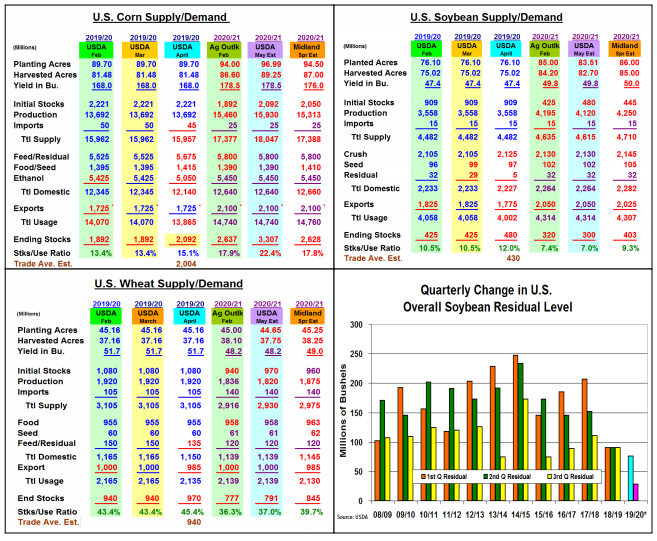
In corn, March’s lower quarterly stocks did prompt the USDA to up its feed demand by150 million bu., but the Ag Department also slashed US ethanol demand by 375 million bu.; higher than most expected. However, recent strong sales prompted the World Board to hold US export unchanged vs. dropping it like beans and wheat. The USDA also reduced imports by 5 million and upped US food corn demand by 20 million bu. Overall, this year’s corn ending stocks were raised by 200 million to 2.092 billion bu. vs. trade’s idea of a 2.0 billion level.
In soybeans, the USDA upped its US domestic crush outlook by 20 million. However, they also dropped exports by 50 million bu. despite this month’s lower Argentine (-2.0 mmt) and Brazilian (1.5 mmt) soybean crops from DC because of dryness. Last month’s quarterly stocks revealed a potential underestimate of last year’s US crop because of a drop in soybean’s March 1 residual demand level to its lowest level since 1983. The USDA went ahead and sliced 24 million off this demand which advanced soybean’s US stocks by 55 million to 480 million bu.
In wheat, the USDA sliced US feed demand by 15 million bu. because wheat’s strong price relationship to other US course grains. Wheat’s slow down in export shipments vs. its seasonal pace also prompted the World Board to drop exports by 15 million bu. Overall, wheat’s old-crop US stocks were raised by 30 million to 970 million bu.
What’s Ahead:
The results of the current crude oil meeting to curb OPEC’s output and the trend in the numbers of US Covid-19 cases will likely remain major market factors. Current cold temperatures keeping Midwest planters in their sheds, S. American dry weather and counties wanting higher food security will also be price factors going forward. Look to resume soybean and wheat sales near recent highs. Hold corn.



Comments
Log in or sign up to join the conversation.