


When the Iran war started this past March, I wrote about the potential for an oil shock and a resulting recession. While it briefly looked like that could happen, Wall Street’s rose colored glasses approach to oil futures, together with the gradual draining of the strategic oil reserve, prevented that from happening. With renewed attacks on shipping, where are we now?
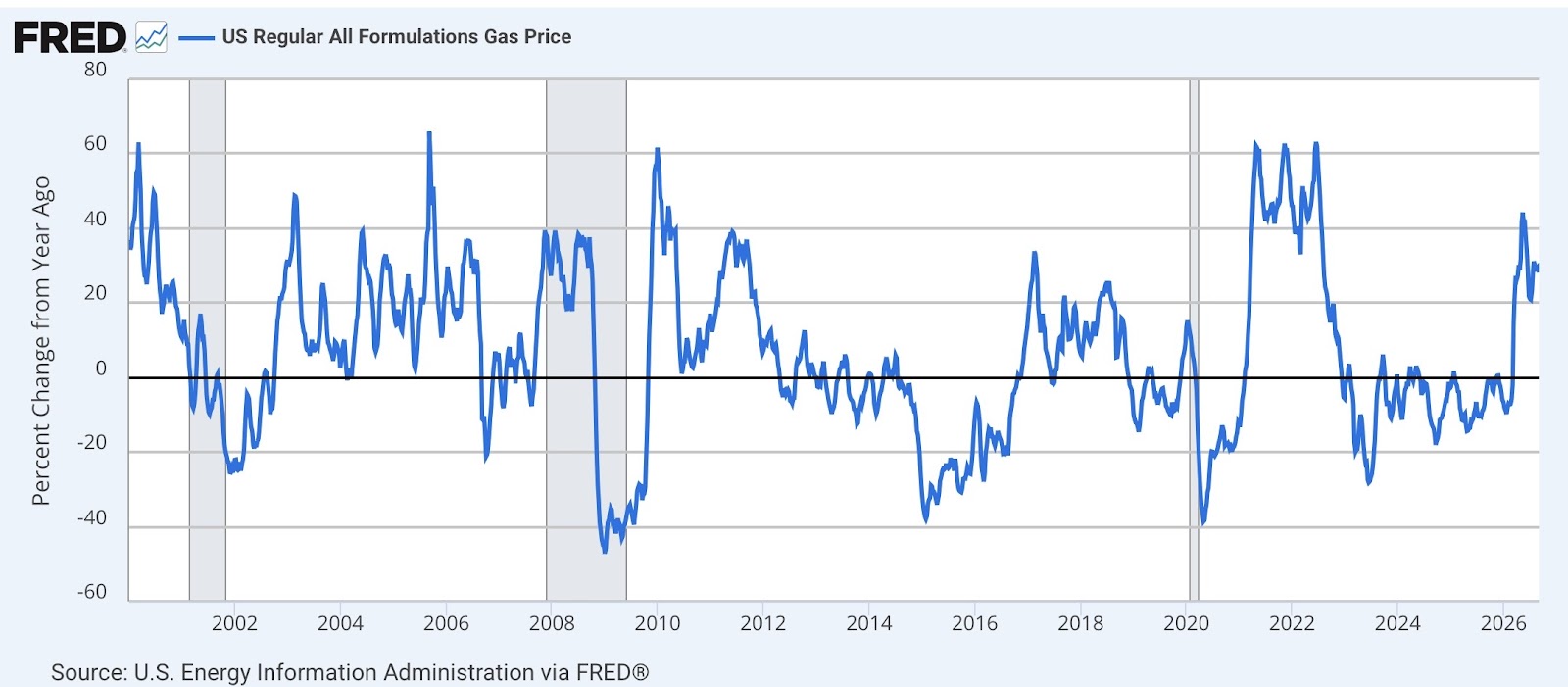
Almost all US recessions in the past 50 years have had a component of an “oil shock.” This has a stagflationary effect: driving up prices and constricting the ability to spend on other things. Typically, that stagflationary effect has kicked it up to about a 40% increase in price YoY. For example, here is what YoY gas prices have looked like this Millennium:
While there’s no graph for gas prices going back before the 1990s, here’s the same comparison substituting oil prices instead, going back to 1970:
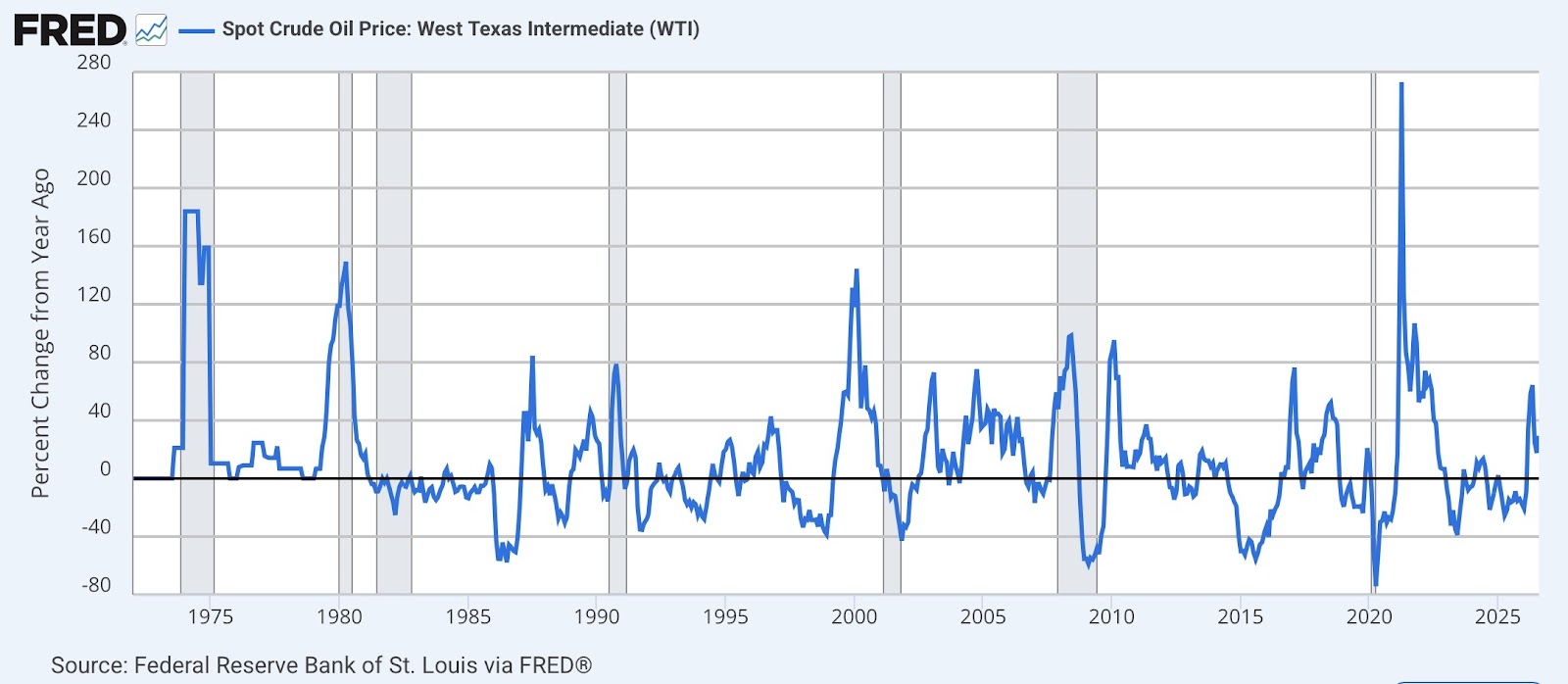
Typically, it has taken an 80% or higher YoY spike in oil prices to correlate with a recession. Before the Iran war, oil was selling for about $60/barrel. That would imply that oil prices would need to rise to $108/barrel for a sustained period of time to be consistent with triggering a recession.
But it isn’t just the increase per se; rather, it is a function of how much that price increase hits consumers’ wallets. A 40% or 80% increase from a very low price is different from a 40% or 80% increase from a price that already was slightly constrictive. To show that, here is what oil prices look like divided by average hourly nonsupervisory wages. Think of this as “how many minutes of work would it take to buy a barrel of oil:
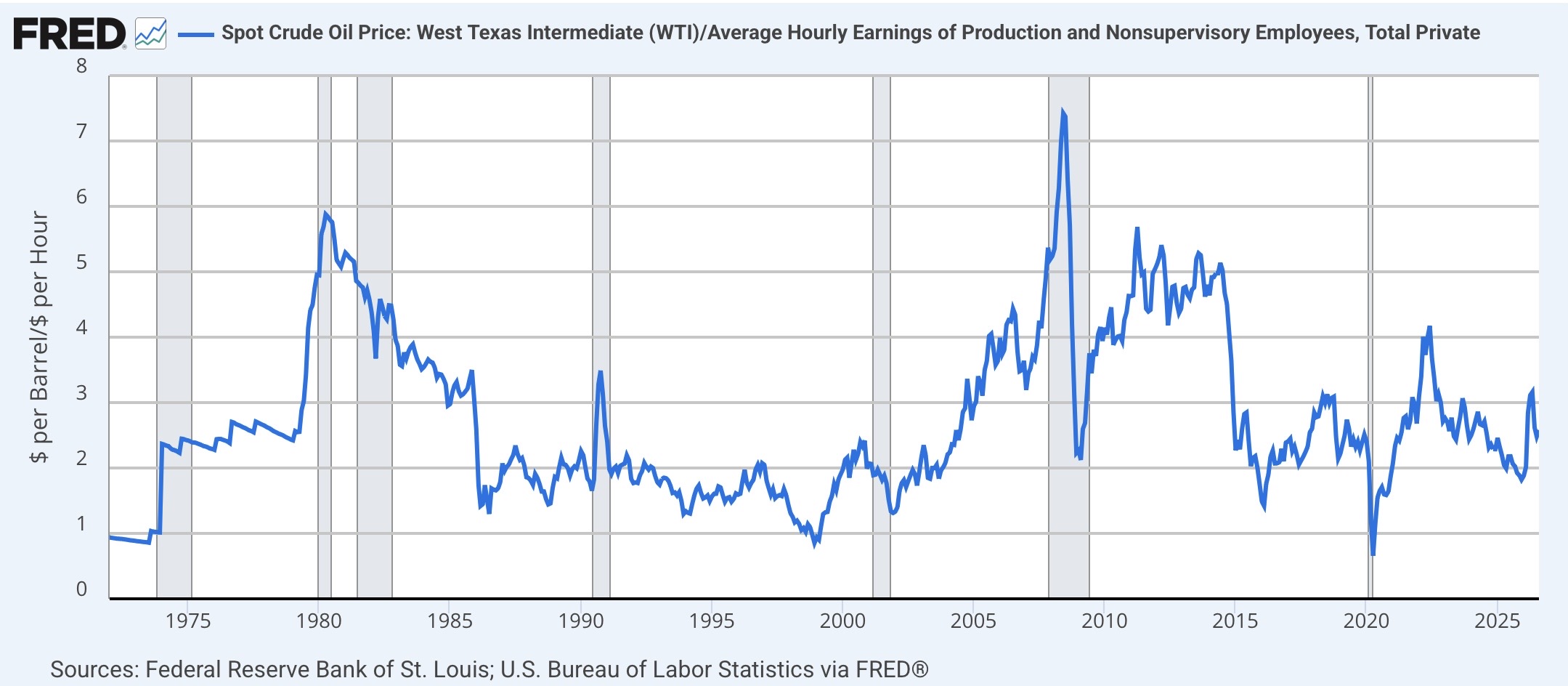
As you can see, the big increase this past spring doesn’t look like much in comparison with several earlier oil price shocks.
Now here is the same graph using gas prices instead of oil prices:
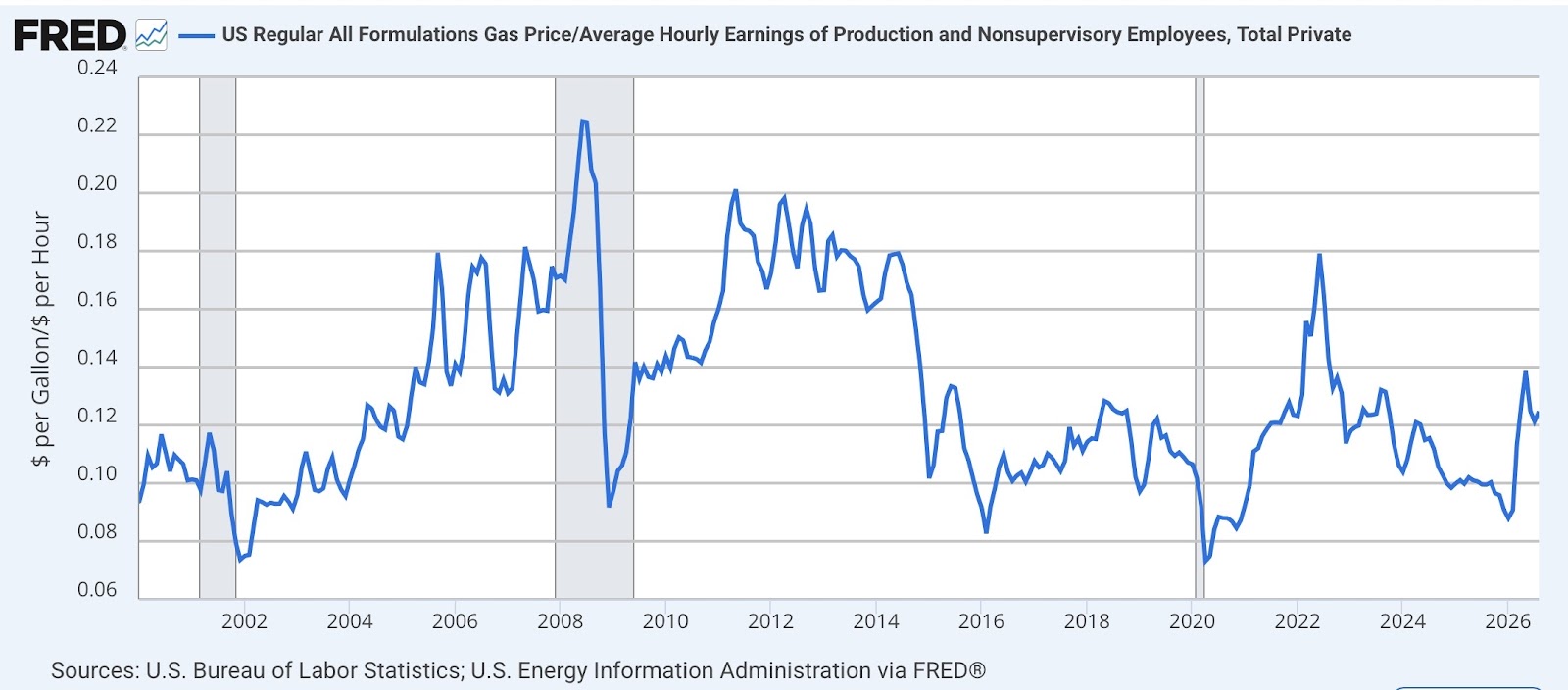
Again, the spike earlier this year doesn’t even compare with the 2022 spike associated with Russia’s invasion of Ukraine, nor even the “oil choke collar” that typified the early years of the economic expansion after the Great Recession.
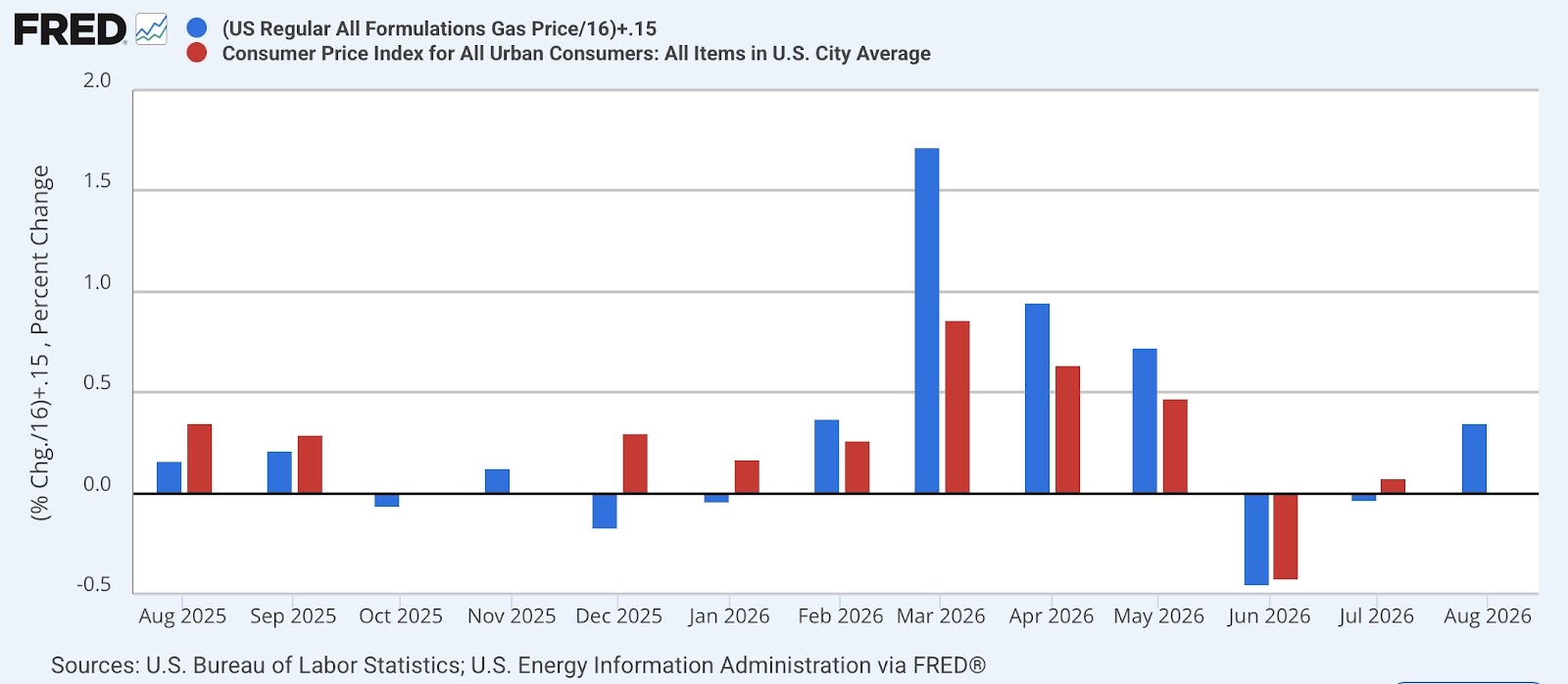
And indeed, even with the increase in prices during August, the Cleveland Fed estimates that CPI inflation, when it is reported Friday, is likely to only show an increase of 0.3%-0.4%, in line with my back-of-the-envelope method for forecasting monthly inflation, which divides the monthly average gas price change by 16 and then adds 0.15% for the average background ‘core’ inflation:
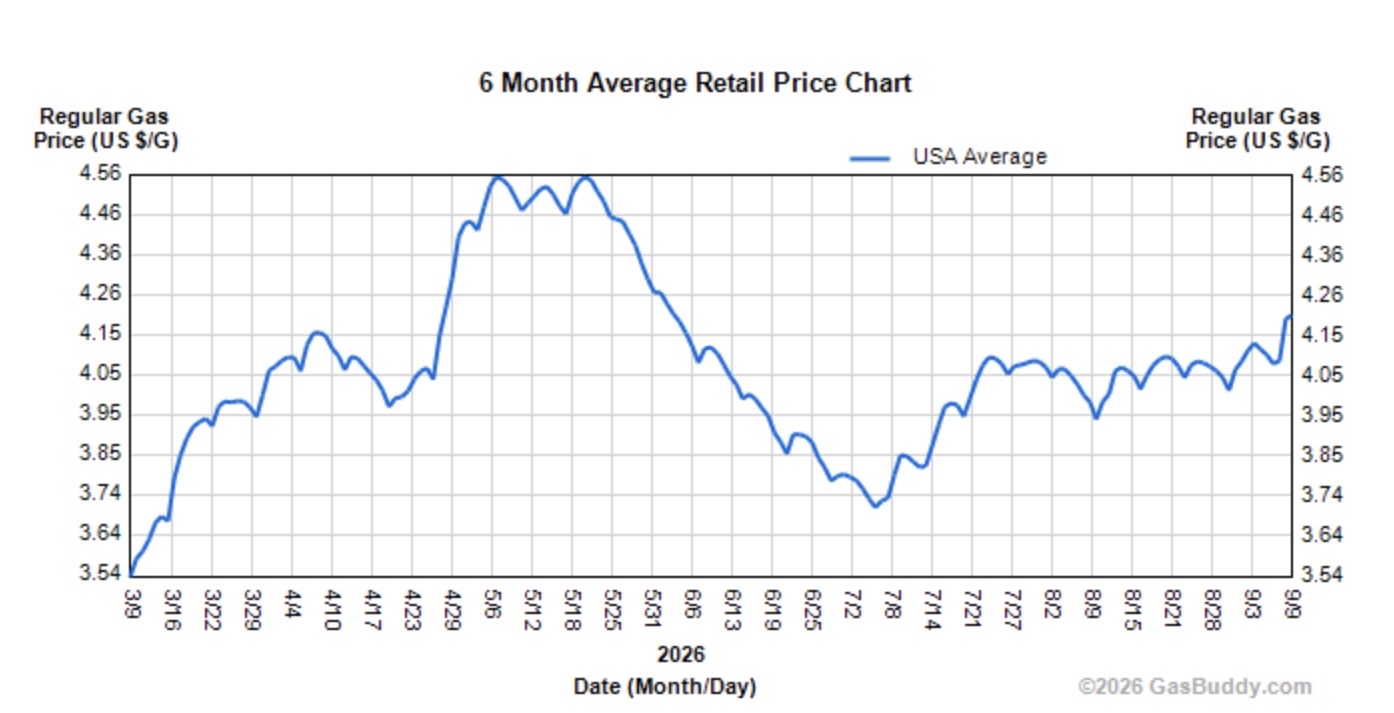
But that only takes us through the end of last month. GasBuddy shows that as of this morning, average gas prices have risen to $4.22/gallon, still well below May’s peak of $4.50/gallon:
And per CNBC oil prices have risen to about $96/barrel as I write this:
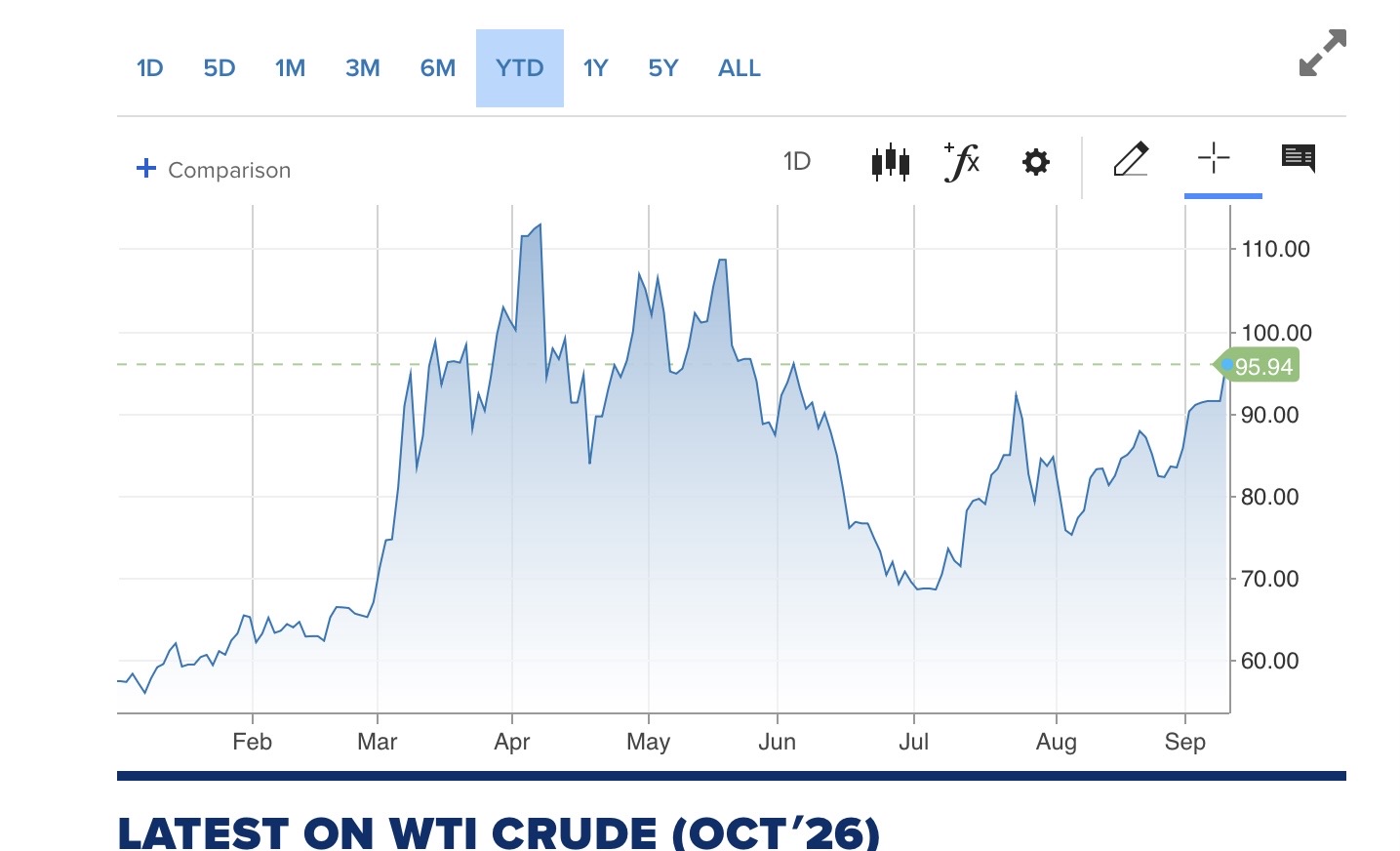
But even the $112/barrel oil this past April and May, with gas prices briefly hitting $4.50/gallon did not create a recessionary shock. Compared with this past spring, the US economy (driven by manufacturing) is in somewhat stronger shape. Under those circumstances, for that to happen,such price levels would have to continue on a more sustained basis, and gas prices would probably need to exceed the $5/gallon level they reached in 2022. Engaging in a completely insane trade war with our biggest trading partner, Canada, certainly won’t help.



Comments
Log in or sign up to join the conversation.