

United States Weather App Market Outlook
According to TechSci Research report, “United States Weather App Market – By Region, Competition, Forecast and Opportunities, 2031F”, The United States Weather App Market will grow from USD 622.47 Million in 2025 to USD 1219.46 Million by 2031 at a 11.86% CAGR.
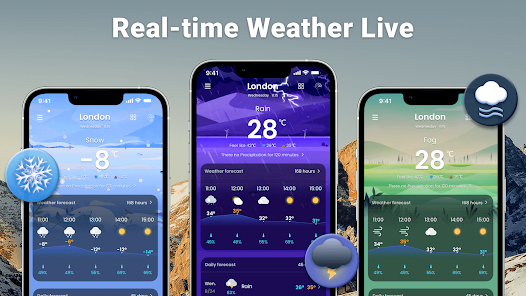
Weather has always played a pivotal role in shaping human activities, influencing decisions ranging from daily commuting and travel plans to agriculture, energy management, disaster preparedness, and business operations. In today's highly digital and connected world, access to accurate, real-time, and personalized weather information has become more critical than ever before. This growing dependence on immediate weather insights has fueled the remarkable expansion of the United States Weather App Market.
The market has evolved significantly over the last decade. Weather applications are no longer simple platforms that provide temperature updates and basic forecasts. Modern weather apps have transformed into sophisticated digital ecosystems powered by artificial intelligence (AI), machine learning (ML), advanced analytics, satellite imagery, and real-time data processing technologies.
The relentless pace of technological advancement continues to redefine the capabilities of weather applications. The integration of advanced meteorological data analytics and machine learning algorithms enables weather apps to process enormous volumes of atmospheric data rapidly and efficiently. This technological sophistication significantly improves forecasting precision and reliability while facilitating the development of increasingly advanced short-term and long-term weather prediction models.
Today's consumers expect more than traditional weather forecasts. They seek hyper-local predictions, real-time notifications, severe weather alerts, interactive radar maps, personalized recommendations, and actionable insights that help them make informed decisions. Weather apps have emerged as indispensable tools that cater to these growing expectations by delivering highly accurate and user-centric forecasting experiences.
Businesses and industries are also increasingly recognizing weather information as a strategic asset. From agriculture and logistics to travel, retail, construction, and energy production, organizations depend on precise weather intelligence to optimize operations, reduce risks, improve productivity, and ensure safety.
As technological innovation continues accelerating and climate variability increases worldwide, the United States Weather App Market is poised to witness substantial growth through 2031. The market's future will be shaped by the convergence of artificial intelligence, mobile technologies, Internet of Things (IoT) ecosystems, and predictive analytics, creating new opportunities for innovation and market expansion.
Request For Sample Copy of Report For More Detailed Market insight: https://www.techsciresearch.com/sample-report.aspx?cid=23427#requestform
Industry Key Highlights
Growing consumer reliance on real-time weather information and forecasting services
Rapid integration of artificial intelligence and machine learning technologies
Increasing demand for hyper-local weather forecasting and personalized alerts
Rising adoption across agriculture, transportation, energy, tourism, and construction industries
Expanding smartphone penetration and mobile internet accessibility
Growing need for disaster preparedness and severe weather management solutions
Increasing integration of weather applications with wearable devices and smart home systems
Apple iOS Store emerging as the fastest-growing marketplace segment
South United States becoming the fastest-growing regional market
Rising investments in predictive analytics and climate intelligence technologies
Evolution of Weather Applications in the United States
Weather forecasting has undergone an extraordinary transformation in recent years. Traditional weather reporting methods, which once relied on television broadcasts and newspaper reports, have been replaced by highly sophisticated digital applications capable of delivering real-time information directly to users' smartphones and connected devices.
Modern weather applications now provide a broad range of functionalities, including:
Real-time weather monitoring
Hyper-local forecasts
Interactive radar maps
Severe weather notifications
Air quality monitoring
Pollen forecasts
Hourly and long-term forecasts
Climate analytics
Personalized recommendations
Emergency preparedness alerts
Satellite imagery
Location-based notifications
The widespread adoption of smartphones and mobile technologies has fundamentally changed how consumers interact with weather information. Users increasingly demand immediate access to accurate and actionable weather intelligence that seamlessly integrates into their daily lives.
This evolution has transformed weather applications into essential digital tools that support both personal and professional decision-making processes.
Market Dynamics
The United States Weather App Market is experiencing significant growth due to changing consumer expectations, technological advancements, and increasing weather-related risks.
Several factors are shaping market dynamics:
Increasing frequency of severe weather events
Growing climate awareness
Rising smartphone adoption
Expansion of mobile internet infrastructure
Growing dependence on digital information services
Advances in artificial intelligence and predictive analytics
Rising demand for personalized experiences
Increasing adoption of IoT technologies
Growing business reliance on weather intelligence
Expanding digital ecosystems
These developments are creating favorable conditions for innovation and long-term market growth.
Major Market Drivers
Technological Advancements in Forecasting Systems
The relentless pace of technological innovation remains one of the most powerful drivers of the United States Weather App Market.
Modern weather applications increasingly leverage advanced technologies such as:
Artificial intelligence
Machine learning
Big data analytics
Satellite technologies
Predictive modeling
Geographic information systems
Cloud computing
Machine learning algorithms are capable of analyzing vast amounts of meteorological information gathered from satellites, sensors, radar systems, weather stations, and historical databases.
These technologies enable weather applications to:
Improve forecasting accuracy
Generate hyper-local predictions
Deliver real-time weather alerts
Enhance long-term climate modeling
Continuously improve forecasting capabilities
The integration of these advanced technologies has significantly elevated user confidence and reliance on weather applications.
As technological innovation continues accelerating, weather applications are expected to become increasingly sophisticated and indispensable.
Increasing Frequency of Severe Weather Events
The growing frequency and intensity of severe weather events have significantly increased demand for reliable forecasting solutions.
The United States frequently experiences:
Hurricanes
Tornadoes
Floods
Heatwaves
Snowstorms
Wildfires
Thunderstorms
Drought conditions
These events often result in substantial economic losses and pose significant risks to public safety.
Consequently, individuals, businesses, and government agencies increasingly depend on weather applications that provide:
Real-time alerts
Emergency notifications
Forecast updates
Preparedness recommendations
Geographic impact assessments
As weather volatility continues increasing, demand for sophisticated forecasting solutions is expected to rise substantially.
Rising Smartphone Penetration
The widespread adoption of smartphones has dramatically expanded the accessibility of weather applications.
Modern consumers increasingly rely on smartphones as their primary source of information.
The growing availability of:
High-speed mobile internet
Advanced mobile devices
Location services
Push notification capabilities
has significantly improved user experiences and increased adoption rates.
Mobile applications provide convenient access to weather information anytime and anywhere, making them highly attractive to consumers.
The continued expansion of smartphone usage will remain a major growth driver for the market.
Growing Demand for Personalized User Experiences
Consumers increasingly expect personalized digital experiences.
Weather applications are responding to this demand by offering:
Location-specific forecasts
Customized alerts
Activity-based recommendations
Personalized weather dashboards
Travel forecasts
Health-related weather information
These personalized capabilities significantly enhance user engagement and satisfaction.
The growing emphasis on individualized experiences is driving continuous innovation within the weather app market.
Increasing Business Dependence on Weather Intelligence
Weather conditions significantly influence operational efficiency across numerous industries.
Businesses increasingly utilize weather applications to support:
Resource planning
Risk management
Scheduling optimization
Supply chain management
Safety planning
Customer engagement strategies
Industries particularly dependent on weather intelligence include:
Agriculture
Transportation
Energy
Construction
Retail
Tourism
Logistics
Insurance
The increasing strategic importance of weather information is substantially contributing to market expansion.
Emerging Trends in the United States Weather App Market
Artificial Intelligence Revolutionizing Weather Forecasting
Artificial intelligence is fundamentally transforming weather forecasting capabilities.
AI technologies enable weather applications to:
Analyze massive data volumes
Identify weather patterns
Improve prediction accuracy
Generate personalized recommendations
Deliver real-time insights
AI-powered forecasting systems continuously learn and improve through ongoing data analysis.
This capability significantly enhances the quality and reliability of weather predictions.
Artificial intelligence is expected to remain one of the most transformative trends shaping the future of weather applications.
Hyper-Local Forecasting Becoming Mainstream
Consumers increasingly seek highly localized weather information.
Hyper-local forecasting provides:
Neighborhood-specific predictions
Street-level weather updates
Precise precipitation forecasts
Microclimate analysis
These capabilities are particularly valuable for industries and individuals operating in regions with rapidly changing weather conditions.
The growing demand for highly precise forecasting is encouraging weather app providers to invest heavily in advanced data analytics technologies.
Integration with Internet of Things (IoT)
The proliferation of connected devices is creating new opportunities for weather applications.
Weather applications increasingly integrate with:
Smart home devices
Connected vehicles
Agricultural sensors
Wearable technologies
Smart city infrastructure
These integrations enable:
Automated responses
Personalized notifications
Real-time environmental monitoring
Enhanced user experiences
The growing IoT ecosystem is expected to significantly expand market opportunities.
Increasing Adoption of Wearable Technology
Wearable devices are rapidly becoming important channels for weather information delivery.
Consumers increasingly prefer receiving:
Weather alerts
Temperature notifications
Storm warnings
Air quality information
directly through smartwatches and wearable devices.
This trend is encouraging weather app developers to create highly integrated cross-platform experiences.
Climate Intelligence and Long-Term Forecasting
Organizations increasingly seek long-term climate intelligence to support strategic planning and risk management.
Weather applications are evolving beyond short-term forecasts by incorporating:
Seasonal predictions
Climate trend analysis
Environmental risk assessments
Predictive climate modeling
These advanced capabilities are expanding the role of weather applications across commercial sectors.
Regional Analysis
South United States Emerges as the Fastest-Growing Market
The South United States has emerged as the fastest-growing region within the United States Weather App Market.
Several factors contribute to this remarkable growth.
Exposure to Severe Weather Events
States including:
Florida
Texas
Louisiana
Alabama
frequently experience hurricanes, floods, tropical storms, and extreme heat conditions.
The increasing frequency of these events has significantly heightened demand for accurate weather forecasting applications.
Diverse Economic Activities
The South hosts numerous weather-sensitive industries, including:
Agriculture
Energy
Construction
Tourism
Transportation
These industries depend heavily upon weather intelligence to optimize operations and minimize risks.
Population Growth
The South has experienced substantial population growth over recent years.
The expanding population has increased the number of individuals relying on weather applications for daily planning and safety.
Technological Development
Significant investments in:
Broadband infrastructure
Mobile connectivity
Wireless technologies
have created favorable conditions for digital innovation and weather application adoption.
Thriving Innovation Ecosystem
The region's growing technology ecosystem has encouraged startups and established companies to develop weather applications specifically designed to address regional forecasting requirements.
Marketplace Analysis
Apple iOS Store Emerges as the Fastest-Growing Segment
The Apple iOS Store has become the fastest-growing marketplace segment within the United States Weather App Market.
Several factors contribute to this growth.
Loyal User Base
The iOS ecosystem enjoys a highly engaged and loyal customer base that actively utilizes mobile applications for daily activities.
Premium Application Demand
iOS users frequently seek advanced weather applications featuring:
Hyper-local forecasts
Interactive radar maps
Real-time notifications
Personalized recommendations
Ecosystem Integration
Weather applications seamlessly integrate with:
Apple Watch
Siri
Widgets
Location services
This integration significantly enhances convenience and user experiences.
Quality Standards
Apple's stringent application quality requirements ensure that users receive reliable, secure, and well-designed weather applications.
Privacy and Security
Apple's strong emphasis on data protection and privacy further contributes to user trust and application adoption.
As demand for sophisticated mobile experiences continues increasing, the iOS segment is expected to maintain strong growth momentum.
Competitive Analysis
The United States Weather App Market remains highly competitive and innovation-driven.
Technological Innovation
Companies continuously invest in advanced forecasting technologies and predictive analytics capabilities to improve accuracy and user engagement.
Artificial Intelligence Integration
Leading providers increasingly leverage AI technologies to deliver personalized experiences and more accurate predictions.
Product Differentiation
Market participants compete through:
User interface enhancements
Advanced analytics
Hyper-local forecasting
Interactive visualization tools
Premium subscription services
Strategic Partnerships
Collaborations with technology companies, data providers, and IoT manufacturers are accelerating innovation and expanding market reach.
Monetization Strategies
Companies increasingly pursue diversified revenue models, including:
Subscription services
Advertising
Premium features
Enterprise solutions
Data services
Key Market Players
AccuWeather, Inc.
The Weather Company LLC
Acme AtronOMatic, LLC
DTN LLC
IAC Inc.
Verizon Communications, Inc.
The Tomorrow Companies Inc.
Windyty, SE
Customers can also request for 10% free customization on this report.
Future Outlook
The future of the United States Weather App Market appears exceptionally promising.
Several long-term trends are expected to drive sustained market expansion:
Increasing climate uncertainty
Growing smartphone adoption
Expansion of IoT ecosystems
Advances in artificial intelligence
Rising demand for hyper-local forecasting
Growing enterprise adoption of weather intelligence
Increasing use of wearable technologies
Expansion of smart city initiatives
Weather applications are expected to evolve into intelligent decision-support platforms capable of delivering highly personalized, predictive, and actionable insights.
As businesses and consumers increasingly depend on real-time environmental information, weather applications will become even more integral to daily life and strategic business operations.
10 Benefits of the United States Weather App Market Research Report
Provides comprehensive market size estimates and future forecasts.
Delivers detailed insights into industry trends and growth drivers.
Evaluates emerging technologies and innovation opportunities.
Offers in-depth segmentation analysis by marketplace and region.
Identifies high-growth regions and investment opportunities.
Assesses competitive strategies and company positioning.
Provides valuable information for strategic planning and investment decisions.
Evaluates market challenges and potential risks.
Helps organizations understand changing customer preferences and technology adoption trends.
Enables stakeholders to develop data-driven strategies and achieve sustainable competitive advantages in the evolving United States Weather App Market.
Comments
Log in or sign up to join the conversation.