

IMARC Group has recently released a new research study titled “United States Menswear Market Report by Product Type (Trousers, Denims, Shirts and T-Shirts, Ethnic Wear, and Others), Season (Summer Wear, Winter Wear, All-Season Wear), Distribution Channel (Supermarkets and Hypermarkets, Exclusive Stores, Multi-Brand Retail Outlets, Online Stores, and Others), and Region 2026-2034”, offering a detailed analysis of the market drivers, segmentation, growth opportunities, trends, and competitive landscape to understand current and future market scenarios.
United States Menswear Market Size, Growth, and Forecast (2026-2034)
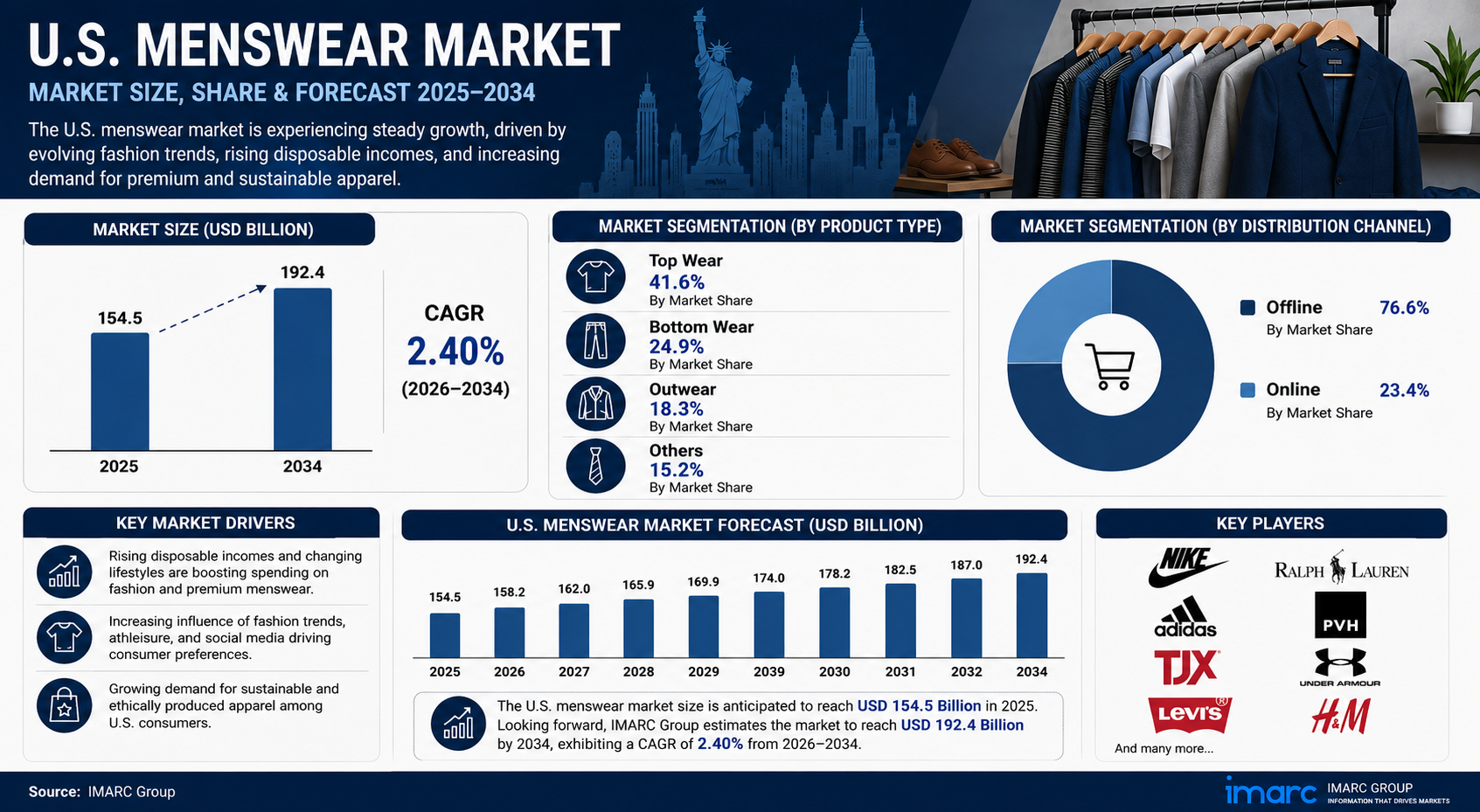
The United States menswear market size was valued at USD 154.5 Billion in 2025 and is projected to reach USD 192.4 Billion by 2034, growing at a CAGR of 2.40% during 2026-2034.
The market is witnessing steady growth driven by evolving fashion preferences, rising demand for comfortable and multifunctional clothing, increasing adoption of athleisure wear, and rapid expansion of online retail platforms. Growing consumer interest in premium, sustainable, and branded apparel is further strengthening market expansion across the United States.
Menswear includes a wide range of clothing products designed for men such as shirts, trousers, denims, ethnic wear, and casual and formal apparel. The market is evolving from traditional formalwear toward lifestyle-oriented fashion that combines comfort, versatility, and style.
Analyze the U.S. Menswear Market Download the IMARC Sample Report for Insights: https://www.imarcgroup.com/united-states-menswear-market/requestsample
Key Trends Driving the United States Menswear Market
Rising demand for athleisure and casual wear: Increasing preference for comfort-driven clothing suitable for work, leisure, and fitness activities is boosting demand for versatile menswear products.
Growth of sustainable fashion: Consumers are increasingly adopting eco-friendly fabrics, ethical sourcing practices, and sustainable apparel brands.
Expansion of e-commerce platforms: Online retail channels and direct-to-consumer (DTC) brands are transforming the purchasing experience for menswear products.
Influence of fashion-conscious male consumers: Social media and celebrity-driven fashion trends are encouraging higher spending on premium apparel.
Rise of streetwear culture: Urban fashion and casual styling are becoming mainstream across younger demographics.
Premiumization of menswear products: Consumers are increasingly shifting toward high-quality, durable, and branded apparel.
United States Menswear Market Report Segmentation:
The United States menswear market report provides a detailed segmentation analysis to help businesses identify key growth segments and evolving industry trends. The market is categorized based on product type, season, and distribution channel, offering comprehensive insights into demand patterns across the country.
Product Type Insights:
Shirts and T-Shirts: The largest and most versatile segment, driven by demand for both casual and formal wear applications.
Trousers: Includes formal pants, chinos, and casual joggers, catering to diverse consumer needs.
Denims: A consistently strong category supported by fashion trends and durability preferences.
Ethnic Wear: A niche but growing segment influenced by cultural diversity and global fashion integration.
Others: Includes activewear, outerwear, and seasonal apparel categories.
Season Insights:
All-Season Wear: Dominates the market due to increasing demand for versatile clothing suitable throughout the year.
Summer Wear: Growing demand driven by lightweight fabrics and travel-friendly fashion.
Winter Wear: Stable segment supported by demand for jackets, coats, and layered clothing.
Distribution Channel Insights:
Online Stores: Fastest-growing segment driven by convenience, personalization, and increasing digital adoption.
Exclusive Stores: Preferred for premium and luxury brand experiences.
Multi-Brand Retail Outlets: Offer wide product variety and competitive pricing.
Supermarkets and Hypermarkets: Serve mass-market consumers with affordable apparel options.
Regional Insights:
North America: The dominant region, driven by high apparel consumption and strong presence of leading fashion brands.
Urban U.S. Markets: High demand for premium, streetwear, and sustainable fashion products.
Suburban Regions: Strong demand for affordable, casual, and functional menswear.
Digital Consumer Base: Rapid adoption of online fashion platforms across all regions.
Key Market Drivers
Rising fashion consciousness among men
Growth in athleisure and lifestyle apparel
Expansion of online retail channels
Increasing demand for sustainable clothing
Strong influence of social media trends
Rising disposable income in urban areas
Challenges and Restraints
High competition from fast fashion brands
Price sensitivity in mass-market segments
Supply chain disruptions and raw material cost fluctuations
Rapidly changing fashion trends
Sustainability compliance costs for manufacturers
Investment Opportunities
Growth of sustainable menswear brands
Expansion of digital-first fashion companies
Premium athleisure and performance wear segment
AI-driven personalized fashion platforms
Growth of resale and circular fashion models
Market Outlook (2026-2034)
The United States menswear market is expected to maintain stable and sustainable growth over the forecast period. Increasing adoption of digital retail, rising demand for premium and sustainable apparel, and continued expansion of athleisure and streetwear segments will be key growth drivers.
The future of the market will be shaped by:
Digital transformation of fashion retail
Expansion of eco-friendly apparel production
Increasing demand for comfort-oriented clothing
Growth of personalized and AI-driven shopping experiences
Frequently Asked Questions (FAQs)
1. What is the size of the United States menswear market?
The market was valued at USD 154.5 Billion in 2025.
2. What is the expected growth rate of the market?
The market is expected to grow at a CAGR of 2.40% during 2026–2034.
3. What are the key drivers of the market?
Key drivers include athleisure demand, e-commerce growth, and sustainable fashion trends.
4. Which product segment dominates the market?
Shirts and T-shirts dominate the market.
5. Which distribution channel is growing fastest?
Online stores are the fastest-growing segment.
6. What are the major trends in the market?
Streetwear growth, sustainability, and premiumization of menswear.
Author IMARC Group
IMARC Group is a leading global management consulting firm providing market research reports, advisory services, and feasibility studies. The firm helps organizations make informed decisions through actionable insights and data-driven analysis.
Contact Information:
Email: [email protected]
Phone: +1-201-971-6302
Comments
Log in or sign up to join the conversation.