

Given the state of the COVID headlines, the ongoing fighting over additional economic stimulus, the prospect of higher taxes next year, and the potential for a contested election, one couldn't be blamed for a less than optimistic outlook toward the stock market. However, "market logic" isn't always completely logical. And sometimes, as the late Joe Granville was famous for saying, "If it's obvious it's obviously wrong."
Take the downbeat view related to a stimulus deal for example. Markets initially fretted that a deal for additional stimulus won't get done anytime soon due to the politics associated with the election. That makes sense, right? And since Jay Powell has been basically begging Congress to provide as much stimulus as possible so as to limit the downside in the economy, it is logical that stocks would struggle if a deal doesn't get done.
Yet, while a stimulus deal doesn't appear to be close, the S&P 500 is back to within a stone's throw of all-time highs. Logical? Maybe not.
However, David Kostin, Goldman Sachs' chief U.S. equity strategist cleared things up for me recently. Kostin argued that the macro outlook remains upbeat. Yes, he says that a Biden win will mean higher corporate taxes. But, he argues, there are a lot of positive offsets to the increased taxes. Frist, Kostin believes that a Biden win means that a larger stimulus deal is likely, which will be "additive to earnings." This alone, Kostin says, will overcome the higher tax rates (Kostin's team projects next year's S&P 500 EPS will be between $170 on the low end and $179 on the high end).
Next, there is the interest rate outlook. With Powell & Co. saying in no uncertain terms that rates are going to stay lower for longer, which historically has been positive for stocks. As is the idea that corporate America will likely resume buying back stock next year and also increase dividends. Then when you toss in the idea that foreigners continue to pile into U.S. stocks, Kostin argues that we should maintain an optimistic stance toward the U.S. stock market from a big-picture standpoint.
Now let's check in on our Fundamental Factors indicator board...
The State of the Fundamental Models
There are no changes to the Fundamental Factors board again this week. To review, Monetary conditions remain positive and supportive, the economic composite is improving steadily, earnings remain negative but are starting to show signs of improvement, inflation is not a concern (a positive), and valuations remain at extremely high levels - but we know that this tends to occur when the economy starts to come out of recession. All in, my view is the board continues to favor the bulls from a big-picture, intermediate- to long-term standpoint.
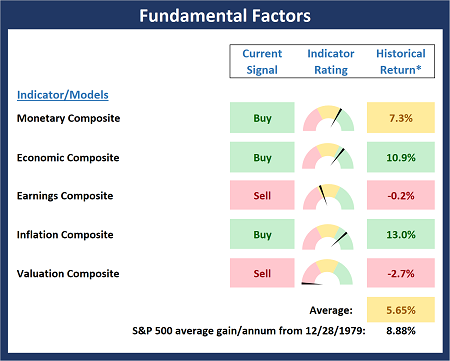
* Source: Ned Davis Research (NDR) as of the date of publication. Historical returns are hypothetical average annual performances calculated by NDR. Past performances do not guarantee future results or profitability - NOT INDIVIDUAL INVESTMENT ADVICE.



Comments
Log in or sign up to join the conversation.