

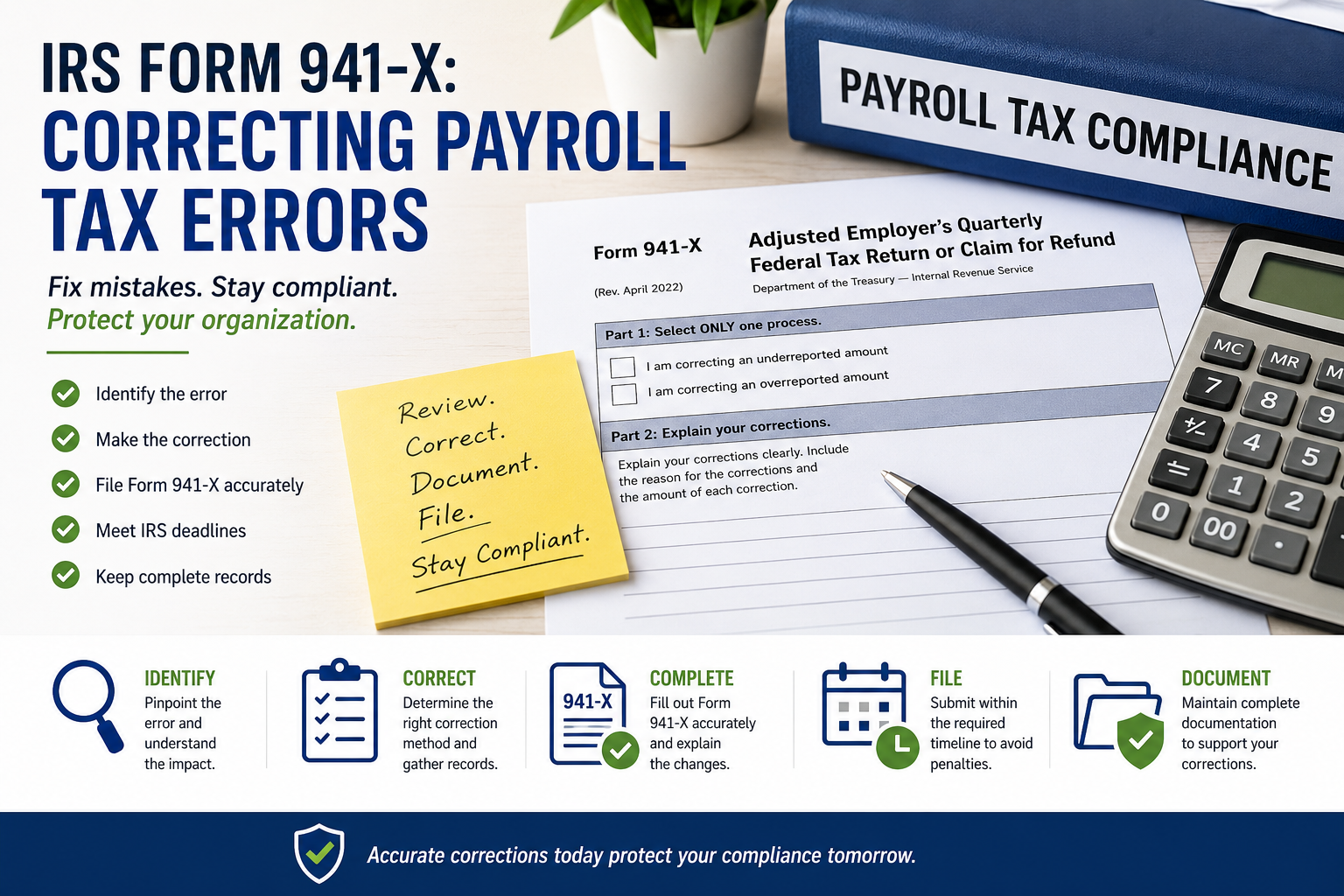
Filing an IRS tax return accurately is one of the most important responsibilities for any employer, but even experienced payroll professionals sometimes discover errors after a return has already been submitted. Whether it's a miscalculated wage amount, an incorrect tax withholding figure, or an overlooked adjustment, these mistakes can create compliance headaches if left uncorrected. That's where Form 941-X comes in — the IRS's designated tool for amending a previously filed Form 941, the Employer's Quarterly Federal Tax Return.
Understanding how to properly use Form 941-X isn't just a technical skill; it's a critical part of maintaining a clean compliance record with the IRS. Errors on an employment tax return, if not corrected properly and promptly, can lead to penalties, delayed refunds, additional tax assessments, and unwanted correspondence from the IRS. For payroll and finance professionals, knowing when and how to file this correction form can mean the difference between a smooth resolution and a prolonged compliance issue.
Why Payroll Tax Corrections Happen
Payroll tax reporting involves numerous moving parts — wages, tips, federal income tax withholding, Social Security and Medicare taxes, and various credits or adjustments. With so many variables, it's not uncommon for discrepancies to surface after a return has already been filed. Common triggers include:
Errors in reported wages or tax withholdings
Miscalculations in Social Security or Medicare tax amounts
Overlooked adjustments for sick pay, tips, or fringe benefits
Corrections related to previously claimed tax credits
Simple clerical or data entry mistakes
Regardless of the cause, once an error is identified on a filed IRS tax return, employers are expected to take corrective action rather than let the discrepancy stand. This is precisely the situation Form 941-X was designed to address.
What Makes Form 941-X Different
Unlike the original Form 941, which is filed quarterly to report payroll taxes, Form 941-X is filed only when a correction is necessary. It allows employers to adjust previously reported figures and explain the nature of the correction. The IRS requires detailed documentation supporting any changes, which means employers need to maintain accurate payroll records and be prepared to justify each adjustment.
There are also specific rules around filing timelines. Depending on whether the correction results in an underpayment or overpayment of tax, the process and deadlines can differ. Filing incorrectly, missing a deadline, or failing to provide adequate supporting documentation can trigger further IRS scrutiny, undermining the very purpose of the correction.
Key Steps for a Smooth Correction Process
For payroll professionals navigating a correction, a few best practices go a long way toward avoiding complications:
Identify the error precisely. Before amending an IRS tax return, pinpoint exactly which figures were reported incorrectly and why.
Determine the correct filing approach. Not all corrections are handled the same way — underreported and overreported taxes often follow different procedures.
Gather supporting documentation. The IRS expects a clear paper trail justifying any changes made to a previously filed return.
Complete Form 941-X accurately. Attention to detail here prevents processing delays and reduces the likelihood of follow-up notices.
File within the required timeline. Missing deadlines can complicate an otherwise straightforward correction.
Avoiding Common Mistakes
Many of the issues employers run into with Form 941-X stem from rushing the process or misunderstanding IRS correction rules. Common pitfalls include failing to explain the reason for the correction clearly, using the wrong correction method for the type of error, or neglecting to retain sufficient documentation. These missteps can delay processing or, worse, prompt additional IRS inquiries into the organization's broader tax return history.
Building Long-Term Payroll Compliance
Beyond fixing an individual error, understanding Form 941-X contributes to a stronger overall payroll compliance framework. Organizations that handle corrections properly reduce their exposure to financial and administrative risk while demonstrating good-faith efforts to maintain accurate employment tax records. This is particularly valuable for payroll executives, HR professionals, accounting personnel, and business owners who share responsibility for their organization's tax reporting accuracy.
For those looking to deepen their understanding of this process, resources like the IRS Form 941-X: A Practical Guide to Payroll Tax Corrections webinar — led by payroll expert Dayna J. Reum, CPP, FPC — offer practical, real-world guidance on identifying errors, completing the form correctly, and navigating IRS correction rules with confidence.
Final Thoughts
Mistakes on an IRS tax return are more common than many professionals realize, but they don't have to result in prolonged compliance trouble. By understanding the purpose of Form 941-X, following a structured correction process, and maintaining thorough documentation, payroll and finance teams can resolve reporting errors efficiently while safeguarding their organization's standing with the IRS.
FAQs
1. What is Form 941-X used for?
Form 941-X is used to correct errors on a previously filed Form 941, the Employer's Quarterly Federal Tax Return. Employers use it to adjust wages, tax withholdings, or other figures that were reported incorrectly on an original IRS tax return.
2. When should an employer file Form 941-X?
An employer should file Form 941-X as soon as an error is identified on a filed return. The specific deadline depends on whether the correction results in an underpayment or an overpayment of tax, so timing should be determined based on the nature of the mistake.
3. What documentation is needed to support a correction?
The IRS expects a clear paper trail justifying any changes, so employers should keep accurate payroll records, calculations, and explanations that support each adjustment made on their IRS tax return.
4. What happens if Form 941-X is filed incorrectly?
Filing errors, missed deadlines, or insufficient documentation can trigger IRS scrutiny, delay processing, or lead to follow-up notices — which is why accuracy and a structured filing approach are essential.
Comments
Log in or sign up to join the conversation.